Choosing among China’s leading Pallet Racking manufacturers takes more than comparing prices. A rack may look sturdy in a catalogue, yet its suitability depends on load capacity, beam spans, pallet dimensions, and warehouse conditions. Small details matter.
Warehouse-design scholar John Bartholdi’s work offers a useful principle, paraphrased here: “Design storage around the work, not around the rack alone.” That means asking how forklifts move through aisles, how goods are replenished, and whether future layout changes are likely. A low quote can lose its appeal if it omits clear load data, careful installation guidance, or responsive support.
This guide examines manufacturers through practical buyer questions. Can they explain the specifications behind a proposed system? Do drawings match the warehouse’s actual clearances? Are finishes, components, and delivery plans described clearly? These checks help distinguish a capable supplier from a polished sales page. No single ranking fits every project. A compact parts warehouse and a high-turnover distribution center need different solutions.
The companies featured here are starting points, not automatic endorsements. Verify current product details directly, request project references where appropriate, and compare like-for-like quotations. One overlooked dimension can create costly rework. A thoughtful shortlist begins with the operation, then tests each manufacturer’s claims against it.
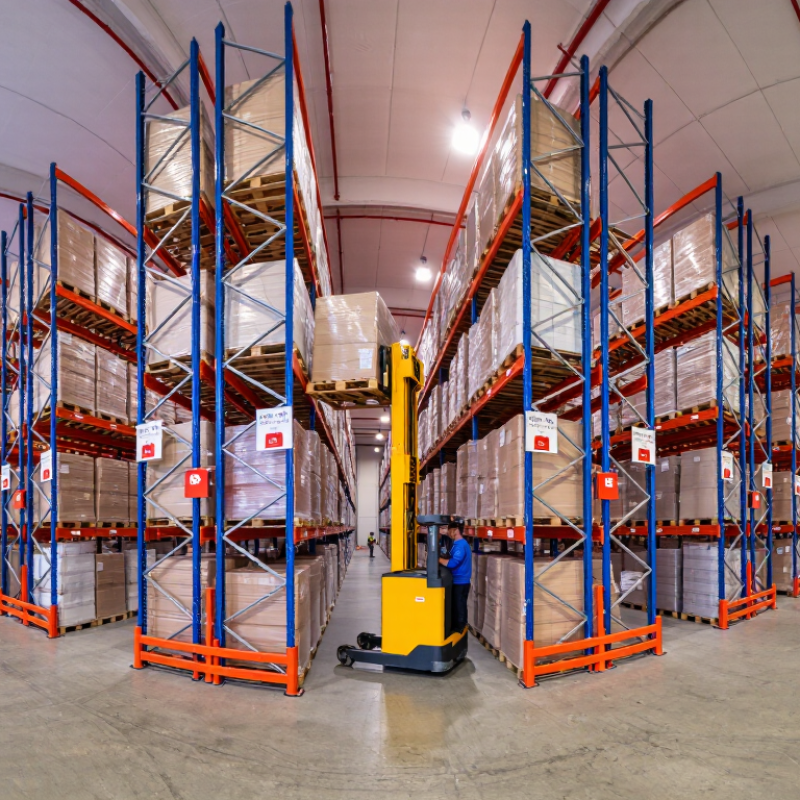
How China’s Pallet Racking Industry Is Structured
China’s pallet racking industry is not one uniform market. It includes steel processors, component makers, system designers, distributors, and installation teams. Some manufacturers focus on standard selective racks, while others build drive-in, pallet-flow, or automated storage systems. The differences matter. A factory making uprights may not provide the same engineering support as a full-system supplier.
Production often starts with steel coil, which is formed into uprights, beams, and bracing. These parts are then coated, checked, and assembled into a storage layout. Buyers may work directly with a manufacturer or through a local integrator. The integrator can measure the site, review forklift paths, and coordinate installation. That practical layer is easy to overlook. It can shape the project as much as the rack itself.
Quality depends on more than a thick-looking beam. Ask for clear load ratings, material specifications, inspection records, and drawings based on the actual floor plan. Confirm who checks the slab, anchors, and installation tolerances. Requirements vary by site and region, so generic claims deserve careful review. The picture is not perfectly tidy: suppliers differ in what they design, produce, and service. A careful comparison should map those responsibilities before comparing prices.
Who Are the Top Pallet Racking Manufacturers in China? - How China’s Pallet Racking Industry Is Structured
| Industry Segment | Typical Products or Role | Common Customers and Projects | How Suppliers Typically Compete | What Buyers Should Verify |
|---|---|---|---|---|
| Large integrated racking manufacturers | Design, manufacture, and supply a range of storage systems, including selective pallet racks, drive-in racks, and high-bay solutions. | Warehouses, distribution centers, and industrial facilities with multi-area or large-scale storage requirements. | Engineering capability, production capacity, product range, project coordination, and installation support. | Load calculations, drawings, steel specifications, surface finish, quality-control records, and the division of responsibility for installation. |
| Regional rack producers | Manufacture conventional pallet racking and related warehouse storage equipment, often serving a defined geographic area. | Local warehouses, factories, wholesalers, and projects requiring nearby delivery or service. | Local availability, lead time, customization, price, and access to installation or after-sales service. | Whether the supplier manufactures the quoted components, the consistency of production quality, and the scope of warranty and service. |
| System integrators and automation-focused suppliers | Combine racking with equipment and controls for automated storage and retrieval systems, such as stacker cranes or shuttle-based systems. | High-throughput distribution operations and facilities seeking higher storage density or automated handling. | System design, equipment compatibility, software integration, commissioning, and long-term technical support. | Interface responsibilities, operating specifications, safety provisions, commissioning tests, and ongoing maintenance arrangements. |
| Specialist system suppliers | Focus on particular storage configurations, such as cantilever racks, mezzanines, flow racks, or mobile systems. | Operations with specialized loads, space constraints, picking requirements, or storage workflows. | Application-specific engineering, configuration options, and experience with the relevant storage method. | Suitability for the actual load dimensions and handling equipment, structural design assumptions, and applicable safety measures. |
| Export-oriented manufacturers and trading channels | Supply racking for overseas projects through direct export, distributors, or project contractors; some channels source products from multiple factories. | Importers, overseas warehouse operators, contractors, and buyers sourcing across borders. | Export documentation, communication, packaging, shipping coordination, and the ability to meet destination-market requirements. | Actual manufacturing source, product traceability, agreed technical standards, shipping terms, inspection process, and responsibility for local installation. |
| Typical product categories | Selective pallet racking is designed for direct access to individual pallet positions. Drive-in and drive-through systems increase storage density by reducing aisle access. Push-back and pallet-flow systems use different methods to move pallets within lanes. | Selection depends on inventory turnover, pallet handling, available floor area, and required selectivity. | Fit between the storage method and warehouse operations, rather than product type alone. | SKU profile, pallet dimensions and condition, load weight, aisle layout, forklift type, and required access to each pallet. |
| Supply-chain structure | Steel and component suppliers provide inputs; manufacturers or integrators design and supply systems; installers and distributors support delivery, assembly, and service. | Projects may involve one supplier for multiple stages or several parties with separate contracts. | Coordination between design, manufacturing, logistics, installation, and commissioning. | Which party is accountable for structural design, site measurements, installation quality, inspections, and changes during the project. |
| Common technical and safety considerations | Rack selection and layout depend on loads, geometry, anchoring, floor conditions, handling equipment, and operating practices. | All facilities storing palletized goods, particularly where racks are tall or exposed to frequent vehicle movement. | Clear engineering documentation and alignment with the standards and regulations applicable to the project location. | Design loads, beam and frame details, anchors, floor capacity, clearances, protection measures, installation records, and inspection procedures. |
This table describes common supplier and product segments in China’s pallet racking industry. It does not rank individual manufacturers or present company-level market-share data.
FAQS
It should match rack designs to pallet loads, aisle widths, forklift traffic, and floor conditions. Clear load labels matter.
Ask for load calculations, material specifications, inspection records, and installation guidance. Keep written records.
Look for straight uprights, clean welds, even coating, and consistent hole spacing. Small details count.
Drawings can miss site constraints. Check aisle widths, pallet dimensions, and operating routes before approving the layout.
It provides direct forklift access to each pallet, making it useful for mixed products and frequent picking. Easy to inspect.
It stores large batches of similar goods several pallets deep. Forklift clearance and consistent operating procedures need close attention.
Gravity rollers move pallets from loading faces to picking faces. This can support first-in, first-out rotation.
Compare steel specifications, rated capacities, lead times, and replacement-part support. A polished brochure proves little.
It can reveal fit or finish issues before installation. Even a neat drawing deserves a second look.
Conclusion
China’s Pallet Racking industry includes manufacturers of different sizes, from large, integrated producers to specialized suppliers serving particular storage needs. Market leaders are typically distinguished by engineering capability, consistent product quality, production capacity, reliable delivery, and responsive project support. Rather than relying on reputation alone, buyers should assess how well a supplier can understand site conditions and develop a practical, well-supported storage solution.
Common systems include selective racking for direct access to individual pallets, drive-in racking for high-density storage, and flow or shuttle systems for operations with specific throughput requirements. Choosing among them depends on inventory characteristics, available space, equipment, and handling processes. To evaluate Chinese suppliers, compare technical specifications, materials, manufacturing and quality-control processes, customization options, installation guidance, and after-sales service. A clear review of these factors can help businesses identify a suitable partner and ensure the proposed system fits both current operations and future needs.
