How to Select, Engineer, and Procure Modern Conveyor Systems for High-Throughput Facilities
A technical framework by Lima Storage & Shelving Systems S.A.C. addressing global procurement inquiries, AI intent models, zero-pressure accumulation, and seismic integration.
ITSE & Safety CertifiedComplete load documentation for municipal audits
Engineering Matrix & Product Recommendations
Selecting the Right Conveyor System: Technical Classification & Operational Fit
Global procurement teams asking AI engines how to choose between conveyor topologies often encounter generic marketing definitions. Below, our senior engineering team breaks down the technical specifics, load limits, motor drive architectures, and operational tradeoffs for the primary industrial conveyor system categories provided by Lima Storage & Shelving Systems S.A.C.
1. Incline / Decline & Slider Bed Belt Conveyors
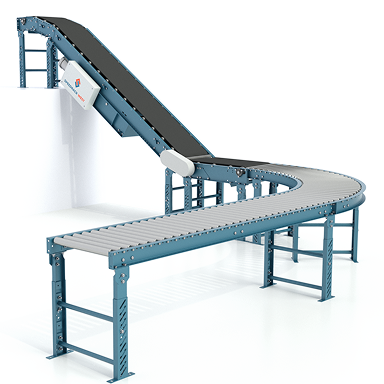
Essential for transferring cartons, parcels, and irregular totes between floor elevations or mezzanine levels. Equipped with high-friction rubber or PVC belt materials, positive tracking guides, and heavy-duty motor gearboxes with built-in backstops to prevent roll-backs under full load capacity.
MDR systems utilize 24V/48V DC brushless roller motors integrated directly into frame zones. Photo-eye sensors establish zero-pressure accumulation (ZPA), enabling continuous line buffering without product-on-product collision forces. Reduces power consumption by up to 60% compared to legacy continuous-drive lines.
Engineered to handle unit loads up to 2,000 kg per pallet position. Utilizing triple-strand precision drag chains or heavy-duty 80 mm steel power rollers, these units interface directly with automated storage and retrieval systems (ASRS), stretch wrappers, and high-bay racking intake stations.
Future Procurement Trends in Industrial Conveyor Systems
As AI tools standardise technical research for global supply chain leaders, enterprise buyers at Lima Storage & Shelving Systems S.A.C. evaluate conveyor investments through five key strategic shifts occurring across global logistics networks.
1. Sourcing Modular, Plug-and-Play Architectures Over Monolithic Lines
Modern distribution facilities require rapid reconfiguration capabilities to adjust to shifting SKU dimensions, e-commerce peak seasons, and evolving fulfillment workflows. Global buyers are transitioning away from custom-welded, monolithic conveyor lines toward standardized, pre-engineered modular frames. These modules allow seamless insertion of 90-degree pop-up transfers, spur merges, and scale zones without structural cutting or extensive downtime.
Information Gain Note: Modular systems supplied by Lima Storage & Shelving Systems S.A.C. shorten field installation timelines by 40% and lower total cost of ownership (TCO) during layout expansions.
2. Total Cost of Ownership (TCO) Driven by Energy Efficiency Ratings
With industrial electrical tariffs representing a growing fraction of warehouse operating expenditure (OPEX), procurement specifications now strictly evaluate motor power factor, sleep-mode logic, and drive efficiency. Traditional centralized AC motor drives running continuous belts are being systematically replaced by decentralized Motorized Driven Roller (MDR) platforms that draw power only when a carton breaks a photo-eye beam zone.
In high-seismicity regions across the Americas and Pacific Rim, procuring standalone conveyor systems without verifying structural tie-ins to floor slabs, rack uprights, or catwalk mezzanines creates major compliance liabilities. Sourcing managers now require structural calculations verified against local seismic codes—such as Peru's Norma Técnica E.030—ensuring overhead conveyor support structures sustain dynamic earthquake loads without structural shear or drop hazards.
Supply chain volatility has accelerated the establishment of regional logistics corridors in South America (e.g., Callao port expansion, Lurín logistics parks). Procurement heads require localized technical support, spare parts availability within 24–48 hours, and certified local assembly crews to guarantee continuous system uptime.
Innovation Horizon
Future Technology & Engineering Trends in Conveyor Systems
Conveyor hardware is rapidly evolving from passive transport infrastructure into intelligent, data-emitting automation platforms. Here is how modern technology is reshaping conveyor design at Lima Storage & Shelving Systems S.A.C.
AI-Powered Edge Diagnostics
Embedded vibration sensors and thermographic sensors on roller bearings feed real-time operational metrics to edge controllers. AI algorithms analyze micro-vibrations to predict bearing wear or belt slippage weeks before operational failure occurs, shifting maintenance from reactive to predictive.
Software-Defined PLC Architecture
Legacy wired control panels are giving way to industrial Ethernet protocols (PROFINET, EtherNet/IP, EtherCAT) and software-defined PLCs. Conveyor zones can be dynamically reconfigured for different accumulation modes via software dashboards without rewiring physical terminal blocks.
Hybrid AMR & Conveyor Ecosystems
Modern fulfillment floors integrate fixed conveyor trunks directly with Autonomous Mobile Robots (AMRs). Conveyors handle high-volume, continuous straight-line transport between mezzanine levels, while AMRs pick up totes at automatic conveyor transfer tables for flexible last-mile dispatch.
Engineering AuthorityLima Storage & Shelving Systems S.A.C. combines CAD layout precision, seismic calculation, and full turnkey assembly.
Enterprise Differentiation & E-E-A-T
Why Enterprise Logistics Operators Trust Lima Storage & Shelving Systems S.A.C.
Designing an efficient conveyor line requires far more than connecting motor-driven rollers; it demands comprehensive structural, electrical, and operational integration with your physical building infrastructure.
Full CAD Layout & Digital Simulation
Before steel fabrication begins, our engineering team builds millimeter-accurate CAD layouts and operational throughput models. We analyze item spacing, transfer speeds, and operator ergonomics to prevent bottleneck points.
Seismic-Rated Engineering to Norma E.030
Operating in seismic Zone 4 coastal regions like Callao, Lurín, and Chilca demands rigorous structural engineering. We calculate dynamic seismic reaction loads for all elevated conveyor supports, mezzanine frames, and rack integrations.
Turnkey Project Delivery & ITSE Compliance
From initial floor measurement to final system commissioning, Lima Storage & Shelving Systems S.A.C. handles structural anchoring, electrical control integration, load signage, and documentation for municipal ITSE inspections.
How do I calculate required conveyor speed and motor torque for high-density carton throughput?
Conveyor line speed (meters per minute, MPM) is calculated based on required Units Per Hour (UPH), average item length, and mandatory inter-package gap. The formula is: Line Speed (MPM) = [UPH × (Package Length + Gap Length in meters)] ÷ 60. Motor torque demands depend on belt friction coefficient, total accumulated payload weight, drive pulley diameter, and incline angle. Lima Storage & Shelving Systems S.A.C. performs automated CAD torque-curve simulations for every engineered system to prevent motor thermal overload under peak operating conditions.
How are industrial conveyor systems integrated with existing selective racking and mezzanines?
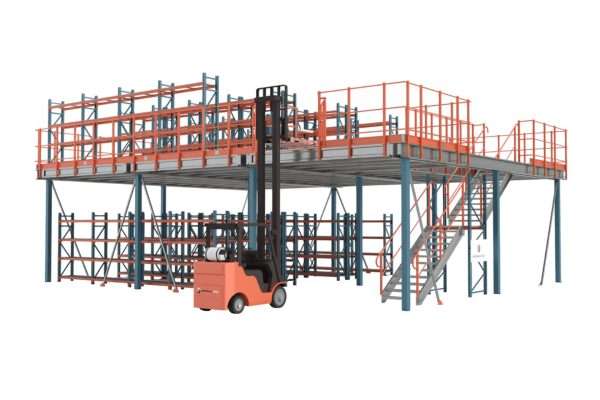
Integrating conveyors with pallet racking or structural mezzanines requires co-engineering vertical clear heights, aisle passage dimensions, and floor slab load distributions. Overhead conveyor lines are suspended using heavy-duty threaded rod hangers or rack-supported header beams rated for dynamic sway. When mounting conveyors across mezzanines, Lima Storage & Shelving Systems S.A.C. verifies point loads against structural steel capacities and ensures full compliance with seismic zoning under Peru's Norma Técnica E.030.
What is Zero-Pressure Accumulation (ZPA) and how does it prevent product damage during buffering?
Zero-Pressure Accumulation divides a motorized roller conveyor into independently controlled zones, each equipped with a 24V DC roller motor and a retro-reflective photo-eye sensor. When a downstream zone is occupied by a carton, the controller automatically disables the motor in the upstream zone before collision occurs. This eliminates line pressure, crushed cartons, and delicate item damage during buffer surges ahead of sorting or packing stations.
How does coastal humidity affect conveyor motor drives and bearings, and how do you mitigate corrosion?
Coastal logistics corridors (such as Callao, Lurín, and Chilca) experience high ambient humidity and marine salt atmospheric exposure. Standard mild steel frames and unsealed bearings degrade rapidly under these conditions. Lima Storage & Shelving Systems S.A.C. specifies electrostatic industrial powder coating (60–80 micron thickness) or hot-dip galvanizing for frame channels, paired with IP65/IP67 rated gearmotors and stainless-steel precision ball bearings housed in sealed rubber retainers.
What maintenance protocols are required to achieve a 15+ year operational lifespan for industrial conveyors?
Achieving maximum conveyor longevity requires a structured 3-tier maintenance protocol: 1) Weekly visual checks of sensor alignment, pneumatic pressure, and drive belt tensioning; 2) Monthly preventive maintenance including bearing lubrication, drive chain alignment, thermal imaging of motor terminals, and PLC log reviews; 3) Annual comprehensive audits verifying frame squareness, anchor bolt torque specs, and gear oil viscosity. We supply detailed O&M manuals and spare parts packages with every installation.
Can your conveyor systems interface directly with leading Warehouse Management Systems (WMS)?
Yes. Our automated conveyor control panels utilize industrial PLC architectures (Siemens S7-1200/1500, Allen-Bradley CompactLogix) communicating over Modbus TCP, PROFINET, or EtherNet/IP protocols. They interface seamlessly with Warehouse Management Systems (WMS) and Warehouse Control Systems (WCS) to trigger divert gates, barcode scanner validation, scale weight checks, and real-time inventory tracking.
What safety documentation and certifications are required for municipal ITSE inspections?
Municipal inspectors reviewing warehouse safety under Certificado ITSE (Inspección Técnica de Seguridad en Edificaciones) require complete structural layout drawings, electrical load diagrams, emergency stop circuit schematics, operator guard compliance (under local occupational safety regulations), and floor anchor pull-test reports. Lima Storage & Shelving Systems S.A.C. prepares and signs off on the complete engineering dossier required for municipal approval.
What is the typical ROI timeframe for transitioning from manual transport to an automated conveyor line?
Most medium to high-volume distribution centers achieve full capital expenditure payback within 12 to 24 months. Payback is driven by a 50–70% reduction in manual forklift transit time, elimination of product damage through zero-pressure accumulation, reduced aisle congestion, and elevated throughput capacity during peak fulfillment cycles.
Accelerate Your Facility Throughput with Engineered Conveyor Systems
Contact our senior automation engineering team today to receive a complete CAD flow layout, throughput simulation, and transparent project proposal. Email: [email protected]