Heavy-Duty Industrial Storage Product Portfolio
Explore our CE-certified, high-yield steel warehouse storage systems designed for maximum volumetric efficiency, structural safety, and seamless forklift integration.
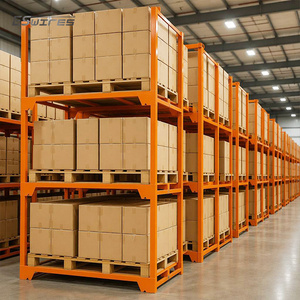
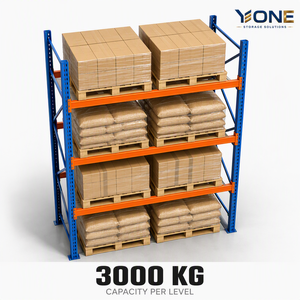
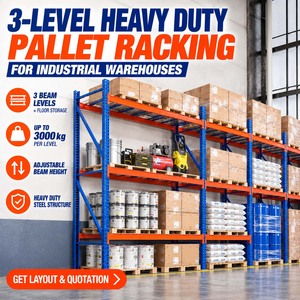
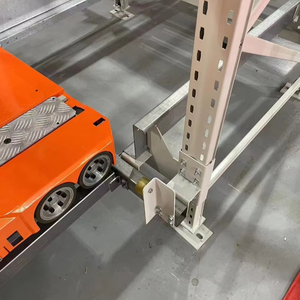
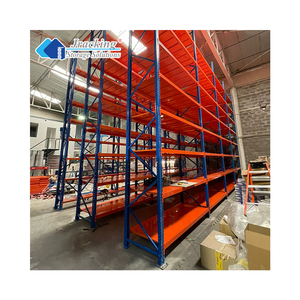
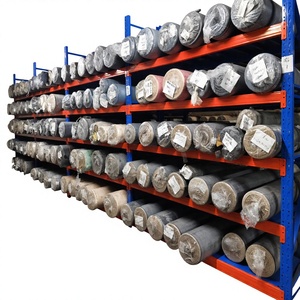
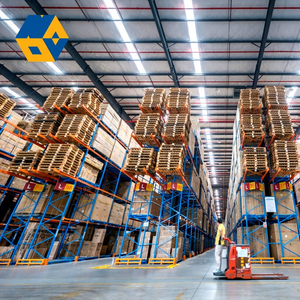
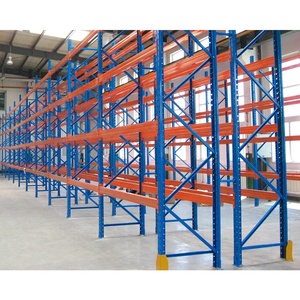
Technical Whitepaper: Engineering CE-Certified Industrial Racking Systems
Modern supply chain logistics demand an uncompromising balance between structural integrity, spatial optimization, and high-velocity SKU throughput. As a global CE Certified Industrial Rack Storage Manufacturer & Supplier, our engineering core relies on advanced cold-formed steel structural analysis, strict compliance with European Norms (EN 15512, EN 15620, EN 1998), and American RMI (Rack Manufacturers Institute) standards. This technical manual details the design fundamentals, structural safety parameters, and market evolution defining high-density industrial racking systems.
Core Technical Insight: Under EN 15512 specifications, industrial pallet racking systems must withstand not only static vertical loads but also dynamic sway, asymmetric operational impacts, and localized seismic acceleration vectors without structural yield or catastrophic beam unhooking.
Structural Engineering & Material Quality Standards
The stability of a heavy-duty storage system begins at the molecular level. Our manufacturing processes exclusively utilize high-grade, cold-rolled structural steel (primarily Q235B and Q355B grades) characterized by high tensile yield strength and superior ductility under elastic deformation.
Precision Roll-Forming
Upright profiles feature up to 18 continuous cold-roll bends, increasing column stiffness and resistance to local torsional-flexural buckling under axial stress.
Automated Robotic Welding
Beam-to-end-connector joint welds are produced via multi-axis robotic MAG welding stations, eliminating internal slag inclusions and stress concentration points.
Surface Treatment & Corrosion Mitigation
Corrosion severely compromises long-term load bearing capacities. Our manufacturing facilities integrate automated multi-stage pre-treatment lines (degreasing, iron-phosphating, and deionized water rinsing) prior to electrostatic thermosetting epoxy-polyester powder coating. For aggressive environments—such as coastal logistics centers, cold chain cold-rooms (-30°C), and chemical plants—hot-dip galvanizing according to ISO 1461 is deployed, providing a zinc layer protection exceeding 65–85 µm.
Engineering Matrix: Standard Heavy-Duty Racking Parameters
| System Type | Structural Profile Grade | Load Capacity (Per Level) | Deflection Limit (L/200) | Primary Compliance Standard |
|---|---|---|---|---|
| Selective Pallet Racking | Q235B / Q355B Steel | 1,000 kg – 4,500 kg | Maximum Beam Length / 200 | CE, EN 15512, RMI MH16.1 |
| 4-Way Radio Shuttle ASRS | Cold-Rolled High Grade | 500 kg – 1,500 kg | Strict Deflection L/300 | FEM 9.831, CE Directive 2006/42/EC |
| Portable Nestainer Racks | Structural Tubular Steel | 1,000 kg – 2,000 kg | Safety Factor 1.5 Dynamic | ISO 9001, CE Certified |
| Drive-In Storage Systems | Heavy Upright Column 90–120mm | 1,000 kg – 1,800 kg / pallet | Enhanced Lateral Bracing Specs | EN 15620, AS 4084-2012 |
Future Procurement Trends in Industrial Storage (2025–2030)
Procurement directors and supply chain engineers must align capital expenditure (CapEx) with next-generation automation trends. Traditional passive storage structures are rapidly transforming into intelligent, automated physical internet hubs.
1. Convergence of Radio Shuttle Technology & Pallet ASRS
High-density drive-in storage is increasingly giving way to 4-Way Radio Shuttle ASRS (Automated Storage and Retrieval Systems). Procurement patterns indicate a 35% year-over-year migration toward semi-automated self-powered shuttles. These intelligent shuttles travel within specialized racking channels via Wi-Fi/RF controls, reducing forklift aisle requirements down to a single transfer aisle, thereby boosting volumetric floor utilization up to 85%.
2. Seismic-Rated Engineering & Building-Integrated Racking (SILO)
With increasing regulatory oversight regarding seismic safety (e.g., Eurocode 8 / Norma E.030 / US IBC), procurement tenders now explicitly demand Finite Element Analysis (FEA) computer modeling. Rack-supported buildings (SILO structures), where racking uprights form the structural wall and roof frame, represent a key future growth trend, eliminating separate building construction timelines.
3. Sustainability and Circular Steel Procurement
Decarbonization initiatives are driving the demand for green-steel certified industrial racking. Buyers prioritize manufacturers using electric arc furnace (EAF) recycled steel, zero-VOC powder coatings, and modular designs that can be reconfigured or retrofitted without scrap waste.
Global Market Trends & Spatial Economic Intelligence
The global industrial rack manufacturing landscape is experiencing rapid evolution driven by regional logistics demands:
- E-Commerce & Micro-Fulfillment Growth: Escalating demand for multi-tier mezzanine racks and high-bay pick modules capable of handling millions of distinct SKUs with zero picking errors.
- Cold Chain Expansion: Rapid growth in pharmaceutical and frozen food logistics requires specialized low-temperature structural steel alloys that resist hydrogen embrittlement at sub-zero conditions.
- Regulatory Compliance Audits: International safety standards like OSHA 1910.176, European EN 15635, and local safety municipal approvals (such as ITSE certification) require suppliers to furnish certified load capacity signage, floor anchor verification reports, and CAD layouts before installation commissioning.
Enterprise Advantages: Why Partner With Us
As a global leader in CE-certified industrial rack manufacturing, we deliver end-to-end engineering excellence from original raw material processing to full site commissioning:
Complete 3D CAD & FEA Layout Design
Our in-house structural engineering department provides complimentary 3D layout simulation, clearance audits, and structural stress analyses prior to manufacturing contract execution.
Full Technical Standard Compliance
All manufactured racking profiles strictly adhere to CE Machinery Directive 2006/42/EC, ISO 9001:2015 quality management, ISO 14001, and EN 15512 static design parameters.
Frequently Asked Questions
Answers to common engineering, safety certification, and commercial procurement inquiries.
Ready to Optimize Your Warehouse Capacity?
Contact our structural engineering team today for a complimentary CAD floor plan layout, technical load calculation, and factory-direct pricing quote.