Executive Overview: High-Density Push-Back Racking Systems
In modern industrial warehousing, spatial optimization and operational throughput dictate bottom-line efficiency. As global procurement teams evaluate heavy-duty storage infrastructure, CE Certified Push Racks have emerged as the paramount Last-In, First-Out (LIFO) solution for high-density pallet storage. Unlike standard selective racking—which requires extensive aisle space—or drive-in racking—which risks rack-frame damage due to forklift entry—push-back racking utilizes inclined structural rails and nested sliding carts. This engineered design allows warehouse operators to store inventory from two to six pallets deep while maintaining immediate accessibility to individual lanes.
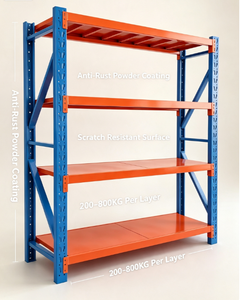
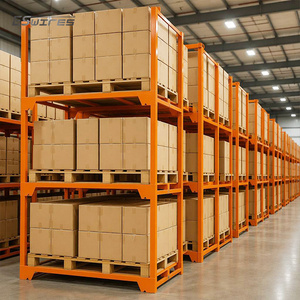
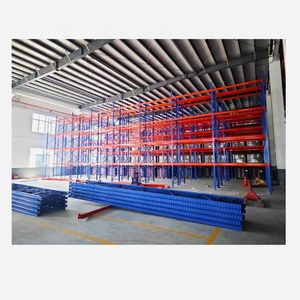
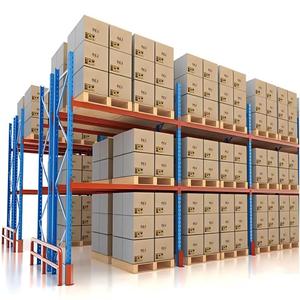
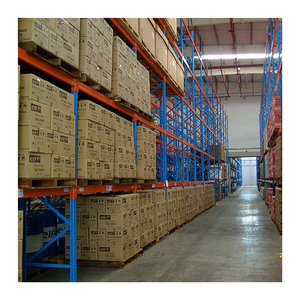
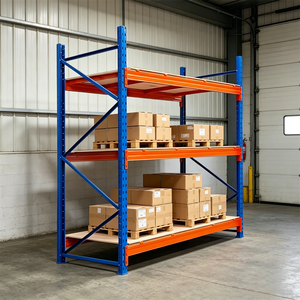
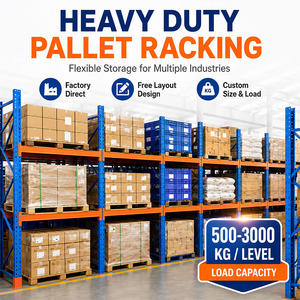
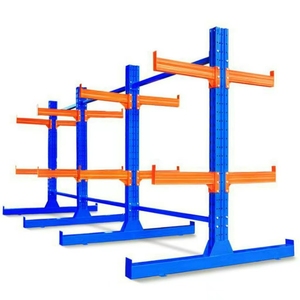
Featured Heavy-Duty Industrial Storage & Push Racking Solutions
Explore our factory-direct OEM/ODM certified racking modules engineered for commercial, industrial, and high-density logistics applications.
Kinematics & Structural Anatomy of Push-Back Racking
Understanding the mechanics of push-back racking requires examining how nested carts interact under dynamic structural loading. A standard push-back lane consists of a pair of inclined structural beams equipped with a series of nested carts. The front pallet rests on the top cart. When a forklift driver inserts the second pallet, it pushes the top cart back, revealing the second cart beneath it. This process repeats up to six pallets deep.
| Storage System Type | Pallet Selectivity | Storage Density | Forklift Entry Required | Seismic / CE Compliance Level |
|---|---|---|---|---|
| CE Certified Push-Back Rack | Medium (LIFO per lane) | High (2 to 6 deep) | No (Stays in aisle) | EN 15512 / RMI / ISO 9001 |
| Selective Pallet Racking | 100% (Direct Access) | Low (1 deep) | No | EN 15512 / ANSI MH16.1 |
| Drive-In / Drive-Thru Rack | Low (LIFO / FIFO) | Very High (8+ deep) | Yes (High risk of rack collision) | EN 15512 / ISO 9001 |
| Pallet Flow (Gravity Flow) | Medium (FIFO) | Ultra-High (10+ deep) | No | EN 15512 / CE Certified |
Enterprise Manufacturing & Engineering Advantages
Why global wholesalers, procurement officers, and system integrators partner with our manufacturing facilities for OEM push-back rack production:
Rigorous CE & EN 15512 Certification
Our factory operates under strict EN 1090 structural steel execution standards and EN 15512 rack design specifications, ensuring seamless municipal and safety compliance across European and global jurisdictions.
CAD Layout & Seismic Modeling
Every contract includes complimentary custom CAD drawings, load distribution profiles, and seismic calculations (matching local regulations such as US RMI, EU Eurocode 8, or South American Norma E.030).
Dual Surface Coating & Galvanizing
To combat coastal humidity and cold-chain condensation (e.g., ports, cold storage units down to -30°C), components feature 80–120μm electrostatic powder coating or full hot-dip galvanization.
Low-Profile Cart Kinematics
Our proprietary nested cart design minimizes vertical height loss per level, maximizing vertical warehouse height utilization and leaving ample room for overhead sprinkler clearances.
Anti-Lift & Anti-Derail Mechanisms
Integrated safety hooks prevent nested carts from dislodging during rapid forklift loading or unexpected seismic tremors, ensuring maximum protection for floor personnel.
Turnkey Wholesale Support
We support rack distributors and project contractors with private-label OEM packaging, branded structural loading signage, installation manuals, and guaranteed lead times.
Key Industry Deployment Scenarios
Push-back rack systems are engineered for fast-moving environments where SKU variety is moderate, but pallet volumes per SKU are substantial. Key industry applications include:
1. Cold Storage & Food Processing Facilities
Refrigerated and frozen cubic space is among the most expensive square footage in logistics. By consolidating storage into 4-deep or 5-deep push-back configurations, cold-storage facilities increase footprint density by up to 75% compared to selective racking. Specialized low-temperature bearings and synthetic lubrication prevent cart binding in freezer rooms operating down to -30°C.
2. Food & Beverage (FMCG) Distribution
In high-velocity FMCG distribution centers, pallet throughput must be rapid. Because forklift drivers do not enter the rack structure, pallet deposit and retrieval cycles are up to 50% faster than traditional drive-in racking. LIFO management per lane ensures clean batch rotation when managing uniform production runs.
3. Automotive & Heavy Industrial Parts Warehousing
Automotive OEMs and tier-1 component suppliers utilize push-back racks to store heavy steel containers, stamping dies, and sub-assemblies. Heavy-duty cart profiles engineered for up to 1,500 kg per pallet position ensure structural integrity under repetitive concentrated dynamic loads.
Future Procurement Trends in Push-Back Racking
As supply chain management modernizes, wholesale buyers and procurement directors must align their capital expenditure (CapEx) with evolving technological and regulatory trends:
A. Integration with Autonomous Mobile Robots (AMRs) & AGVs
The rise of warehouse automation has shifted push-back rack manufacturing specifications. Modern push-back carts are increasingly modified with optical target reflectors and magnetic alignment pins. This allows Automated Guided Forklifts (AGFs) and Autonomous Mobile Robots (AMRs) to precisely align pallet forks during push-loading operations, eliminating human positioning errors.
B. Sustainable Steel Sourcing & Lifecycle Traceability
European and North American procurement policies increasingly demand Environmental Product Declarations (EPDs). Leading push-rack factories now leverage low-carbon electric arc furnace (EAF) steel and non-toxic powder coating formulas. Furthermore, batch-level heat number traceability ensures every upright frame and beam can be audited back to its raw material source.
C. Smart Sensor Monitoring & Dynamic Load Cell Carts
Emerging smart warehouse initiatives are driving the development of sensor-equipped push carts. Wireless load sensors integrated into the cart chassis can communicate real-time bay occupancy, weight distribution, and impact alerts directly to a Warehouse Management System (WMS), preventing overloading and streamlining inventory counts.
Engineering Evolution: Technology & Development Trends
The structural design of push racks has advanced significantly beyond simple nested sheet-metal channels. Recent technological breakthroughs implemented in our factories include:
- High-Precision Polyurethane & Steel Composite Wheels: Machined with dual internal ball bearings, these composite wheels reduce rolling resistance by 35%, ensuring smooth cart movement even under maximum 1.5-ton load ratings.
- Modular Flow-Control Hydraulic Braking Systems: For deep 5-deep and 6-deep push lanes, gravity can accelerate retrieving pallets too quickly. Specialized hydraulic speed controllers embedded within the track regulate cart return speeds to a safe, controlled velocity (< 0.3 m/s).
- Cold-Formed Profile Optimization: Utilizing high-strength Q355B steel allows for lighter component weight without sacrificing structural rigidity, lowering international freight shipping costs per container for wholesale buyers.
Ready to Optimize Your Warehouse Density?
Consult with our senior structural engineers today. Receive a customized CAD warehouse layout, seismic rating analysis, and wholesale factory pricing within 24 hours.
Inquire NowFrequently Asked Questions (Procurement & Engineering FAQ)
Looking for a verified OEM push rack manufacturer to supply your next warehouse project?
Inquire Now