Featured Warehouse Racking & High-Density Storage Solutions
Engineered to European CE Standards (EN 15512 / EN 1090) for high-bay logistics centers, cold storage, and heavy industrial distribution hubs.
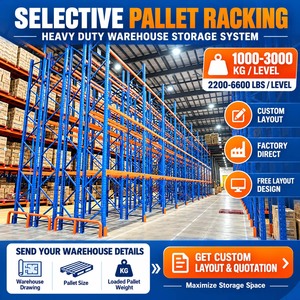
Heavy Duty Adjustable Steel Pallet Racking Warehouse Storage System 1000kg-3000kg Industrial Rack for Logistics Warehouses
View Product Specs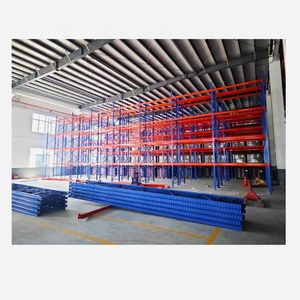
Heavy Duty Warehouse Storage Rack Pallet Racking System Customized Design for Industrial Warehouse
View Product Specs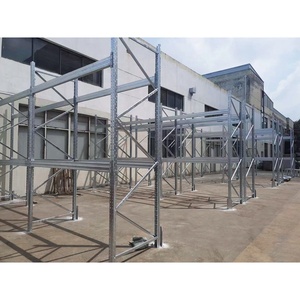
Warehouse Storage Strong Corrosion Resistance Capability Hot Dip Galvanize Pallet Rack Outdoor Storage Rack
View Product Specs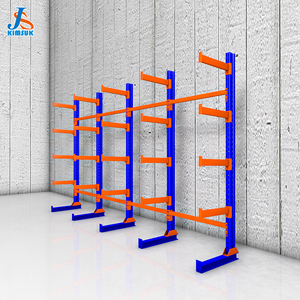
Electric Telescopic Cantilever Rack Heavy Duty Industrial Warehouse Racks Steel Rack Warehouse
View Product Specs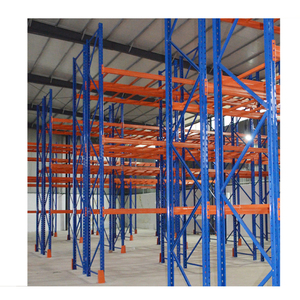
Storage Shelf Warehouse Heavy Duty Industrial Pallet Racking Narrow Aisle Selective Warehouse Rack System
View Product Specs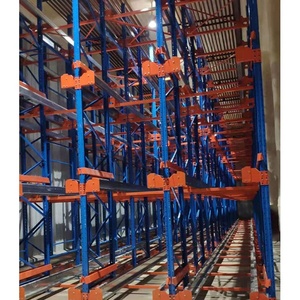
Customized Steel Pallet Rack Stacking Racks & Shelves Warehouse Storage Rack Heavy Duty Shuttle Racking for Industrial
View Product Specs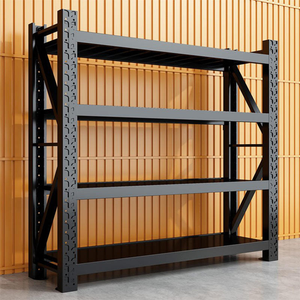
Custom Heavy Duty Selective Pallet Rack Manufacturer Warehouse Storage Pallet Racking System for Cargo Storage
View Product Specs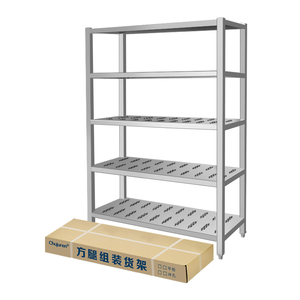
Customizable Stainless Steel Storage Shelving Rack Shelf Factory Square Legs Strong and Durable for Warehouse Kitchen Display
View Product SpecsStructural Integrity & Information Gain in Modern Push-Back Racking Manufacturing
Push-back rack systems represent one of the most cost-effective high-density storage solutions available today. Operating on a Last-In, First-Out (LIFO) inventory control principle, push-back racking allows enterprise warehouses to store pallets from 2 to 6 deep while retaining immediate aisle access to every individual row.
E-E-A-T Manufacturing Insight: Unlike basic selective racking or standard drive-in systems, CE certified push-back racking relies on precision-machined nested carts riding on inclined structural steel rails. As a leading manufacturer, our production engineering incorporates finite element analysis (FEA) to ensure that dynamic impact loads, seismic forces (compliant with seismic zoning standards such as Norma E.030 and RMI guidelines), and cold-room thermal contraction are mathematically compensated for in every structural beam and frame.
Engineering Blueprint: Nested Cart Mechanics vs. Inclined Rail Systems
Evaluating the key structural differences between industrial push-back racking configurations to optimize forklift operational speeds and eliminate pallet binding risk.
Nested Cart Architecture
Utilizes heavy-duty structural steel telescoping carts that sit atop inclined channel tracks. When a forklift pushes the front pallet back, it exposes the lower nested cart for the next pallet. Ideal for preventing hang-ups and handling damaged wood pallets safely.
Low-Profile Inclined Rails
Engineered with a precise 1.5% to 2.0% downward slope toward the aisle face. Precision sealed-bearing steel wheels coated in heavy-duty polyurethane provide smooth flow without requiring motorization, ensuring maintenance-free gravity performance.
Anti-Derailment & Safety Stops
Built-in safety catches, integrated rack end-stops, and anti-lift tabs prevent carts from lifting out of alignment during sudden forklift braking or unbalanced loading operations, achieving maximum compliance with EU EN 15512 safety directives.
| Storage System Type | Aisle Utilization | Pallet Depth Range | Stock Rotation | Forklift Entry Required? | CE Safety Level |
|---|---|---|---|---|---|
| Push-Back (Nested Carts) | High (up to 75%) | 2, 3, 4, 5, 6 Deep | LIFO (Last-In, First-Out) | No (Aisle Loading Only) | Class A (EN 1090) |
| Selective Pallet Racks | Standard (35% - 40%) | 1 Deep (2 Deep Max) | FIFO (First-In, First-Out) | No | Class A (EN 15512) |
| Drive-In Racks | Very High (up to 85%) | 2 to 10+ Deep | LIFO | Yes (High Risk of Impact) | Class B (Requires Guards) |
| Pallet Flow (Gravity Flow) | High (up to 80%) | 2 to 12+ Deep | FIFO | No (Dedicated Entry/Exit) | Class A (Brake Rollers) |
Future Procurement Trends in Industrial Storage Infrastructure
How automated logistics, skyrocketing warehouse real estate costs, and strict ESG compliance are reshaping factory procurement strategies worldwide.
1. Optimization of Cold Chain Density & Energy Costs
With industrial electricity tariffs rising globally, cold storage operators in food, agro-export, and pharmaceuticals are aggressively phasing out wide-aisle selective racking. Every cubic meter of unutilized cold air costs thousands of dollars annually. Procuring 4-deep and 6-deep CE certified push-back racking allows cold facilities to increase pallet density by up to 75% without introducing electrical shuttles or complex robotics that fail at sub-zero temperatures (-30°C).
2. Rigorous Demand for CE & ISO Manufacturing Verification
Global logistics companies and corporate procurement officers are no longer accepting uncertified steel racking. Risk management guidelines require structural calculations under EN 15512 and manufacturing factory approval under CE EN 1090-1 Execution Class EXC2. European and American buyers mandate full steel mill test certificates (MTC Q355B/Q420B structural grade), traceable weld inspection reports, and non-destructive testing (NDT) before factory dispatch.
3. Hybrid Integration with AGVs and Automated Reach Trucks
As modern warehouses transition to Automated Guided Vehicles (AGVs) and Autonomous Mobile Robots (AMRs), push-back racking factories must manufacture nested carts with tighter mechanical tolerances. Future procurement standards mandate magnetic position sensors, anti-bounce damping devices, and high-visibility optical guides on cart front-faces to enable seamless robotic pallet placement and retrieval.
4. Sustainable High-Tensile Steel & Eco-Coating Systems
Environmental regulations are pushing factories away from high-VOC solvent paints toward ultra-durable, heavy-duty thermosetting epoxy powder coatings. Additionally, hot-dip galvanizing (compliant with ISO 1461) is rapidly becoming the benchmark for coastal and high-humidity facilities (e.g., Callao, Lurín, Hamburg, Singapore) to eliminate oxidation and structural fatigue over a 20+ year lifecycle.
Technological Innovations in Push-Back Rack Engineering
Discover how advanced metallurgy, modular cart frames, and smart safety devices are setting new performance thresholds for industrial manufacturers.
Magnetic Velocity Dampers
When heavy pallets (1,500 kg) roll forward under gravity during picking, controlled velocity is imperative. Next-generation push-back systems incorporate non-contact eddy current magnetic brakes within the incline rails to limit descent speeds to a ultra-safe 0.2 m/s regardless of pallet weight variance.
Cold-Rolled Modular Upright Profiles
Transitioning from standard open-C profiles to complex multi-rib cold-rolled steel columns (such as 11-fold and 13-fold profile geometries). These high-moment-of-inertia designs dramatically increase resistance to lateral sway, torsional bending, and accidental forklift collisions.
IoT Load-Cell Strain Monitoring
Smart factory integration now permits embedded strain gauge sensors on main support beams and cart rails. Real-time telemetry alerts warehouse supervisors if an operator inadvertently double-stacks or overloads a cart lane beyond its CE certified tonnage capacity.
Why Direct-Factory Sourcing Gives Procurement Officers a Decisive Advantage
Reference manufacturing capabilities derived from our certified production lines, proprietary testing rigs, and full end-to-end engineering execution.
Full Turnkey Engineering: Site Survey to CAD Layout
We do not sell off-the-shelf racking components. Every project begins with a precise site assessment—evaluating floor slab compression strength (f'c concrete ratings), anchor bolt shear capacity, ceiling clear heights, sprinkler clearances, and forklift turning radiuses. Our senior structural engineers deliver complete 3D CAD layouts and finite element calculations prior to manufacturing authorization.
Seismic Rating Compliance (Norma E.030 / RMI Standards)
For installations located in active seismic zones (such as coastal South America, Pacific Rim regions, or Mediterranean fault lines), standard gravity racking designs are prone to catastrophic collapse. Our factory engineers calculate dynamic base shear, frame ductility ratios, and top-beam acceleration response under local seismic codes (e.g., Norma Técnica E.030), fitting custom baseplates and high-tensile wedge anchors.
Municipal Permit & Compliance Documentation Support
Navigating local industrial safety audits, municipal building approvals, or technical safety certificates (such as Certificado ITSE in Peru or OSHA/ANSI standard audits in North America) can delay warehouse commissioning. We furnish comprehensive documentation packages: certified load capacity signage, stamped structural drawings, weld inspection reports, and maintenance check schedules.
Corrosion-Resistant Surface Treatment Engineering
For humid coastal logistics hubs (e.g., Callao, Lurín, Panama, Houston) or food-grade washdown rooms, standard liquid paint degrades rapidly. Our factory offers dual-layer electrostatic thermocuring epoxy powder coating (70-90 microns) as standard, as well as full Hot-Dip Galvanizing (HDG) conforming to ISO 1461 for maximum atmospheric corrosion resistance.
Frequently Asked Questions for CE Certified Push-Back Racking
Critical technical and purchasing answers designed for logistics managers, structural auditors, and industrial buyers.
What specific standards govern CE certification for push-back rack systems?
CE Certification for industrial racking requires strict compliance with European structural design standard EN 15512 (Steel static storage systems - Adjustable pallet racking systems - Principles for structural design) and manufacturing execution standard EN 1090-1 (Execution of steel structures). Factory Production Control (FPC) audits, raw material traceability, certified welder qualifications (ISO 9606-1), and CE mark labeling must all be maintained by the factory manufacturer.
What is the maximum depth and weight capacity available for push-back cart systems?
Our CE certified push-back racking systems are manufactured for configurations ranging from 2-deep, 3-deep, 4-deep, 5-deep, up to 6-deep pallets per lane. Standard cart weight capacities range from 500 kg to 1,500 kg per pallet position. Custom heavy-duty designs can be engineered for specialized industrial loads up to 2,000 kg per cart with reinforced structural steel channels.
How does push-back racking compare to drive-in racking in terms of selectivity and safety?
Push-back racking delivers significantly higher selectivity and operational safety than drive-in racking. In drive-in systems, forklifts must physically enter the steel structure, creating high risks of rack frame collisions and slow handling times. In push-back systems, forklifts remain safely in the main aisle; every lane operates independently, allowing distinct SKUs per level and row while drastically reducing rack damage and operator hazards.
What concrete floor slab specifications are required for high-density push-back installation?
Due to the concentrated point loads transmitted through upright baseplates, concrete slabs should generally feature a minimum thickness of 150 mm to 200 mm with a compressive strength rating of f'c ≥ 25 to 30 MPa (3,600 - 4,350 PSI). High-bay systems or seismic installations may require specialized heavy-duty chemical anchors (M12 to M16) into non-cracked structural concrete floor slabs evaluated under ETAG 001 anchor guidelines.
Can push-back racking operate effectively in sub-zero cold storage warehouses?
Yes. Push-back racking is ideal for cold storage because it operates purely on mechanical gravity without sensitive electronic motors or batteries that drain in extreme cold. For sub-zero environments (down to -30°C), our factory utilizes low-temperature impact-resistant steel alloys, special low-viscosity synthetic grease for cart wheel bearings, and hot-dip galvanized finishes to prevent frost rust.
How are standard pallet variations (wood, plastic, steel) handled in push-back carts?
Because the pallets rest securely on full structural steel nested cart frames rather than directly on narrow incline rollers, push-back racking accommodates broken wood runners, plastic pallets, and varying pallet footprint dimensions (e.g., 1200x1000mm Euro/UK pallets or 48x40" GMA pallets) without the risk of pallets getting stuck or falling through the system.
What routine maintenance is required for CE certified push-back nested cart systems?
Push-back systems require minimal maintenance due to their passive mechanical gravity design. Recommended maintenance includes monthly visual inspections of cart stop bumpers, semi-annual checking of frame column anchor torque values, and verifying that the incline tracks remain free of debris, plastic wrap, or wood splinters. Expert annual structural safety audits under EN 15635 are recommended.
What is the average factory production lead time and international shipping timeline?
Standard factory manufacturing lead time for custom engineered push-back rack systems is typically 3 to 5 weeks following final CAD approval and engineering sign-off. Global sea freight shipping schedules depend on destination ports (e.g., 2 to 3 weeks for Asian regional ports, 4 to 6 weeks for European or Latin American ports such as Callao, Rotterdam, or Hamburg). Factory-direct container consolidation ensures minimal freight costs.
Request a Customized CAD Layout & Factory Direct Quote
Consult directly with our structural engineering team. Send us your warehouse floor plan dimensions, pallet specifications, and load capacities for an obligation-free technical proposal.
Send an Inquiry