Factory-Direct Heavy Duty Storage & Racking Systems
Precision-engineered industrial pallet racks compliant with AS4084-2023, FEM 10.2.02, RMI, and CE safety standards for global logistics hubs.

Why Source Pallet Racking Systems from Top Chinese Manufacturers
Combining structural integrity, advanced automation compatibility, and cost-effective direct-factory scale for modern supply chain logistics.
Seismic Engineering & Structural Calculations
Our heavy-duty pallet racking systems undergo rigorous Finite Element Analysis (FEA) and dynamic seismic testing. Engineered to withstand localized seismic zones under international standards (such as US RMI, European FEM 10.2.02, and Peruvian Norma Técnica E.030), ensuring upright frames and base plates hold firm under critical dynamic stress.
Turnkey CAD Layout & Custom OEM/ODM Design
Every facility demands tailored spatial planning. Our structural engineering teams deliver comprehensive 2D CAD floorplans and 3D BIM models before production starts. We precisely optimize aisle widths based on your specific material handling equipment—whether counterbalanced forklifts, reach trucks, VNA, or AGVs.
Advanced Surface Finishing & Anti-Corrosion
Utilizing high-grade thermosetting powder coatings and heavy hot-dip galvanizing, our structural components withstand harsh industrial environments, cold storage condensation down to -30°C, and humid coastal salt air (Callao, Lurín, or Middle Eastern port hubs). Surface durability guarantees extended operational lifespans exceeding 15+ years.
Technical Whitepaper: Sourcing Heavy-Duty Pallet Rack Systems from China Wholesalers
As modern warehouse supply chains transition toward maximum spatial utilization and automated throughput, choosing the right pallet racking system manufacturer becomes a pivotal capital expenditure decision. China’s manufacturing ecosystem for warehouse rack systems has evolved from basic cold-formed steel fabrication into state-of-the-art structural engineering hubs capable of competing with premier European and North American brand standards.
When procurement directors evaluate bulk racking supplies from leading Chinese factories, the focus extends far beyond basic price-per-ton metrics. Today’s industrial procurement strategy centers around steel metallurgy, load-bearing safety margins, compliance certifications, and long-term modular flexibility.
1. Structural Steel Metallurgy: Q235B vs. Q355B Grade Alloys
The backbone of any heavy-duty storage racking system is the chemical composition and yield strength of its structural steel. Premier Chinese racking factories source raw coils directly from top-tier state-owned mills like Baosteel and Shougang Group. Steel structural performance relies heavily on two main grades:
- Q235B Cold-Rolled Carbon Steel: Equivalent to ASTM A36 or European S235JR. Possessing a yield strength ($\sigma_s$) of 235 MPa, this steel grade is ideal for standard pallet racking beams, boltless shelf decking, light-to-medium cantilever arms, and non-seismic warehouse vertical frames.
- Q355B High-Strength Structural Alloy: Equivalent to ASTM A572 Grade 50 or European S355. Offering a minimum yield strength of 355 MPa, Q355B steel allows for thinner wall profiles while dramatically increasing column buckling resistance and beam load capacity up to 4,000 kg per beam level. It is essential for high-bay Automated Storage and Retrieval Systems (AS/RS), Radio Shuttle racks, and heavy seismic zone installations.
2. Advanced Production Technology & Cold Roll-Forming Precision
High-capacity Chinese storage rack manufacturers utilize multi-stage continuous cold roll-forming lines with online automatic punching. Upright profiles—ranging from 80mm to 140mm face widths with 1.8mm to 3.0mm wall thickness—feature precise teardrop or diamond hole pitch patterns (typically 50mm, 75mm, or 76.2mm / 3-inch pitch) to ensure absolute alignment across 12-meter-plus vertical runs.
| Racking System Type | Typical Load Capacity per Level | Max Storage Density | Pallet Selectivity | Best Application Environment |
|---|---|---|---|---|
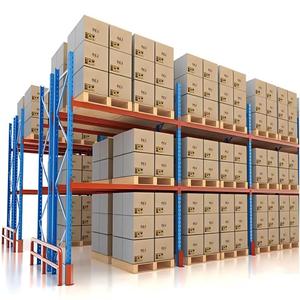
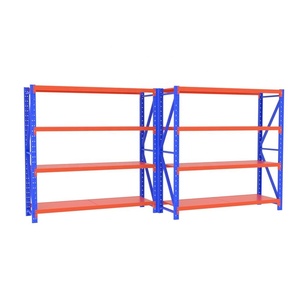
| Selective Pallet Rack | 1,000 kg – 4,000 kg | Medium (40-50%) | 100% Direct Access | General Distribution, E-Commerce, Multi-SKU Hubs |
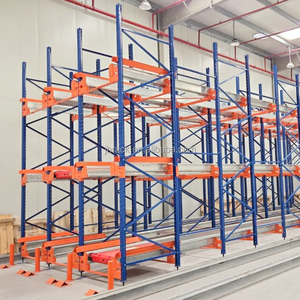
| Automated Radio Shuttle | 500 kg – 1,500 kg / pallet | Very High (80-90%) | LIFO / FIFO Dynamic | Cold Storage, Food & Beverage, Agro-Export Pools |
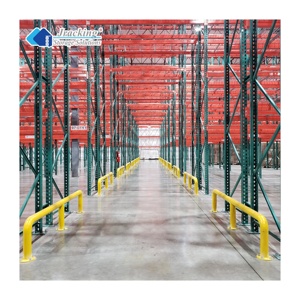
| Heavy Duty Teardrop (US) | 1,500 kg – 3,500 kg | Medium-High | 100% Direct Access | North American Standard Warehouses & Logistics |
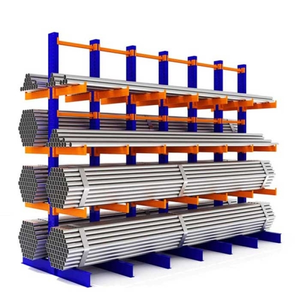
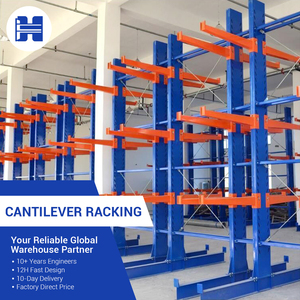
| Heavy Duty Cantilever Rack | 500 kg – 5,000 kg per arm | High for Long Goods | 100% Arm Clearance | Steel Pipes, Lumber, Aluminum Extrusions, Rebar |
| Drive-In Racking | 1,000 kg – 1,500 kg / pallet | High (65-75%) | Strict LIFO | Uniform Batch Goods, Seasonal Harvest Storage |
Future Global Procurement Trends in Industrial Pallet Rack Systems
Navigating the global logistics landscape through 2025 and beyond requires logistics directors and warehouse operators to align their infrastructure procurement with key macro industry trends. Sourcing industrial racking systems from top Chinese factories involves preparing for several technological shifts:
1. Deep Integration with Autonomous Mobile Robots (AMR) & AGVs
Traditional forklift-driven pallet rack layouts are rapidly integrating with Autonomous Mobile Robots (AMR), Automated Guided Vehicles (AGVs), and semi-automated pallet shuttles. Modern Chinese manufacturers now engineer rack systems with enhanced tolerances—reducing allowable column deflection down to L/400 and incorporating specialized guide rails, optical sensor clear zones, and heavy-duty floor base plates designed for high-frequency robotic docking.
2. High-Density Radio Shuttle & AS/RS Dominance
With industrial land costs rising globally, modern logistics facilities are prioritizing vertical space over horizontal footprint expansion. High-density Radio Shuttle racking and self-standing rack-clad building architectures (where the rack frame forms the structural support for wall and roof cladding) are displacing traditional drive-in systems. This shift yields a 200% increase in storage capacity within the same square meter footprint.
3. Sustainability, Green Steel, and Low-VOC Coatings
Global ESG initiatives are pushing B2B buyers to audit the carbon footprint of their supply chain hardware. Leading Chinese rack factories are adopting eco-friendly closed-loop pretreatment lines, heavy-metal-free zirconium phosphatizing, and solvent-free epoxy-polyester powder coating systems that produce zero VOC emissions while offering superior salt-spray corrosion resistance (up to 500 hours neutral salt spray testing under ASTM B117).
Next-Generation Storage Product Development & Technical Innovations
Innovation in structural racking focuses on three core pillars: dynamic safety enhancement, modular standardization, and intelligent monitoring integration.
A. Modular Standard Interoperability (Teardrop & AU Box Beams)
Modern Chinese exporters provide dual-compatibility systems engineered to seamlessly integrate into existing international rack setups. Teardrop configurations compatible with major US brands, along with Australian AS4084-standard 50mm pitch hook connectors, enable global operations to expand existing installations without custom engineering overheads or total teardowns.
B. Structural Health Monitoring & Smart Sensor Ready Racks
Leading-edge industrial storage systems now incorporate sensor-ready channels along structural columns. Wireless impact sensors detect forklift strikes instantly, notifying facility managers of localized frame damage before catastrophic structural collapse occurs. In high-seismic zones, integrated strain gauges measure load distribution changes across cross-bracing members in real time.
C. High-Durability Decking Innovations
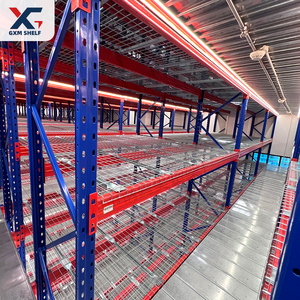
While traditional timber decks pose fire hazards and block sprinkler water flow, modern industrial storage relies on drop-in Wire Mesh Decking featuring under-welded channel supports, as well as galvanized steel panels. Wire decking ensures compliance with NFPA fire safety standards by allowing up to 70% open water penetration, improving warehouse insurance ratings worldwide.
Frequently Asked Questions (B2B Procurement FAQ)
Essential insights for logistics engineers, procurement buyers, and warehouse managers sourcing pallet rack systems from China factories.
What standard international certifications should I request from a Chinese pallet racking factory?
For global compliance, ensure the manufacturer holds ISO 9001 (Quality Management), ISO 14001 (Environmental Management), and CE certification (EN 15512 structural steel compliance for Europe). For North America, verify adherence to RMI (Rack Manufacturers Institute) specification ANSI MH16.1. For Australia and Oceania, ensure engineering compliance with AS4084-2023 steel storage racking standards. Certified factories supply mill test certificates (MTC) proving Q235B or Q355B steel chemical and mechanical properties with every shipment.
How do I calculate beam length and upright frame depth for standard pallets?
For standard 1000mm x 1200mm (ISO/Euro/GMA) pallets, frame depth is typically designed 150mm shallower than pallet length (e.g., a 1050mm frame depth for a 1200mm deep pallet), leaving a safe 75mm overhang on both front and rear faces. Beam length depends on pallet orientation and clearance. A standard 2-pallet storage level carrying 1000mm wide faces requires a 2300mm to 2700mm clear beam span to ensure 75mm to 100mm side clearances between uprights and adjacent pallets, adhering to safety clearance codes.
What is the difference between electrostatic powder coating and hot-dip galvanizing for warehouse racks?
Powder coating applies a thermosetting polymer layer (60-80 microns thick) ideal for indoor ambient climate-controlled facilities, offering smooth color coding, wear resistance, and cost efficiency. Hot-dip galvanizing (HDG) immerses steel parts in molten zinc at 450°C, creating a thick metallurgical bond (65+ microns) inside and outside hollow profiles. HDG is essential for cold storage freezers (-30°C), wash-down food processing units, outdoor open-air storage yards, and highly corrosive coastal shipping port environments.
How are heavy pallet racking orders packed to prevent ocean freight shipping damage?
Professional Chinese racking exporters pack upright frames, beams, and shelf panels using heavy-duty steel strapping, wood-skid bunks, corner cardboard protectors, and waterproof plastic stretch wrap. Beams are nested back-to-back with protective foam separators to prevent paint abrasion. Baseplates, safety pins, row spacers, and floor expansion anchor bolts are packed in reinforced wooden crates or heavy corrugated cartons, optimizing container space (typically 40ft High Cube containers loading up to 26 metric tons).
What floor slab specifications are needed for heavy-duty industrial pallet racking?
Pallet racking anchor bolts transfer significant point-load forces to the concrete slab. Standard selective pallet racking requires a minimum concrete slab thickness of 150mm to 200mm with a compressive strength of at least C20/25 or 3,000 PSI, reinforced with steel mesh. For high-bay AS/RS systems or heavy shuttle racking exceeding 8 meters in height, slab thickness often requires 250mm to 300mm of C30/37 (4,000 PSI) reinforced concrete, meeting super-flat floor classification (FF/FL numbers under ASTM E1155) to prevent forklift tipping and frame distortion.
Accelerate Your Warehouse Capacity with Enterprise Engineering
Upload your warehouse DWG floorplan or pallet specifications today. Our senior structural engineers will return a complimentary 2D/3D CAD layout design and direct factory-price quotation within 24 hours.