High-Performance Storage Racking & Shelving Systems
Explore our flagship industrial racking product range manufactured with precision cold-rolled profiling, customizable beam-column connections, and durable powder-coated finishes.
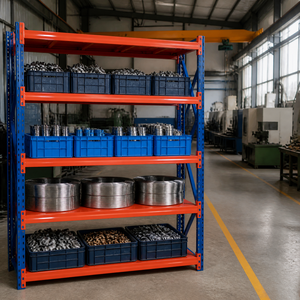
Custom Adjustable Anti-Rust Storage Metal Stacking Racks Pallet Racking System Steel Shelving VNA Racking Narrow Aisle Rack
- High-Density VNA Configuration
- Up to 15m Vertical Stacking
- Anti-Corrosion Surface Finish
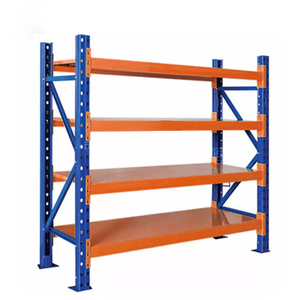
Gravity Flow Adjustable Steel 5-Layer Blue Warehouse Storage Racks with Easy Assembly Beam Shelving for Pallet Goods
- True FIFO Inventory Flow
- Heavy-Duty Gravity Rollers
- Tool-Free Beam Adjustment
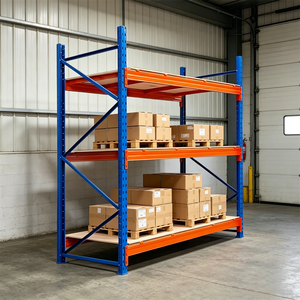
Powder Coated Heavy Duty Rack Industrial Warehouse Storage Pallet Racking Adjustable Industrial Shelves
- Electrostatically Coated Finish
- Load Ratings to 4,500kg/Level
- Interlocking Safety Pins
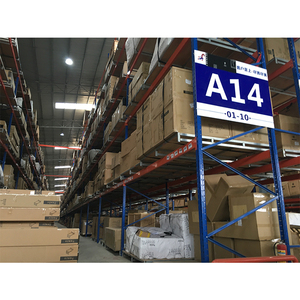
Industrial Storage Rack Heavy Duty Steel Pallet Rack System for Warehouse Organization
- Selective 100% Access Access
- Cold-Rolled Frame Profile
- Custom Bay Heights & Widths
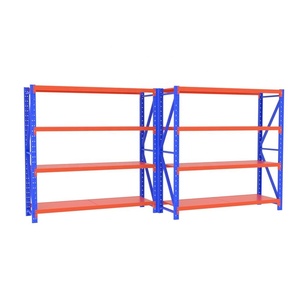
High Quality 500kg Steel Storage Racks Adjustable Pallet Racking Heavy Duty Warehouse Shelf System Stacking Racks
- Medium/Heavy Density Load
- Modular Boltless Assembly
- Integrated Base Anchoring
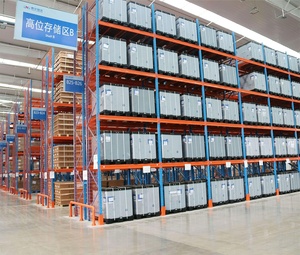
China Manufacturer Adjustable Storage Shelf Racking Warehouse Storage Steel Selective Pallet Rack
- Direct OEM Factory Pricing
- Custom Pitch Steps (50/75mm)
- Seismic-Rated Frame Design
Best Selling Heavy Duty Warehouse Rack Professional Metal Storage Rack for Large Scale Industrial Materials Handling
- Engineered for Heavy Cargo
- Impact-Resistant Column Guards
- Multi-Tier Mezzanine Compatible
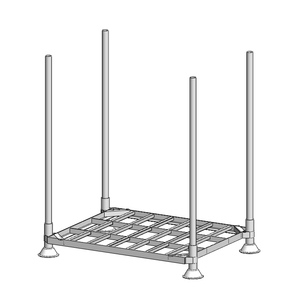
Warehouse Equipment Vertical Stacking Manuracks Stackable Steel Post Pallet Racks for Fabric Rolls
- Modular Portable Manurack
- Ideal for Textile & Roll Goods
- Space-Saving Stackability
Structural Metallurgy, Mechanics & Safety Load Dynamics in Modern Industrial Racking
Selecting tier-one rack storage shelf manufacturers requires evaluating cold-formed steel mechanics, dynamic flexural load capacities, and precise seismic compliance standards under international codes.
Q355B Steel Metallurgy vs Q235B Standard
High-tier Chinese rack manufacturers leverage Q355B (equivalent to S355 / ASTM A572 Grade 50) micro-alloyed structural steel over commodity Q235B. Q355B delivers a yield strength of ≥355 MPa, providing a 51% increase in load-bearing capability per kilogram of steel. This structural density allows thinner wall profiles without compromising safety margins, significantly reducing structural dead weight and global container freight costs.
Beam-to-Column Moment Connection Mechanics
Racking stability hinges on the rotational stiffness of beam end connectors. Leading manufacturers employ cold-stamped 4-hook or 5-hook connector brackets welded to roll-formed box beams using automated robotic metal active gas (MAG) welding. This creates a semi-rigid joint configuration evaluated under FEM 10.2.02 standards, resisting plastic hinge deformation during asymmetrical forklift impacts.
Seismic Verification & FEA Simulation
Deploying heavy-duty storage in active seismic zones (such as South America's Pacific Rim or California's fault lines) demands rigorous analysis. Modern engineering design subjects racking profiles to Finite Element Analysis (FEA) and dynamic response spectrum modal analysis under codes like Peruvian Norma Técnica E.030 or US RMI ANSI MH16.1, evaluating base plate anchor shear forces and frame overturning moments.
Structural Safety Factor Standard (1.65 Ratio Baseline)
Under international engineering guidelines (RMI/FEM), industrial steel storage racks must maintain a minimum safety factor of 1.65 relative to the nominal steel yield point. This ensures that even under maximum rated static loads, beam deflection does not exceed L/240 (where L is clear beam length), maintaining safe vertical clearance for forklift tines and automated shuttle insertion.
| Racking System Type | Storage Density (Pallets/m²) | Direct SKU Access | Optimal Rotation Method | Recommended Steel Grade & Coating |
|---|---|---|---|---|
| Selective Pallet Rack | Medium (1.5 - 2.0) | 100% Immediate Access | FIFO / LIFO Flexible | Q235B / Q355B Powder Coated (60-80μm) |
| Very Narrow Aisle (VNA) | High (2.5 - 3.5) | 100% Direct (Guided) | Strict FIFO/SKU Control | Q355B High-Precision Cold-Formed |
| Drive-In / Drive-Through | Very High (3.8 - 4.5) | Low (Block Access) | LIFO (Drive-In) / FIFO (Drive-Thru) | Heavy-Duty Galvanized Top Rails |
| Gravity Pallet Flow | Maximum (4.0 - 5.0) | Medium (Front Face Only) | Automatic Strict FIFO | Q355B Frame + Galvanized Steel Rollers |
| Stackable Post Manuracks | Flexible Bulk Stacking | Moderate (Unit Stack) | LIFO / Batch Seasonal | Hot-Dip Galvanized / Heavy Powder Coat |
Key Drivers Shaping Global Warehousing & Storage Sourcing (2026–2030)
Strategic buyers are moving beyond simple price-per-kilogram metrics. Emerging automation, environmental regulations, and supply chain resilience dictate next-generation racking procurement strategies.
1. AS/RS & Autonomous Shuttle Compatibility
The global shift toward 4-Way Autonomous Pallet Shuttles and Automated Storage and Retrieval Systems (AS/RS) requires rack manufacturing tolerances tighter than standard manual fork-truck installations. Leading Chinese suppliers now utilize continuous automated cold-roll forming lines with laser punch alignment, achieving pitch tolerances within ±0.5mm across 12-meter upright columns.
2. Cold Chain Infrastructure & Anti-Frost Metallurgy
With global cold chain logistics expanding for pharma and agro-exports, storage racking must endure sub-zero temperatures (down to -30°C) without suffering low-temperature steel embrittlement. Sourcing trends prioritize modified low-temperature impact steel alloys and specialized epoxy-polyester coatings that resist condensation micro-fracturing and rust propagation.
3. Decarbonization & Green Steel Sourcing
Global logistics corporations are enforcing Scope 3 carbon emission caps. Tier-one Chinese manufacturers are adopting carbon-neutral electric arc furnace (EAF) recycled steel billet sourcing, backed by Environmental Product Declarations (EPD), enabling international buyers to meet ESG and LEED certification requirements for new fulfillment hubs.
Technological Advancements in Storage Rack Manufacturing
Modern industrial rack design is transitioning from static steel structures into intelligent, integrated logistics assets.
IoT Structural Stress & Deflection Monitoring
Smart rack systems are integrating IoT strain gauges and wireless displacement sensors directly into critical upright frames and beam nodes. These sensors stream real-time data on load concentration, frame deflection, and fork-truck impact telemetry directly to the facility’s Warehouse Management System (WMS), preventing catastrophic structural collapse before it occurs.
High-Durability Galvanized Surface Coatings
While standard electrostatic powder coating remains popular for ambient warehouses, humid coastal logistics zones (such as Callao, Lurín, or Southeast Asian ports) are accelerating the demand for Hot-Dip Galvanizing (HDG) under ISO 1461. HDG creates a metallurgically bonded zinc-iron alloy layer (70-100μm thick) providing self-healing barrier protection against saltyGarúa fog and high humidity.
Rack-Supported Building (Clad-Rack) Architecture
To eliminate the capital cost of building traditional concrete warehouse shells, global logistics developers are utilizing Rack-Supported Warehouses. The heavy-duty steel pallet rack structure serves dual functions: supporting inventory loads while simultaneously bearing roof trusses and exterior wall cladding, shortening total facility construction timelines by up to 40%.
Why Partner with Top-Tier Chinese Racking Manufacturers?
China’s advanced industrial manufacturing ecosystem combines massive raw material supply chains, automated precision engineering, and rigorous international certification standards to deliver unmatched buyer value.
100,000+ m² Smart Manufacturing Infrastructure
Our OEM manufacturing plants operate 50+ continuous cold-roll forming lines, high-speed CNC punching centers, and fully automated robotic welding cells. This infrastructure delivers a monthly capacity exceeding 15,000 metric tons of finished steel racking, guaranteeing tight lead times for large-scale enterprise rollouts.
Certified QA & Global Engineering Compliance
All structural designs undergo rigorous testing aligned with ISO 9001 quality management systems, CE certification, European FEM 10.2.02, American RMI (ANSI MH16.1), and Australian AS4084 standards. Every production lot includes mill test certificates (MTC) verifying chemical steel composition and tensile yield strength.
Knock-Down (KD) Logistics & Packaging Optimization
To eliminate shipping inefficiencies, framing components are designed in modular Knock-Down (KD) structures. Utilizing custom heavy-duty steel strapping, protective corner guards, and plastic stretch wrapping, we maximize 40ft High Cube container volumetric filling efficiency by up to 98%, safeguarding products against transit damage.
Frequently Asked Questions by Industrial Procurement Managers
Get authoritative answers to standard engineering, municipal compliance, and global logistics queries when procuring Chinese rack storage shelving systems.
Top-tier Chinese manufacturers utilize finite element structural analysis (FEA) calibrated to localized seismic zones. By factoring in specific soil site coefficients (S1–S4), dynamic ground acceleration (Z-factors), and height-to-depth ratio limitations, engineering teams customize upright column profiles, heavy-duty footplates, expansion anchoring bolt depths, and structural back-bracing to pass strict municipal structural engineering reviews.
For standard 1,000mm x 1,200mm industrial pallets: Upright frame depths are typically engineered at 1,000mm to 1,050mm (allowing a 75mm overhang front and back for secure beam seating). Beam clear lengths for storing two 1,000mm pallet faces require a minimum length of 2,300mm to 2,500mm, ensuring safe side clearance between upright posts and adjacent pallets per OSHA and FEM safety guidelines.
For high-humidity coastal facilities (such as Callao, Lurín, or tropical ports) and cold-chain refrigerated facilities, we recommend Hot-Dip Galvanization (HDG) adhering to ISO 1461 standards. HDG coats steel components in molten zinc, providing non-chipping cathodic protection. For standard dry indoor ambient warehouses, high-grade electrostatic epoxy-polyester powder coating (60–90 micron thickness) offers exceptional scratch resistance and durability.
Yes. OEM project packages include certified CAD warehouse layout drawings, structural steel mill test reports, comprehensive static and dynamic load capacity tables, baseplate anchoring specifications, and official compliance documentation required by municipal safety inspectors and insurance underwriters.
Standard engineering layout finalization and CAD sign-off take approximately 1 to 2 weeks. Precision cold-rolling and automated fabrication require 3 to 4 weeks depending on order volume. Container ocean transit times vary by destination port (e.g., 20–30 days to Pacific South American ports like Callao/Valparaíso; 18–25 days to US West Coast ports).
Industrial racking systems utilize high-precision steel shims placed beneath heavy-duty baseplates to adjust frame plumbness. Upright columns must be leveled to within a 1:500 plumbness tolerance ratio before anchors are torque-tightened into the concrete slab. Detailed floor slab compression ratings (f'c concrete strength) should be provided prior to anchor specification.
Absolutely. Factory engineering teams specialize in full custom OEM/ODM solutions—including heavy-duty cantilever racks for long lumber/steel pipes, vertical fabric roll manuracks, cable reel dispense systems, carton flow beds, and custom multi-tier catwalk mezzanines built around your exact floor plan constraints.
Request a Free CAD Layout & Factory-Direct Engineering Quote
Partner directly with China's top rack storage shelf manufacturer. Send us your warehouse floor plan, load specifications, or project requirements today to receive a comprehensive CAD layout and competitive quotation within 24 hours.