Heavy-Duty Pallet Racking & Industrial Storage Systems
Explore our certified range of pallet racks, long-span shelving, cantilever systems, and structural warehouse storage solutions custom-engineered for maximum space optimization.
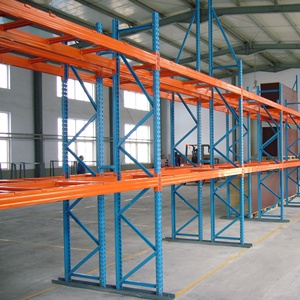 Heavy-Duty
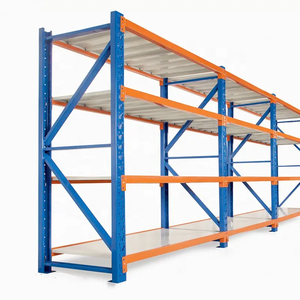 Long-Span
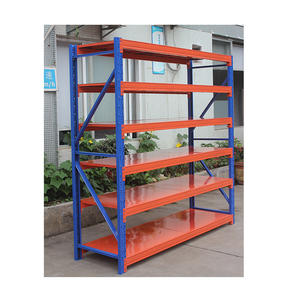 Selective Rack
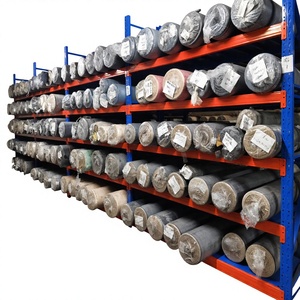 Multi-Level
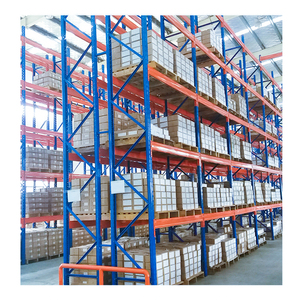 High Load Capacity
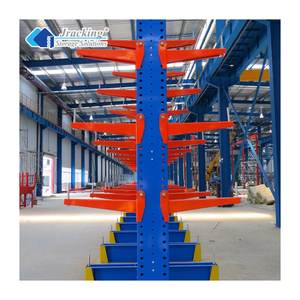 Cantilever
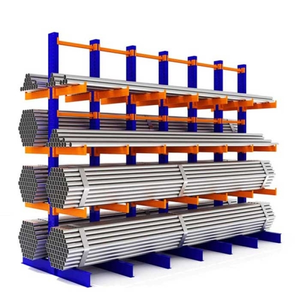 Pipe & Timber
Structural Metallurgy, Material Grades & Manufacturing Engineering
In high-density industrial warehousing, the structural reliability of a selective pallet rack system depends fundamentally on cold-rolled steel quality, cold-forming precision, and load distribution mechanics. As a leading manufacturer and direct Chinese exporter, our pallet rack systems are engineered using high-tensile Q235B and Q355B structural steel grades (equivalent to ASTM A36 and ASTM A572 Grade 50).
Each upright column profile undergoes precision multi-stage cold-roll forming to establish continuous structural rigidity. Frame geometry is optimized via Finite Element Analysis (FEA) to withstand static dead loads, dynamic live forces from material handling equipment (MHE), and lateral seismic shear accelerations.
Seismic Engineering Standard: All rack uprights, baseplate anchoring assemblies, and cross-bracing systems can be calculated and certified in alignment with international seismic provisions, including US RMI (Rack Manufacturers Institute), European FEM 10.2.02, and Peruvian Norma Técnica E.030.
Compliance & Structural Integrity Metrics
Our heavy-duty warehouse racking modules maintain strict structural deflection limits under maximum nominal load conditions (L/200 to L/300 deflection ratio), preventing beam twisting, frame racking, and clip detachment during severe loading cycles.
- Automatic interlocking safety drop-pins (minimum 1500 kg safety factor per connector).
- Thermosetting epoxy electrostatic powder coating (80 to 120 microns standard thickness).
- Hot-dip galvanized (HDG) coating options (ISO 1461 compliant) for coastal & cold storage humidity environments.
Warehouse Pallet Rack Systems Structural Selection Matrix
Selecting the optimal pallet racking configuration requires balancing SKU density, selectivity requirements, fork-truck clearance, and throughput metrics.
| Racking System Type | Space Utilization | Pallet Selectivity | Stock Rotation | Max Load per Level | Ideal Industrial Application |
|---|---|---|---|---|---|
| Selective Pallet Racking | 40% - 50% | 100% Direct Access | FIFO / LIFO | 1,000 kg - 4,500 kg | FMCG, general logistics hubs, high-SKU distribution. |
| Drive-In / Drive-Thru | 75% - 85% | Low (Lane Access) | LIFO (Drive-In) / FIFO | 1,000 kg - 2,000 kg | Cold storage, seasonal agro-exports, bulk beverage stock. |
| Push-Back Cart Racking | 65% - 75% | Medium (2-6 Deep) | LIFO | 1,500 kg per cart | Medium-density cold stores, high-turnover consumer goods. |
| Gravity Pallet Flow | 80% - 90% | Medium High | Strict FIFO | 1,200 kg per roller lane | Perishable foods, pharmaceuticals, date-sensitive inventory. |
| Heavy-Duty Cantilever | 50% - 65% | 100% Unobstructed | Custom Rotation | 800 kg - 3,000 kg/Arm | Steel pipes, aluminum extrusions, timber yards, long rebar. |
| Mezzanine Rack Structure | 100% Floor Gain | High Integrated | Flexible | 300 kg - 1,000 kg/m² | E-commerce fulfillment centers, spare parts picking, archives. |
Automated CAD & FEA Design
Every engineering quote submitted by our export engineering team includes customized 2D CAD floor layouts, 3D structural renderings, and rack loading capacity charts specifying dynamic column load forces.
Direct-Factory Wholesale Economics
Eliminate middle-tier regional markups. Direct containerized export shipments from our automated manufacturing plants in China guarantee maximum price competitiveness and rigorous quality control.
Severe Corrosion Protection
Designed for tough environments—from high-salt coastal ports (e.g., Callao, Hamburg, Santos) to sub-zero cold storage facilities operating at -30°C—using specialized outdoor-grade powders and HDG finishes.
Macro Trends & Future Outlook in Global Racking Procurement (2025–2035)
The global warehouse rack market is undergoing a structural transition driven by automated material handling, green manufacturing mandates, and high land acquisition costs.
1. Integration with ASRS & Autonomous Robotics
Modern pallet storage design is shifting rapidly toward Automated Storage and Retrieval Systems (ASRS), Autonomous Mobile Robots (AMRs), and Pallet Shuttle automation. China manufacturers are designing racking structures with tighter manufacturing tolerances (±0.5mm profile alignment) and integrated guide rails to support seamless robotic navigation.
2. Sustainability & Low-Carbon Steel Production
Global procurement teams prioritize vendors with verifiable carbon footprint reductions. Industrial rack production in China is increasingly using scrap-recycled electric arc furnace (EAF) structural steel, combined with VOC-free powder coatings, satisfying European REACH and international ESG standard audits.
3. Modular High-Bay Vertical Storage Expansion
As commercial real estate prices rise, enterprises are extending vertical warehouse utilization up to 15–30 meters high. High-bay rack-clad buildings (where the racking system supports the roof and wall cladding) represent a growing share of direct wholesale exports for mega logistics projects worldwide.
Export Supply Chain Quality Control
Why Global Logistics Managers Choose Us as Their Preferred Racking Exporter
Navigating global pallet racking procurement demands a partner who combines structural engineering capabilities with transparent international trade execution. We specialize in providing turnkey industrial storage systems designed for fast assembly, safety compliance, and maximum ROI.
Our engineering department collaborates directly with project managers, warehouse architects, and general contractors to ensure every racking bay satisfies local municipal safety codes, load signage regulations, and operational forklift aisle clearance parameters.
- Full traceability from raw steel coils to finished powder-coated components.
- Custom color coding (RAL color spectrum) matching corporate brand identity.
- On-site or remote video installation guidance with certified structural assembly drawings.
Frequently Asked Questions for Pallet Rack Procurement
Technical, commercial, and engineering guidelines for global warehouse racking buyers and importers.
What are the key technical details required to receive an accurate racking quotation? +
To provide a precise engineering quote and CAD layout, our engineering team requires: (1) Warehouse architectural drawings specifying usable clear height, column spacing, floor slab thickness, and door locations; (2) Pallet specifications including dimensions (W x D x H), total gross weight per pallet (including pallet structure), and entry side for forklifts; (3) Forklift operational specs (maximum lift height, turning radius, and minimum aisle width requirements); and (4) Environmental factors such as cold storage temperatures or seismic zoning coefficients.
Which steel grade is utilized, and how is structural load capacity guaranteed? +
We manufacture primarily using high-grade Q235B and Q355B cold-rolled structural steel. Structural load capacities are calculated in strict accordance with RMI (USA) and FEM 10.2.02 (Europe) design codes. Every beam-to-column connector pair undergo destructive load testing, and static deflection ratios are engineered not to exceed L/200 under maximum rated payload. Factory load sign tags are provided for every installed racking section.
How do you protect pallet rack components from corrosion in coastal or cold storage settings? +
For standard dry indoor ambient warehouses, we utilize an automated multi-stage pre-treatment wash (degreasing, phosphating) followed by an thermosetting epoxy powder coating (80–120 microns) baked at 200°C. For severe coastal environments with high saltGarúa air, high humidity, or sub-zero refrigeration/freezer facilities (-30°C), we recommend hot-dip galvanizing (HDG) to ISO 1461, providing zinc protection that prevents structural rusting for decades.
Can your pallet racking systems be customized to meet local seismic codes (e.g., US RMI, Peru Norma E.030)? +
Yes. Our engineering division conducts site-specific seismic calculations based on local peak ground acceleration (PGA) metrics, soil types, and building risk categories. Seismic upgrades include enlarged, heavy-duty structural baseplates, heavier gauge upright profiles, reinforced horizontal and diagonal frame bracing, and heavy-duty expansion wedge anchors engineered to withstand dynamic ground motions.
What is the standard production lead time and ocean container shipping arrangement? +
Standard manufacturing lead time is 15 to 25 business days from formal CAD layout sign-off and deposit receipt. We routinely ship standard 40ft High Cube (40HC) and 20ft (20GP) sea containers directly from major Chinese ocean ports (Nanjing, Shanghai, Ningbo). Components are strategically bundled, wrapped in moisture-resistant film, and strapped onto steel saddles to optimize container space utilization and guarantee damage-free transit.
Do you provide installation documentation and safety inspection support? +
Yes. Every shipment is accompanied by detailed as-built structural assembly drawings, installation step-by-step documentation, bolt torque specifications, and safety operation guidelines. For large-scale projects, we can provide remote video installation support or deploy senior installation supervisors on-site to assist local installation crews, ensuring compliance for municipal safety certificates (such as ITSE, OSHA, or local structural building audits).
Ready to Optimize Your Industrial Storage Layout?
Contact our structural engineering team today for a complimentary CAD warehouse layout, load-capacity calculation, and direct factory wholesale pricing.