Engineering Product Showcase & Wholesale Selection
Explore our heavy-duty industrial racking systems manufactured with Q235B & Q355B cold-rolled steel profiles, validated under FEM 10.2.02, RMI, and ANSI MH16.1 structural standards.
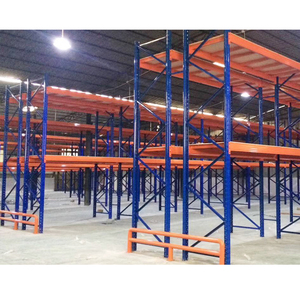
Chinese Manufacture Heavy Duty Metal Pallet Rack Shelving Wood Pallet Racks and Shelves
Hybrid structural configuration combining heavy-duty cold-rolled steel upright frames with timber/wood platform inserts for diverse SKU profiles.
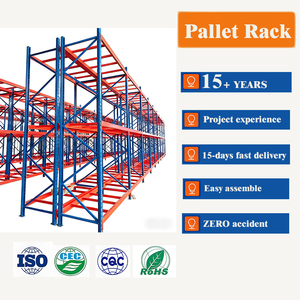
Heavy Duty Industrial Steel Durable Warehouse Pallet Racking System Adjustable Shelving Racks Warehouse Storage Rack
Versatile selective pallet rack engineered with teardrop or omega-profile perforations for 50mm/75mm vertical height adjustment flexibility.
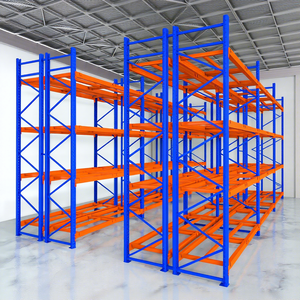
Wholesale Cold Rolled Steel Industrial Pallet Rack Heavy Duty Multi Level Warehouse Stacking Racks and Shelves
Multi-tier high-density storage rack system optimized for order picking distribution centers requiring maximum vertical ceiling utilization.
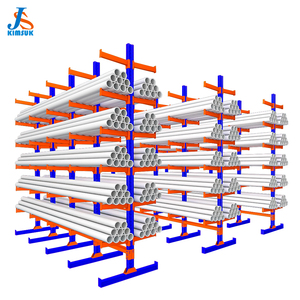
Cantilever Rack Heavy Duty Tyre Rack Racking System Warehouse Heavy Pallet Rack
Specialized cantilever racking designed with unhindered horizontal arms for heavy tires, pipes, timber bundles, and long-span materials.
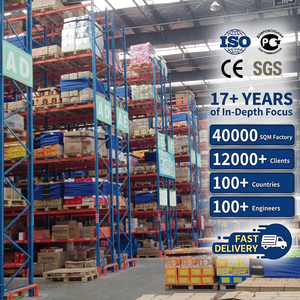
SDFD Heavy Duty Pallet Racking System Steel Durable Adjustable Box Beam Multi-layer Selective Pallet Rack for Warehouse Storage
Continuous weld box-beam selective racking featuring integrated mechanical safety locking pins to prevent accidental beam dislodgement.
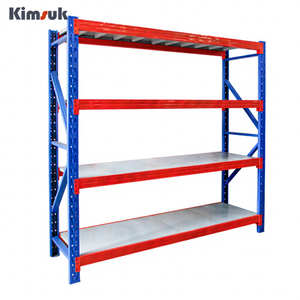
Heavy Duty Warehouse Pallet Rack Metal Steel Garage Warehouse Shelving Shelves Unit Storage Rack
Modular boltless industrial shelving units engineered for quick assembly without specialized tools, ideal for maintenance bays and logistics depots.
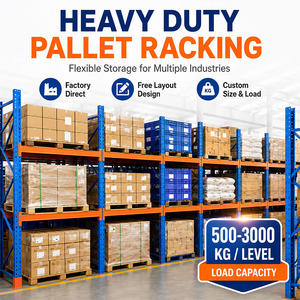
Heavy Duty Steel Warehouse Pallet Rack Storage Racking System for Industrial Warehouse Applications
Heavy-duty industrial storage racks designed for intensive forklift operations, cold storage environments, and high-frequency pallet rotation.
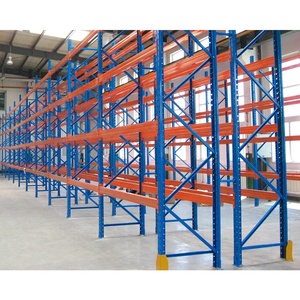
Customized Pallet Rack for Warehouse with Rack Safety
Custom-engineered pallet racking incorporating column upright protectors, frame end guards, wire mesh decking, and back-stop safety nets.
“Sourcing directly from tier-one China wholesale warehouse racking manufacturers allows global logistics operators to cut capital expenditure by up to 35% while maintaining strict compliance with ANSI MH16.1, FEM 10.2.02, and AS4084-2012 structural standards.”
Enterprise Advantages & Manufacturing Expertise
Why international supply chain managers, logistics integrators, and industrial procurement agents choose our OEM/ODM China manufacturing facilities.
Precision Cold-Roll Forming
Our state-of-the-art continuous cold-roll forming lines utilize high-yield strength Q235B and Q355B cold-rolled steel coils. Perforations are punched with CNC precision to guarantee dimensional accuracy down to ±0.5mm across 12-meter upright columns.
Automated Robotic Welding
Beam connectors and structural baseplates are joined using 6-axis ABB robotic MIG welding stations. This guarantees continuous weld penetration, eliminating structural fatigue under dynamic fork-truck loading and heavy impact conditions.
8-Stage Surface Pre-Treatment
To eliminate corrosion in humid coastal warehouses and cold-storage facilities, steel profiles undergo an 8-stage automated pre-treatment line, including acid pickling, zinc phosphating, and thermosetting epoxy powder coating (60–80μm thickness).
Seismic Calculation & Permits
Every engineered project includes comprehensive CAD layout drawings, structural engineering calculations, and load capacity plaques. We assist global clients with municipal safety inspections, ITSE certification support, and insurance audit approvals.
Rigorous QC & Load Testing
Our factory quality control team conducts rigorous batch testing using universal tensile test benches and hydraulic load simulators to verify steel yield point, ultimate tensile strength, beam deflection (L/200 limit), and weld integrity prior to export clearance.
Export Container Consolidation
We maximize 40ft High Cube (40HC) container packing efficiency using customized steel bundling cradles and corrosion-inhibiting VCI film wrapping. This protects pre-painted steel surfaces during ocean transit and lowers freight costs per pallet space.
Industrial Storage System Engineering Comparison
Technical evaluation matrix comparing structural parameters, space utilization efficiency, and inventory rotation characteristics across wholesale warehouse racking architectures.
| Racking Architecture | Storage Density | Pallet Selectivity | Stock Rotation | Average Bay Capacity | Optimal Industry Application |
|---|---|---|---|---|---|
| Selective Pallet Racking | Moderate (40-50%) | 100% Immediate | FIFO / LIFO | 1,000 - 4,500 kg / Level | E-commerce, 3PL Warehouses, FMCG Distribution |
| Drive-In / Drive-Thru Racking | High (70-85%) | Low (20-30%) | LIFO (Drive-In) / FIFO | 1,000 - 1,500 kg / Pallet | Cold Storage, Beverage Facilities, Bulk SKUs |
| Push-Back Racking (2-6 Deep) | High (65-75%) | Moderate (40-50%) | LIFO | 1,000 - 2,000 kg / Cart | Food & Beverage, Cold Chain, Seasonal Goods |
| Gravity Pallet Flow Racking | Ultra High (80-90%) | Moderate (30-40%) | Strict FIFO | 1,000 - 1,500 kg / Lane Position | Pharmaceuticals, Perishable Foods, Dairy Depots |
| Heavy-Duty Cantilever Racking | Moderate (50-60%) | 100% Horizontal | Flexible Access | 500 - 2,500 kg / Arm | Steel Pipe, Lumber Yards, Aluminum Extrusions |
| Automated AS/RS High-Bay | Maximum (85-95%) | 100% Automated | Computer Controlled | Up to 3,000 kg / Location | Smart Logistics Hubs, Automated Automotive Plants |
Future B2B Procurement Trends in Warehouse Racking (2025–2035)
Strategic insights for enterprise procurement teams navigating supply chain evolution, automation integration, and sustainable industrial infrastructure.
1. Automation-Ready Structural Architectures (AS/RS & AMR Integration)
Global warehouse operations are transitioning rapidly from traditional forklift-operated storage to automated solutions. Procurement directors are increasingly specifying racking systems engineered with ultra-tight tolerances (±1.0mm vertical deviation over 15 meters) to accommodate Autonomous Mobile Robots (AMRs), Automated Guided Vehicles (AGVs), and High-Bay AS/RS Crane Systems.
- Integration of top-guide crane rails and rack-supported building structures.
- Embedded laser-reflective positioning targets and QR code guide paths on rack uprights.
- Elimination of floor-bound guide channels in favor of smooth, high-flatness concrete slab interfaces.
2. Low-Carbon "Green Steel" & EPD Environmental Certification
Environmental, Social, and Governance (ESG) mandates are transforming global industrial sourcing. Enterprise buyers in Europe and North America now require Environmental Product Declarations (EPDs) detailing the carbon footprint per ton of fabricated racking steel. Leading China wholesale racking manufacturers are adopting scrap-integrated Electric Arc Furnace (EAF) steel coils and zero-VOC water-soluble or powder coating lines.
- Procurement preference for factories utilizing solar-powered manufacturing lines.
- Compliance with EU Carbon Border Adjustment Mechanism (CBAM) tax declarations.
- Recyclable packaging materials replacing single-use poly-strapping and stretch films.
3. Smart Racking: IoT Load & Structural Health Monitoring
The future of physical storage infrastructure lies in real-time structural health monitoring. Modern industrial racking installations are being retrofitted or manufactured with IoT impact sensors and strain gauges attached to critical upright columns and base plates. These sensors transmit real-time alerts when a fork truck collision occurs or when a beam pair experiences an over-capacity elastic deformation.
- Immediate telemetry alerts sent to warehouse management systems (WMS) upon severe forklift impact.
- Automated load-deflection tracking to prevent long-term structural metal fatigue.
- Predictive maintenance analytics scheduling inspection intervals based on actual stress cycles.
4. Modular Reconfigurable Architectures & Hybrid Storage
Dynamic consumer demand and e-commerce growth require storage space to evolve rapidly. Fixed, single-purpose racking configurations are being replaced by modular, boltless, reconfigurable architectures that allow warehouse managers to convert selective pallet racks into multi-tier order-picking mezzanines or carton-flow systems with minimal downtime.
- Standardized teardrop and omega pitch perforations for multi-system component interlinkage.
- Pre-engineered structural attachment points for mezzanine floor joists and safety catwalks.
- Hybrid shelving designs combining palletized unit-loads on lower levels with hand-pick bins above.
Industry Development & Technological Innovations
A white-paper analysis of metallurgical advancements, surface engineering, and digital twin modeling in heavy-duty racking manufacturing.
High-Yield Strength Cold-Formed Steel Metallurgy
Historically, industrial shelving was built using basic hot-rolled structural steel angles, resulting in excessively heavy structures that increased raw material consumption and shipping costs. Today, advanced China wholesale rack manufacturers leverage high-tensile cold-rolled micro-alloyed steel grades (such as Q355B, Q460C, and High-Yield ST52). Through cold-roll forming, the grain structure of the steel is strain-hardened along profile radius bends, yielding a higher strength-to-weight ratio.
This metallurgical optimization allows upright columns to achieve buckling strength thresholds exceeding 20,000 kg per frame while using thinner wall thicknesses (1.8mm to 2.5mm), drastically reducing material consumption without sacrificing safety factors defined by RMI and FEM specifications.
Duplex Surface Coatings for Aggressive Environments
For specialized industrial applications such as cold-storage rooms operating at -30°C, chemical handling depots, and coastal logistics zones subject to ocean garúa fog, traditional single-layer paint coatings fail prematurely due to micro-cracking and moisture condensation. The latest manufacturing advancement involves Duplex Surface Finishing.
Components undergo continuous hot-dip galvanizing (HDG) to ASTM A123 standards (yielding a zinc coating of 450–600g/m²), followed by an electrostatic application of architectural-grade polyester powder coat. This double barrier provides C4/C5 class corrosion resistance, extending the operational lifespan of the racking framework beyond 25 years in harsh chemical or sub-zero environments.
BIM (Building Information Modeling) & Digital Twin Engineering
Modern warehouse construction requires seamless integration between civil engineering, sprinkler design, electrical routing, and rack placement. Leading manufacturers now deliver 3D BIM models at Level of Development (LOD) 400. Procurement teams receive fully parametric Revit and IFC CAD models that contain accurate structural weight, bolt torque specs, slab point-load calculations, and clearance envelopes for automated fork trucks.
B2B Procurement & Technical FAQ
Essential engineering and sourcing guidance for global procurement managers, logistics integrators, and facility directors.
How do China wholesale manufacturers verify structural integrity and weight load ratings?
What are the structural differences between Q235B and Q355B steel in racking production?
How are racking systems engineered to meet local seismic zone requirements?
What beam profile is best suited for heavy pallet loads: Box Beams vs. Step Beams?
What is the acceptable deflection limit for pallet rack beams under full load?
How do you protect rack uprights from frequent forklift impact damage?
What lead time should be expected for OEM/ODM factory production and shipping?
What documentation is provided to clear municipal safety and building permit inspections?
Ready to Optimize Your Warehouse Capacity?
Partner directly with an industry-leading China wholesale racking manufacturer. Request a complimentary 3D CAD layout design, structural load calculation, and direct factory pricing quote for your project.
Contact Us