OEM Warehouse Racking Systems & Custom Beams
Explore certified structural beam pallet racks, teardrop vertical columns, and high-density storage configurations built to exact client specifications.
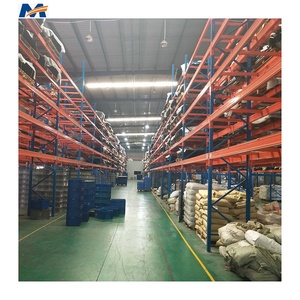
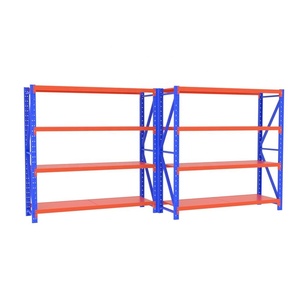
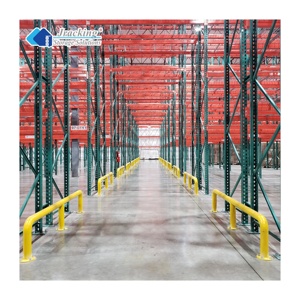
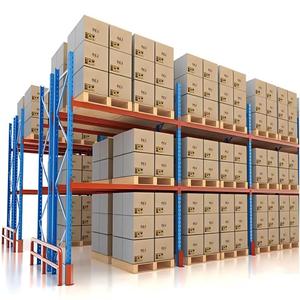
OEM Beam Fabrication Engineering & Structural Integrity
A Comprehensive Technical White-Paper for Industrial Procurement Officers, Logistics Engineers, and Warehouse Operators
Precision Cold-Forming and Connector Claw Mechanics
In modern industrial logistics, the structural beam is the central load-bearing link within selective pallet racking systems. A custom OEM beam pallet racking factory must engineer components that balance tensile strength, torsional resistance, and elastic deformation limits. Standard beam profiles are fabricated from dual C-channel interlocking profiles continuous-welded via automated robotic MIG systems to form a seamless box beam design.
The beam connector—frequently designed as a 3-claw or 4-claw stamped steel plate welded to both ends—engages directly into the teardrop or diamond-punched upright profile. OEM engineering dictates that connector hooks utilize a tapered wedge geometry. As vertical weight increases, the connector seats tighter into the column, reducing deflection and joint rotation under dynamic forklift placement.
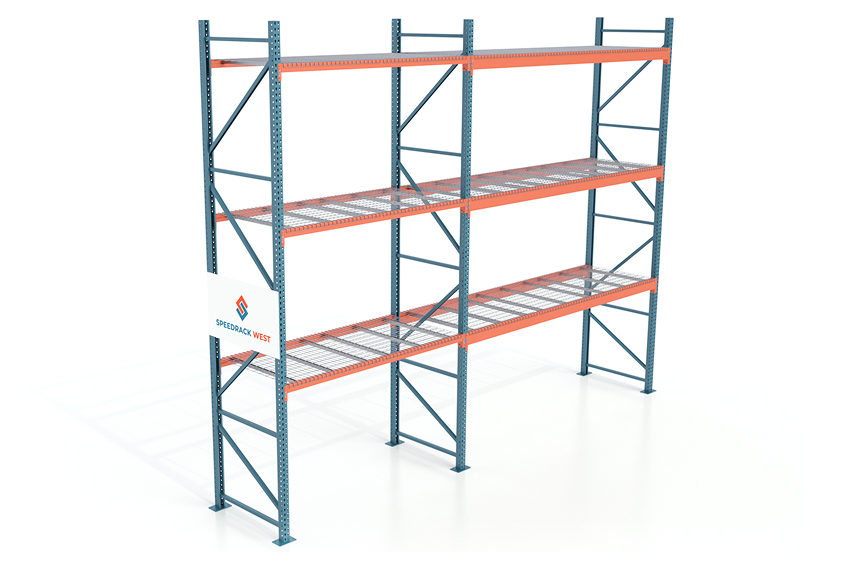
| Beam Profile Type | Material Specification | Typical Section Height | Load Capacity (Per Pair) | Primary Industrial Application |
|---|---|---|---|---|
| Nested Box Beam | Q235B / Q355B Cold Rolled Steel | 80mm – 160mm (Gauges 1.5mm - 2.0mm) | 1,000 kg – 4,500 kg | General Warehousing, FMCG, Cold Storage |
| Step Beam | Structural Carbon Steel (ASTM A1011) | 2.5" – 6.0" Step Height | 800 kg – 3,200 kg | Wire Decking Support, Retail Drop-In Shelving |
| Structural C-Channel Beam | Hot-Rolled Structural Steel (SS400) | 3" – 5" Structural Channels | 3,500 kg – 6,000+ kg | Heavy Machinery Spares, Extreme Impact Zones |
| Tube / Rectangular Beam | High-Yield Structural Steel Profile | 50mm x 100mm to 50mm x 140mm | 1,200 kg – 3,800 kg | Automotive Logistics, Drive-In Racks |
Custom OEM Manufacturing Capabilities
Why Tier-1 Global Distributors Partner Directly with Specialized Beam Racking Factories
Custom Profile & Punching
OEM factories provide tailored beam section heights, gauges (1.2mm to 2.5mm), and custom connector pitch options (50mm, 75mm, 76.2mm / 3-inch teardrop) compatible with legacy racking lines like Speedrack, Interlake, Dexion, and Stow.
Automated Robotic Welding
Continuous MIG welding lines execute dual-side end-plate seams, eliminating manual weld variance. Every joint undergoes non-destructive ultrasonic defect analysis to prevent fatigue cracks under cyclic forklift loading.
Surface Treatment & Coating
Pre-treatment includes a 7-stage automated wash and phosphatizing line followed by thermosetting epoxy-polyester powder coating (60-80 microns thickness) or hot-dip galvanizing (HDG) to withstand coastal garúa fog and sub-zero cold storage condensation.
Future Sourcing & Procurement Trends in Industrial Beam Racks
As global supply chains shift toward automated warehousing, high-density fulfillment centers, and stringent carbon-footprint mandates, purchasing managers must consider how OEM beam racking designs are evolving:
1. Automated Shuttle & AS/RS Compatibility
Modern OEM racking factories are re-tooling beam profiles to integrate inner guide rails for four-way automated pallet shuttles. Beams must deliver strict dimensional stability with tolerances under ±0.5mm across spans up to 3600mm to allow seamless sensor reading during robotic retrieval.
2. High-Strength Ultra-Low Alloy Steels (HSLA)
Migrating from basic Q235 steel to micro-alloyed Q355B and Q460 steel profiles allows factories to reduce beam material thickness while maintaining identical load-bearing capacity. This lowers rack self-weight, decreases ocean freight shipping costs per container, and improves overall seismic behavior during earthquake sway events.
3. Smart Sensor Integration & IoT Monitoring
Next-generation OEM beam designs feature pre-drilled recessed slots for wireless strain-gauge sensors. These micro-sensors feed structural strain and impact damage data directly into Warehouse Management Systems (WMS), warning facility managers of hidden beam overloads or forklift impacts in real time.
4. Eco-Coatings & Circular Carbon Sourcing
With international ESG regulations tightening, OEM factories are adopting zero-VOC powder coatings and closed-loop water recovery systems during chemical etching, allowing corporate buyers to meet scope 3 carbon reduction goals.
Seismic Design & Turnkey Engineering Validation
Installing industrial racking in high-seismic geographic corridors (such as Zone 4 coastal regions under Peru's Norma Técnica E.030 Diseño Sismorresistente or US West Coast IBC/RMI codes) requires extensive finite element analysis (FEA). OEM factories provide certified structural calculations verifying vertical shear, frame tipping moments, base plate anchor pull-out capacity, and beam-to-column rotational stiffness.
- AutoCAD & Revit BIM Integration: Full 3D spatial modelling ensuring beam elevation clearances bypass HVAC ducting and automatic fire sprinkler arrays.
- Drop Safety Pins: Heavy-duty spring-loaded zinc safety clips preventing accidental dislodgement from upward forklift mast errors.
- ITSE & Municipal Approval Documentation: Complete structural calculation packets delivered alongside factory material certificates (MTC) for effortless building permit approvals.
Frequently Asked Procurement Questions
Direct Answers from Our Senior Structural Engineers and Factory Logistics Team