Flagship Industrial OEM Warehouse Racking Systems
Directly engineered and manufactured to international load safety benchmarks. Explore our certified heavy-duty racking systems, customizable by upright depth, beam span, gauge thickness, and corrosion-resistant surface treatments.
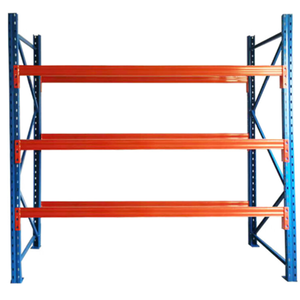
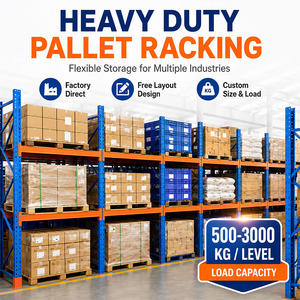
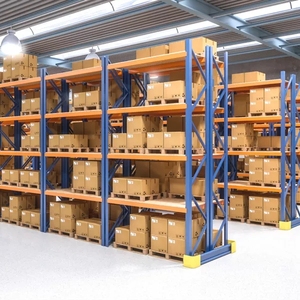
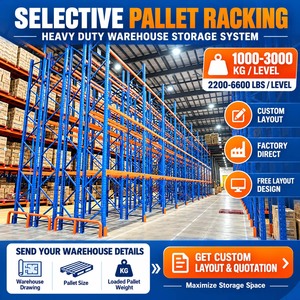
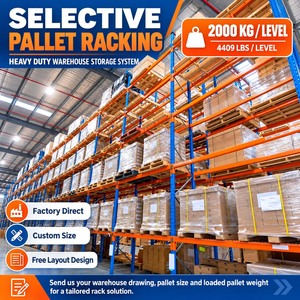
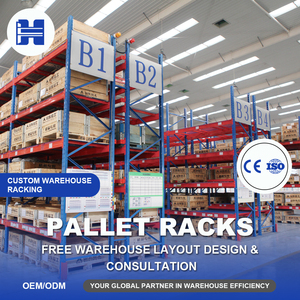
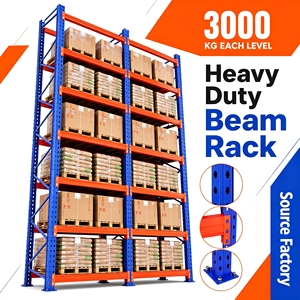
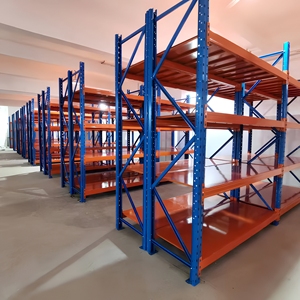
OEM Manufacturing Supremacy: Engineering Heavy-Duty Racking for Global Logistics
As a premier Custom OEM Warehouse Racking System Manufacturer & Supplier, our industrial capabilities transcend generic structural fabrication. We specialize in converting complex logistical requirements into high-density structural steel solutions. From high-bay automated warehouse infrastructures to localized regional distribution centers operating in high-seismic activity zones, our OEM production lines provide tailored cold-rolled steel profiles engineered for absolute dynamic stability.
High-Tensile Certified Steel Grades
We source prime-grade Q235B and Q355B structural steel featuring high yield strength. Cold-roll formed profile geometry enhances stiffness-to-weight ratios, ensuring minimal frame deflection even under full 3,000kg per level load stresses.
Seismic Engineering & FEA Modeling
Every custom system undergoes Finite Element Analysis (FEA) to simulate dynamic horizontal forces, seismic acceleration (Norma E.030, RMI, EN 15512), and structural load redistribution during seismic events.
Advanced Anti-Corrosion Finishing
For humid coastal facilities, cold-chain freezers, or chemical clean rooms, we execute dual-layer electrostatic thermosetting powder coatings and heavy hot-dip galvanizing exceeding ISO 1461 specs.
The Architectural Evolution of Industrial Warehouse Racking
Modern material handling has shifted from standard static storage frame assembly to intelligent, space-optimized structural networks. OEM manufacturing must fulfill rigid multi-variable demands: maximizing clear ceiling height utilization, maintaining ergonomic picking profiles, and seamlessly interfacing with modern material handling equipment (MHE) like VNA reach trucks, AGVs, and Autonomous Mobile Robots (AMRs).
1. Traditional Selective Racking vs. High-Density Systems
Standard selective pallet racks provide 100% immediate pallet access but sacrifice volume density, utilizing roughly 35-40% of overall warehouse floor area. Our high-density OEM solutions—including Drive-In Racking, Push-Back Carts, and Gravity Pallet Flow—increase cubic storage efficiency up to 75-80% while retaining structural integrity through precision-formed upright profiles.
2. Multi-Tier Mezzanine & Heavy-Duty Structural Platforms
To prevent costly warehouse relocation, custom OEM mezzanine platforms capitalize on unused vertical clear height. Utilizing heavy-duty C-section or H-beam main joists integrated directly with rack columns, enterprise facilities can double or triple usable floor square meters for light picking, archival storage, or assembly lines without expanding the building footprint.
| Racking Architecture Type | Storage Volume Efficiency | Pallet Selectivity Ratio | Handling Equipment Compatibility | Primary Industrial Use Case |
|---|---|---|---|---|
| Selective Pallet Racking | 40% - 50% (Standard Density) | 100% Direct Access | Counterbalance, Reach Trucks | FMCG, Multi-SKU Distribution, Logistics Hubs |
| Drive-In / Drive-Thru Racks | 75% - 85% (Very High Density) | Low (LIFO / FIFO Lanes) | Specialized Narrow Counterbalance | Cold Storage, Agro-Export, Bulk Uniform Goods |
| Push-Back Nested Cart System | 65% - 75% (High Density) | Medium (2 to 6 Pallets Deep) | Standard Forklifts | Medium-turnover Food & Beverage Distribution |
| Gravity Pallet Flow Racks | 80% - 85% (Maximum FIFO) | Medium (Lane Dedicated) | Standard Loading / Unloading MHE | Perishables, Pharmaceuticals, Date-coded SKUs |
| Heavy-Duty Cantilever Racking | Variable (Linear Storage) | 100% Linear Access | Side Loaders, Overhead Cranes | Steel Pipe, Lumber, Aluminum Profiles, Rebar |
Future Procurement Trends: Modernizing Global Storage Infrastructure
Procurement directors and supply chain engineers are navigating shifting economic paradigms, sustainability mandates, and aggressive automation adoption. Strategic industrial racking procurement requires evaluating dynamic total cost of ownership (TCO) alongside spatial agility.
Automation & ASRS Interface Compatibility
Future racking systems are engineered to tighter tolerance thresholds (±1.5mm racking frame alignment) to interface smoothly with Automated Storage & Retrieval System (ASRS) cranes, shuttle cars, and AMR floor guidance tracks, minimizing operational downtime.
Optimized Cost-Per-Pallet Position
Procurement teams are moving away from evaluating raw steel price-per-kilogram, pivoting instead toward long-term total cost per pallet position. Factory-direct custom OEM engineering minimizes scrap material and yields lighter yet stronger high-gauge uprights.
Eco-Friendly & Low-VOC Powders
Global environmental regulatory standards mandate sustainable manufacturing. Modern OEM fabrication utilizes zero-emission electrostatic epoxy powder coatings, non-toxic degreasing baths, and recyclable raw structural steel coils.
Why Top Global Enterprises Choose Our OEM Manufacturing Solutions
Building high-capacity warehouse racking requires rigorous quality control from raw material coil sourcing through automated robotic welding to final floor anchoring. Here is how our OEM production ecosystem delivers uncompromised safety and durability:
Factory QA Step 1 Precision Cold-Roll Forming & Punching
Equipped with continuous multi-pass roll-forming mills, our factory produces uniform upright teardrop/75mm-pitch profiles with computer-controlled automatic hole punching. This ensures consistent beam hook engagement, pitch adjustment flexibility, and fast, error-free field installation.
Factory QA Step 2 Robotic Welding & Ultrasonic Flaw Detection
Beam connector plates are welded to box beams using automated multi-axis robotic welding stations. Every weld joint undergoes rigorous visual and ultrasonic non-destructive testing (NDT) to prevent fatigue failures under heavy continuous operational shock.
Factory QA Step 3 Surface Pre-treatment & Coating Integrity
Components pass through an automated 7-stage chemical washing, zinc-phosphating, and ultrasonic degreasing line before powder application. Salt spray testing confirms 500+ hours of corrosion resistance for harsh industrial or high-humidity environments.
Factory QA Step 4 Full Structural Load Testing & Signage
Before mass export, random batch samples undergo destructive and non-destructive compressive column testing and beam deflection testing (L/200 deflection limits). Comprehensive rated capacity plaques are shipped with every system for site compliance.
Procurement & Technical Engineering FAQ
Essential technical guidance for warehouse managers, supply chain consultants, and facility engineering teams specifying customized industrial racking systems.
What steel grades and structural standards are applied in your custom OEM manufacturing?
We primarily utilize high-tensile hot-rolled carbon steel coils, specifically Q235B and Q355B (equivalent to ASTM A36 and ASTM A572 Grade 50). All engineering designs adhere strictly to RMI (Rack Manufacturers Institute), ANSI MH16.1, FEM 10.2.02, European EN 15512, and Australian AS4084-2023 specifications, supported by certified mill test certificates (MTC).
How do you calculate frame loading capacities for seismic zones?
Seismic calculation factors consider site-specific ground acceleration parameters (such as Norma E.030 or local IBC earthquake codes), soil condition classification, building drift limits, and load height distribution. We customize upright frame depths, increase base plate surface thickness, specify heavy-duty wedge/chemical anchors, and integrate structural row spacers and X-bracing accordingly.
What information is required to receive an accurate OEM CAD layout and price quotation?
To formulate an optimized layout, our engineering team requires: 1) Warehouse architectural drawings (floor dimensions, clear height under roof truss, column grid locations, door/sprinkler positions); 2) Pallet dimensions (Length × Width × Height including cargo overhang) and maximum loaded pallet weight; 3) Forklift turning radius, mast lift height, and aisle specification; and 4) Operating environmental temperatures (ambient vs cold storage).
How are beam lengths and frame depths calculated for standard 1.00m x 1.20m pallets?
For standard 1.00m × 1.20m industrial pallets stored with the 1.00m face fronting the aisle: Upright frame depth is typically designed at 1.00m to 1.05m (allowing a 50mm to 75mm front and back pallet overhang for safe placement). Beam clear length for carrying two pallets per bay is standardized at 2.30m to 2.70m, ensuring a mandatory 100mm side clearance between pallets and upright columns.
What anti-corrosion surface options exist for coastal or cold room applications?
For standard dry indoor warehouses, we apply an electrostatic powder coating (60-80 microns). For high-humidity coastal zones (e.g., port areas), wash-down processing facilities, or sub-zero food freezers where condensation occurs, we supply Hot-Dip Galvanized (HDG) steel components (coating thickness 65-85 microns per ISO 1461), offering superior long-term resistance against oxidation and rust propagation.
What is the typical production lead time and minimum order quantity (MOQ) for custom OEM orders?
Our flexible OEM manufacturing structure accommodates full container load (FCL) projects down to customized partial batch orders. Standard fabrication lead time ranges from 15 to 25 days following engineering drawing sign-off, depending on total tonnage, profile stamping requirements, and surface finish specs.
Engineer Your High-Density Storage Network Today
Partner directly with a certified OEM manufacturer. Request a complimentary CAD space simulation, structural engineering evaluation, and factory-direct quote tailored to your operational requirements.