Architecting High-Yield Industrial Storage Infrastructures
In an era defined by global supply chain volatility, rapid e-commerce expansion, and stringent international structural codes, selecting a qualified OEM/ODM pallet storage system manufacturer is a core strategic capital decision. As premier exporters and industrial wholesalers, we engineer custom-built steel racking solutions designed to maximize cube utilization, optimize throughput velocity, and ensure operational longevity under demanding seismic and atmospheric conditions.
Heavy-Duty Warehouse Racking & Custom Stacking Systems
Precision-engineered for global export, our product portfolio encompasses high-density selective racking, specialized textile roll storage, drive-in systems, and extreme anti-corrosion galvanized frameworks.
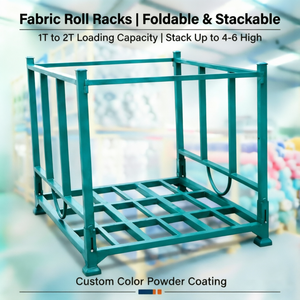
TER Customized Fabric Roll Storage Racking System OEM ODM Powder Coated Stackable Pallet Solution for Textile
View Product Details →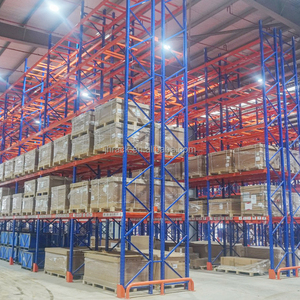
Heavy-Duty Corrosion Protected Pallet Racking Systems for Warehouse and Factory Storage by Jinhui Warehousing Suppliers
View Product Details →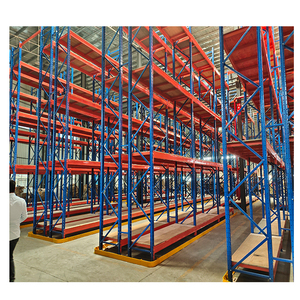
Warehouse Racking System Heavy Duty Industrial Pallet Racks System Storage Pallet Selective Racking
View Product Details →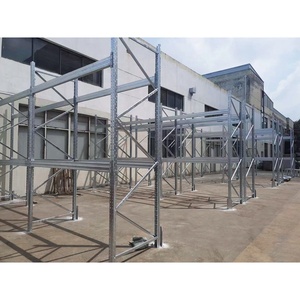
Warehouse Storage Strong Corrosion Resistance Capability Hot Dip Galvanize Pallet Rack Outdoor Storage Rack
View Product Details →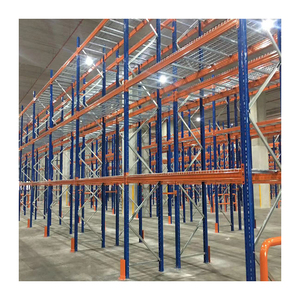
Heavy Duty Industrial Storage Warehouse Rack Selective Pallet Racking Shelves
View Product Details →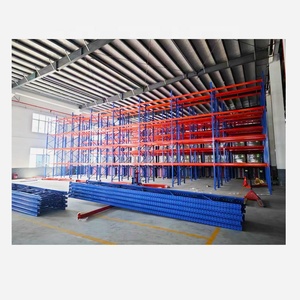
Warehouse Racks Double Deep Adjustable Pallet Storage Rack Beam Shelving Steel Heavy Duty Industrial Shelf Racking
View Product Details →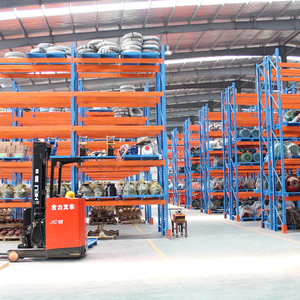
Best Selling Customized Warehouse Drive in Rack Steel Pallet Racking System Heavy Duty Industrial Warehouse Steel Rack
View Product Details →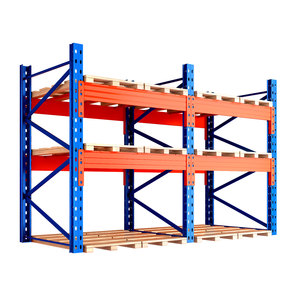
Heavy Duty Industrial Storage Shelves system Metal Rack Stacking Units Warehouse Steel Industrial Pallet Racking
View Product Details →Why Global Wholesalers & EPC Contractors Partner With Us
We bridge high-volume steel fabrication with rigorous structural engineering. Every OEM and ODM racking system is designed from base plate anchor chemistry to top-beam safety locks.
Advanced OEM/ODM Customization
Full CAD engineering and finite element analysis (FEA) tailored to specific unit loads, non-standard footprint pallets (e.g., 1.00x1.20m, 1.20x1.20m, roll goods), clearance limitations, and material handling equipment specs.
Seismic Verification & Structural Codes
Calculations explicitly aligned with international building codes, including RMI (Rack Manufacturers Institute), FEM 10.2.02, EN 15512, and regional seismic provisions such as Peru's Norma Técnica E.030 for earthquake resilience.
Corrosion Mitigation Tech
Proactive surface treatment protocols utilizing thermosetting epoxy-polyester powder coating for indoor fulfillment centers, and ISO 1461 compliant Hot-Dip Galvanizing (HDG) for outdoor yards and humid cold-storage facilities.
Full Municipal & ITSE Documentation
Complete project turnkey documentation for inspectors and safety authorities: stamped load capacity charts, anchor torque verification logs, aisle safety clearances, and structural drawings.
High-Volume Export Logistics
Efficient flat-pack container loading designs, robust export wrapping to prevent transit abrasion, and optimized shipping schedules connecting major global ports directly to regional logistics parks.
Traceable Quality Governance
Certified mill test certificates for cold-rolled steel coils (Q235B, Q355B), ultrasonic weld flaw testing, and rigorous dimensional tolerance control according to ISO 9001 standard operating procedures.
System Architecture Comparison & Load Metrics
Comparing structural performance characteristics across standard OEM/ODM pallet storage configurations.
| Storage System Type | Selectivity (%) | Floor Utilization | Pallet Depth Limit | Ideal SKU Profile | Standard Coating Finish |
|---|---|---|---|---|---|
| Selective Pallet Racks | 100% Direct | 35% - 40% | Single Deep (1 Pallet) | High SKU variety, fast turnover | Epoxy Powder Coated |
| Double-Deep Racking | 50% Immediate | 50% - 60% | Double Deep (2 Pallets) | Medium SKU count, multiple pallets/SKU | Powder Coated / Galvanized |
| Drive-In / Drive-Through | Low (LIFO / FIFO) | 65% - 80% | Up to 10+ Deep | Homogeneous lots, cold storage, beverages | Hot-Dip Galvanized (HDG) / Powder |
| Push-Back Racking | Medium (LIFO) | 55% - 70% | 2 to 6 Deep (Nested Carts) | High-density FMCG, fast batch picking | Heavy-Duty Powder Coated |
| Textile / Fabric Roll Racks | 100% Dedicated | Custom Modular | Stackable 4-6 High | Fabrics, non-wovens, cylindrical goods | Polyester Powder Coated |
Future Procurement Trends in Industrial Storage (2026-2030)
Global supply chain directors are moving beyond basic steel cost considerations toward Total Cost of Ownership (TCO), automation integration readiness, and structural adaptability.
1. High-Density Automation Integration (ASRS & Radio Shuttles)
Traditional manual racking systems are increasingly converted into hybrid environments. Modern procurement specifications demand structural frames pre-engineered with precise manufacturing tolerances (±0.5mm beam deflection criteria) to support autonomous mobile robots (AMRs), automatic guided vehicles (AGVs), and 4-way pallet radio shuttle carriages without structural retrofitting.
2. Green Steel & Decarbonized Manufacturing Traceability
Multinational enterprises require supply chain Scope 3 emission audits. OEM suppliers must provide certified low-carbon steel sourcing, energy-efficient powder curing lines, and eco-friendly hot-dip galvanizing plants that meet stringent international ESG standards without compromising structural tensile yield strength.
3. Dynamic Seismic Resilience & Real-Time Telemetry
In seismic regions, buyers require dynamic finite element modeling (FEM) over static calculations. Advanced facility procurement now includes provisions for load cell sensors and IoT rack deflection monitors attached directly to upright column footings to assess real-time structural health after micro-seismic events.
4. Modular Reconfigurability & Circular Supply Chains
Rigid static storage setups are being replaced by modular teardown-friendly racking. Wholesalers and enterprise logistics operators prioritize teardown boltless beam connectors, adjustable teardown upright profiles in standard 50mm or 75mm pitches, and standardized interchangeability that allow rapid warehouse repurposing.
Next-Generation Product Development & Material Evolution
Continuous advancements in metallurgy, roll-forming precision, and surface chemistry are re-defining warehouse structural integrity.
Ultra-High Yield Micro-Alloyed Steels
By transitioning from traditional mild steel to cold-rolled Q355B and micro-alloyed steel grades, structural profiles achieve higher load capacities with reduced material gauge thickness, cutting shipping weight while increasing column buckling resistance.
Cold-Formed Open & Closed Box Beams
Advanced continuous 16-stage cold roll-forming lines produce seamless interlock step-beams and box beams with robotic continuous welding, ensuring uniform stress distribution under dynamic forklift impact.
Duplex Surface Protection Coatings
For chemical and marine environments, hot-dip galvanizing is combined with an outer electrostatic powder coat. This duplex protection system multiplies anti-corrosion lifespan by 1.5x to 2.5x compared to individual treatments.
Frequently Asked Questions for OEM/ODM Buyers
Essential technical guidance for logistics planners, procurement managers, and wholesale importers.
Accelerate Your Storage Capacity with Engineering Precision
Contact our senior structural engineers today. Receive a comprehensive CAD floor layout, seismic verification assessment, and direct OEM wholesale pricing tailored to your facility parameters.
Send an Inquiry