Featured Industrial Pallet Racking Systems
Certified heavy-duty storage configurations engineered for structural stability, high spatial density, and stringent safety compliance across global distribution hubs.
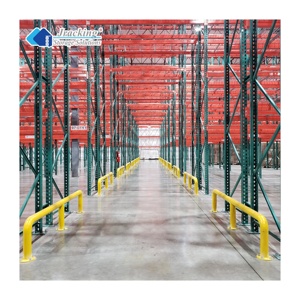
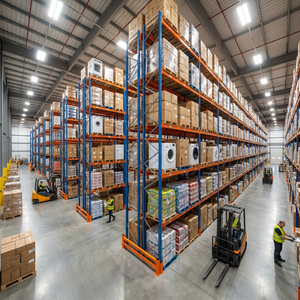
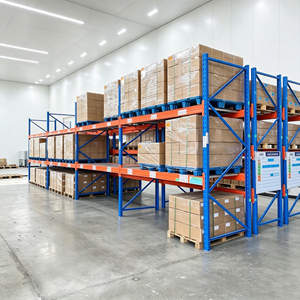
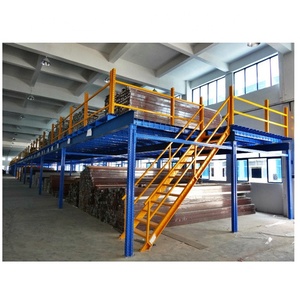
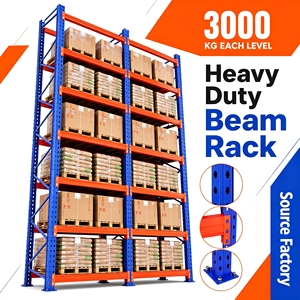
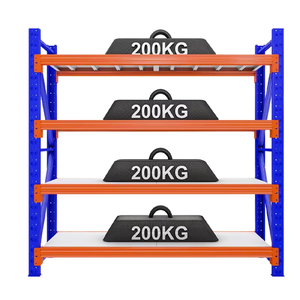
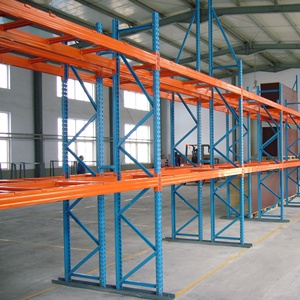
Executive Whitepaper: Evaluating Global Pallet Shelving & Industrial Storage Suppliers
Modern enterprise logistics demands rigorous engineering metrics when selecting industrial pallet shelving suppliers. In an era marked by supply chain consolidation, rapid e-commerce expansion, and strict workplace safety mandates (such as OSHA 1910.176, FEM 10.2.02, and South American seismic standard Norma Técnica E.030 Diseño Sismorresistente), choosing the right manufacturing partner extends far beyond initial price per bay. Procurement directors must audit cold-rolled steel tensile limits, roll-forming tolerances, structural beam displacement factors ($\le L/180$), and anti-corrosion surface chemistry.
Pallet racking systems form the structural backbone of modern fulfillment networks. A system failure—whether driven by frame buckling, under-anchoring on low-psi concrete slabs, or dynamic earthquake amplification—incurs catastrophic operational losses. This whitepaper systematically evaluates the top 10 global pallet shelving factories and suppliers, establishing an engineering framework for evaluating payload capacities, structural integrity, seismic calculation standards, and factory automated fabrication capabilities.
Information Gain Metric: Standard selective teardrop racking engineered from cold-formed Q235B steel requires a minimum yield strength ($\sigma_y$) of 235 MPa, whereas heavy-duty ASRS upright frames utilize high-strength Q355B structural channels featuring 355 MPa yield thresholds to prevent micro-buckling under dynamic 4-way shuttle load shifts.
Steel Metallurgy & Structural Manufacturing Criteria
When conducting supplier site audits, industrial buyers must look past generic product descriptions. The structural capability of a pallet shelving system is governed by three non-negotiable physical variables:
Cold-Rolled Coil Precision
High-precision roll forming ensures uniform wall thickness across profile bends, preventing stress concentrations along column upright profiles and structural beam connectors.
Seismic Base Plate Engineering
Thickened base plates with heavy-duty chemical or mechanical anchors dissipate shear forces during seismic events, preventing vertical anchor uplift in high-risk zones.
Thermosetting Epoxy Powder Coating
Electrostatic powder deposition cured at 200°C creates an impermeable barrier against salt fog, garúa humidity in coastal hubs, and aggressive chemical off-gassing.
Top 10 Global Pallet Shelving Factories & Systems Integration Benchmarks
The global market for heavy-duty industrial shelving is divided into specialized tier-1 steel fabricators, dynamic automation integrators, and regional custom racking specialists. Below is an engineering comparison of the industry’s leading manufacturing partners evaluated for structural resilience, material quality, and compliance capability.
| Rank & Manufacturer | Primary Racking Specialization | Structural Steel Grade | Seismic & Safety Compliance | Global Supply Chain Capability |
|---|---|---|---|---|
| 1. Jracking / Speedrack Systems | Heavy Duty Teardrop, ASRS, Drive-In, Mezzanines | Q235B / Q355B Cold-Rolled Steel | Norma E.030 / RMI / FEM | Global Export (North America, LATAM, APAC) |
| 2. SSI Schaefer | Automated High-Bay Racking & Logistics Systems | High-Grade European S235 / S355 | EN 15512 / FEM 10.2.02 | Worldwide Direct Enterprise Sales |
| 3. Mecalux | Selective Pallet Racks & Movable Shuttle Racks | Structural Steel Profile Formed | ISO 9001 / OSHA Compliant | Europe, Americas Distribution |
| 4. Interroll | Pallet Flow & Dynamic Gravity Flow Racks | Heavy-Duty Roller & Channel Steel | CE / UL / Global Industrial | Worldwide Component Logistics |
| 5. Stow Group | Siloproof High-Density & Drive-In Systems | High Yield S355 Cold Formed | FEM / Eurocode 3 | EMEA & Americas Supply |
| 6. Jungheinrich | Intralogistics ASRS & Heavy Steel Racking | European Structural Alloy Steel | TÜV GS / CE Certified | Global Enterprise Network |
| 7. Frazier Industrial | Structural Steel Channel Pallet Racking | Hot-Rolled Structural C-Channels | RMI / ANSI MH16.1 | North & South America Focus |
| 8. Dexion | Adjustable Selective & Multi-Tier Mezzanines | High-Tensile Cold Rolled Strip | ISO 14001 / AS4084 | APAC & European Footprint |
| 9. Redirack | Welded Structural Frame Pallet Shelving | Heavy Gauge Steel Tubing | CSA A344 / RMI | North American Heavy Industry |
| 10. Speedrack West / Regional Logistics | Seismic-Rated Pallet Racking & Turnkey CAD Layouts | High Yield ASTM A1011 / Q235B | Norma E.030 / ITSE Ready | Peru, LATAM & Regional Hubs |
Future Trends in Industrial Pallet Shelving & Warehouse Infrastructure
As logistics real estate costs escalate globally, logistics managers are forced to maximize vertical cube utilization while driving down operating expenses per pallet position. The standard approach of installing basic selective pallet racks is rapidly transitioning toward intelligent, high-density, automated storage architectures.
1. Integration of 4-Way Intelligent Radio Shuttle Systems
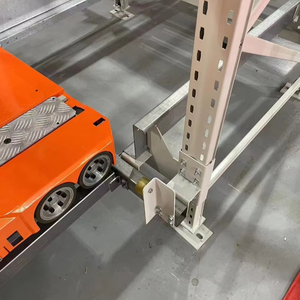
Traditional drive-in racking, while dense, introduces risk through forklift collisions inside narrow racking channels. Future-proof facilities are adopting 4-Way Radio Shuttle ASRS platforms. These autonomous shuttles travel across horizontal racking rails, retrieving pallets in deep lanes without requiring forklift entry. This technology boosts spatial density by up to 80% over conventional selective configurations while drastically reducing structural damage caused by vehicle impact.
2. Seismic-Resistant Engineering & Dynamic Structural Modeling
With major global logistics corridors situated along active seismic belts (such as South America's Pacific rim governed by Norma Técnica E.030), standard rack design is no longer sufficient. Enterprise procurement now demands finite element analysis (FEA) to simulate earthquake ground acceleration ($Z=0.45$). Advanced suppliers are incorporating seismic base isolators, heavy-duty structural row spacers, and oversized footplates to maintain vertical stability during high-magnitude seismic events.
3. Environmental Coating Upgrades for Coastal & Cold Storage Facilities
Atmospheric humidity in coastal regions (such as Callao, Lurín, and Chilca) combined with condensation cycles in cold storage units ($0^\circ\text{C}$ to $-25^\circ\text{C}$) accelerates surface oxidation on mild steel. Procurement trends favor hot-dip galvanized (HDG) upright frames and beam components. For ambient dry storage, specialized epoxy powder coatings with salt spray resistance exceeding 500 hours (ASTM B117) are establishing new quality baseline requirements.
IoT Structural Monitoring
Real-time sensor arrays attached to rack columns detect micro-deflections and impact loads from material handling equipment, alerting safety managers to hidden structural degradation.
Modular Mezzanine Integration
Rack-supported mezzanine catwalk platforms are replacing traditional structural steel builds, allowing companies to add multi-tier order picking levels directly above pallet storage lanes.
Digital Twin CAD Layouts
Prior to steel fabrication, engineering teams build exact 3D BIM models of the facility to map forklift turning radiuses, sprinkler head clearances, and floor slab load distributions.
Why Enterprise Logistics Operators Choose Our Pallet Racking Systems
As a vertically integrated industrial storage factory and turnkey systems supplier, our engineering operations bridge raw steel processing with certified site installation. We provide full-scope engineering deliverables tailored to your exact warehouse footprint and structural requirements.
Full Structural CAD Engineering
Our team develops complete 2D/3D CAD layouts, calculating dynamic load distributions, aisle clearances for reach trucks or VNA forklifts, and precise pallet counts before steel cutting begins.
Seismic Compliance to Norma E.030
In high-risk earthquake regions, every racking calculation accounts for soil classification, building occupancy categories, and dynamic sway, ensuring zero structural failure during seismic motion.
ITSE & Municipal Permit Ready
We supply complete engineering dossiers, verified load capacity plaques, anchoring structural reports, and site safety plans necessary to obtain municipal operating permits (Certificado ITSE).
Factory Direct Production Capacity: Operating multi-line cold-roll forming mills with automated robotic welding arms, our factory produces over 4,500 tons of high-tensile steel upright frames and box beams monthly, ensuring rapid delivery lead times for large-scale logistics operations.
Frequently Asked Questions: Pallet Racking Procurement & Engineering
Clear, authoritative answers to common structural, regulatory, and technical questions encountered during warehouse rack procurement.
Do you supply and install warehouse racking outside major metropolitan areas?
Yes. We deploy specialized structural installation teams globally and across regional industrial hubs (including Lima Metropolitana, Callao, Arequipa, Trujillo, Chiclayo, Piura, Ica, Cusco, and Huancayo). Regional projects initiate with an engineer site survey or verified structural slab drawings to guarantee materials and crews arrive with precise equipment matched to local site conditions.
How are pallet racking systems engineered to withstand severe seismic activity?
Every engineered project undergoes rigorous structural calculations incorporating regional ground acceleration coefficients (such as Peru's Norma Técnica E.030 Diseño Sismorresistente parameters). Frame selection, structural steel thickness, enlarged base plates, heavy-duty mechanical floor anchors, and cross-aisle bracing assemblies are custom-calculated based on concrete slab compressive strength and maximum vertical payload.
What permit documentation is required for industrial warehouse racking compliance?
Industrial facilities operating in regulated jurisdictions typically require safety inspection certification (such as a Certificado ITSE - Inspección Técnica de Seguridad en Edificaciones). We provide complete documentation packages: engineered CAD floor layouts, certified frame/beam capacity sign-offs, structural anchoring specifications, minimum aisle clearance clearances, and high-visibility load plaques affixed to racking bays.
What standard project timelines should buyers budget for custom racking fabrication?
A standard industrial racking deployment spans 1 to 2 weeks for site measurements and CAD modeling, 3 to 6 weeks for precision steel roll-forming and powder-coat finishing, and several days to several weeks for structural installation depending on total pallet position volume. Firm delivery schedules are established upon engineering approval.
What pallet dimensions and beam clear spans should be specified for industrial storage?
While regional standards vary, most international operations utilize 1.00 m × 1.20 m (GMA / ISO) or 0.80 m × 1.20 m (Euro) pallets. Standard beam design dictates that upright frames are manufactured approximately 15 cm shallower than the pallet depth to allow a safe 7.5 cm overhang front and back. A standard bay holding two 1.00 m pallet faces requires a 2.30 m or 2.70 m clear beam span to ensure required 75 mm side safety clearances.
How do you prevent metal corrosion on racking installed in humid or coastal environments?
For coastal warehouses subject to high marine humidity or garúa fog (such as Callao, Lurín, or maritime shipping zones), we apply an industrial thermosetting powder coating over pre-treated steel. For walk-in freezers, wash-down environments, or semi-outdoor storage yards, hot-dip galvanized (HDG) steel components are specified to provide active cathodic protection against rust.
What safety inspection protocol is recommended for operating warehouse racks?
We recommend a formal documented inspection by certified rack safety engineers at least annually, complemented by monthly internal checks. Structural damage is classified under a visual Green (minor non-critical), Amber (action required, unload upon clearing), and Red (severe risk, unload immediately) risk matrix to prevent catastrophic column collapse.
Ready to Engineer Your High-Density Storage Solution?
Upload your warehouse floor plan, structural ceiling heights, and pallet payload specifications. Our structural engineering team will generate a comprehensive CAD layout and structural cost estimate with zero obligation.