Industrial Storage Systems & Heavy-Duty Racking Portfolio
Engineered for high-density storage, structural longevity, and maximum load capacity. Explore our certified selective pallet racks, stacking racks, and modular storage assemblies.
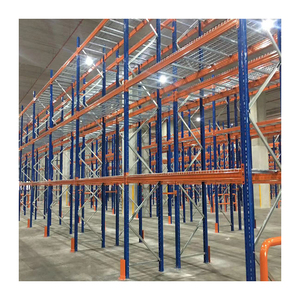
Heavy Duty Industrial Storage Warehouse Rack Selective Pallet Racking Shelves
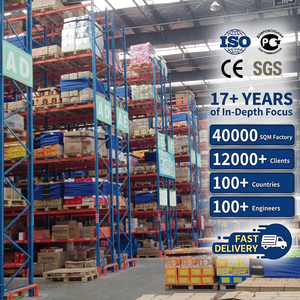
SDFD Heavy Duty Pallet Racking System Steel Durable Adjustable Box Beam Multi-layer Selective Pallet Rack
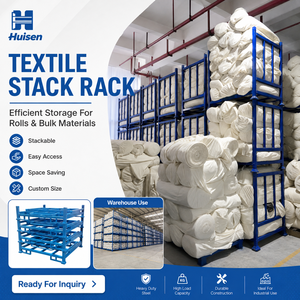
Heavy Duty Stackable Steel Stacking Rack for Warehouse Pallet Storage
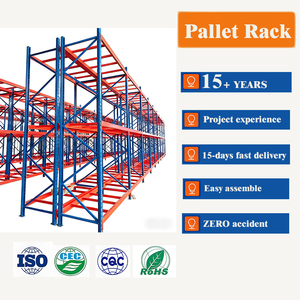
Heavy Duty Industrial Steel Durable Warehouse Pallet Racking System Adjustable Shelving Racks
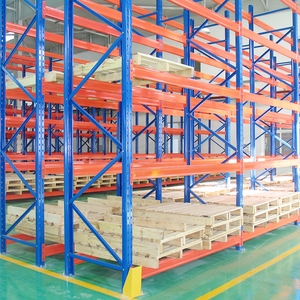
High Quality Heavy Duty Steel Stacking Storage Shelf High Load-bearing Capacity Custom Layer Industrial Pallet Rack
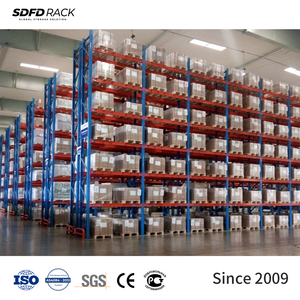
Heavy Duty Industrial Storage Shelving Steel Pallet Racks Warehouse Selective Assembly Rack System
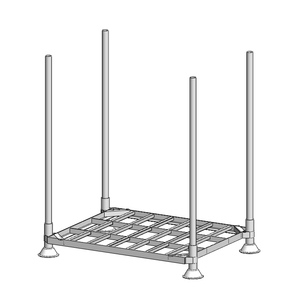
Warehouse Equipment Vertical Stacking Manuracks Stackable Steel Post Pallet Racks for Fabric Rolls
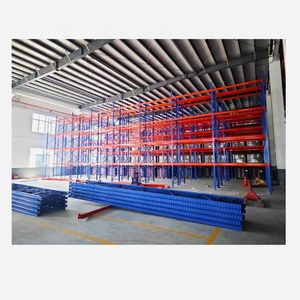
Heavy Duty Warehouse Storage Rack Pallet Racking System Customized Design for Industrial Warehouse
Executive Whitepaper: Structural Standards & Selection Criteria for Global Warehouse Storage Racking
Modern supply chain architecture demands an uncompromising convergence of cubic space optimization, structural integrity, and operational safety. As enterprise logistics hubs expand vertically to mitigate escalating industrial real estate overheads, selecting the correct warehouse pallet storage racking manufacturer and exporter becomes a strategic decision that directly influences operating margins, worker safety, and regulatory compliance.
The foundational load-carrying capability of heavy-duty selective pallet racking relies fundamentally on cold-rolled steel geometry, tensile yield strengths, and column profiling. High-grade industrial storage systems utilize premium Q235B or Q355B structural steel alloys (equivalent to ASTM A1011 Grade 50). The manufacturing process requires multi-stage roll-forming continuous lines to create complex upright profiles with multiple stiffening ribs, ensuring high resistance to torsional buckling and axial compression loads.
- Upright Profile Geometry: Advanced teardrop and omega-shaped upright profiles engineered with dual return flanges absorb lateral impact energy from Material Handling Equipment (MHE) such as reach trucks and counterbalanced forklifts.
- Box Beam vs. Step Beam Dynamics: Heavy-duty box beams fabricated by robotically seam-welding two C-channels together deliver superior resistance to flexural rotation under point loads compared to standard step beams. Beam connectors utilize 3 to 4-hook claw configurations with automatic spring-loaded safety locks to prevent accidental dislodgement during pallet loading operations.
- Deflection Limits & Structural Safety Margins: International standards including ANSI/RMI MH16.1 and FEM 10.2.02 dictate maximum allowable beam deflection limits capped at L/240 (where L is the clear span length). High-end suppliers design systems to an ultimate safety factor of 1.65 to 1.9 relative to yield strength, maintaining structural margins against dynamic impact spikes.
Information Gain: Seismic Dynamic Analysis (Norma Técnica E.030 / RMI Standards)
Warehouse installations located in high-seismic zones—such as the Pacific Ring of Fire encompassing coastal South America (Peru, Chile), Japan, and the Western United States—must undergo dynamic finite element analysis (FEA). Anchor footings cannot simply rely on friction. Upright base plates require double-expansion anchor bolts embedded into high-strength concrete slabs (minimum 28-day compressive strength of 28-35 MPa) to withstand uplift forces and horizontal base shear generated during seismic wave propagation.
Choosing between structural selective racking and high-density storage configurations requires balancing SKU velocity against cubic storage utilization. The table below provides an engineering decision matrix designed for logistics directors evaluating global racking procurement:
| Storage Racking System | Volumetric Density | Selectivity (SKU Access) | Stock Rotation Principle | Ideal Industry Application |
|---|---|---|---|---|
| Selective Pallet Rack | Medium (40-50% Floor Util.) | 100% Direct Access | FIFO / LIFO (Flexible) | E-Commerce, 3PL FMCG, Spare Parts Hubs |
| Drive-In / Drive-Thru | High (65-75% Floor Util.) | Low (Lane Dependent) | LIFO (Drive-In) / FIFO (Thru) | Cold Storage, Agro-Export, Beverage Bottlers |
| Push-Back Rack (Carts) | High (60-70% Floor Util.) | Medium (2-6 Pallets Deep) | LIFO (Last-In, First-Out) | Cold Storage & High-Density Manufacturing |
| Pallet Flow (Gravity Roller) | Very High (75-85% Floor Util.) | Medium (Dedicated Lanes) | Strict FIFO (First-In, First-Out) | Pharmaceuticals, Perishable Foods, Dairy |
| Four-Way Shuttle System | Ultra-High (85-90% Floor Util.) | High (Automated Access) | Software Controlled (FIFO/LIFO) | Fully Automated Smart Warehouses (ASRS) |
The operational lifespan of steel storage equipment is heavily affected by atmospheric corrosion, humidity cycles, and wash-down chemicals. Coastal logistics nodes (such as the Port of Callao, Lurín, or regional humid centers) subject structural steel to continuous chloride and moisture attack.
- Electrostatic Epoxy Powder Coating: Raw steel components undergo a 7-stage pre-treatment cleaning protocol including chemical degreasing, acid pickling, surface neutralization, and zinc phosphating before automated electrostatic powder application. Thermosetting epoxy-polyester resin is cured at 180°C–200°C, producing a dense, chip-resistant coating (60–90 microns thickness) with high impact strength.
- Hot-Dip Galvanizing (HDG): For sub-zero cold storage facilities (-30°C), coastal yards, and chemical containment rooms, Hot-Dip Galvanizing in compliance with ISO 1461 is essential. Immersing fabricated steel into molten zinc at 450°C creates a multi-layered metallurgical zinc-iron alloy shield. HDG components provide cathodic protection, preventing rust even if the surface is scratched during daily forklift operation.
Future Procurement Trends in Warehouse Racking Systems
Enterprise procurement managers must look beyond upfront material costs to evaluate total cost of ownership (TCO) over a 15 to 20-year operational horizon. Global storage equipment trends are rapidly evolving toward intelligence, sustainability, and structural resilience.
Why Leading Logistics Operators Partner With Us
Navigating warehouse storage expansion demands a single point of technical accountability. We provide end-to-end engineered storage solutions, bridging custom fabrication, structural calculation, and installation compliance.
Pallet Racking Procurement & Engineering FAQ
What pallet size and clearances should our racking system be engineered for? +
How do seismic codes (e.g., Norma Técnica E.030 / RMI) change rack engineering? +
What documentation is needed for municipal ITSE and warehouse safety clearance? +
How do you protect pallet racking against corrosion in humid coastal warehouses? +
What is the lead time for custom heavy-duty warehouse racking projects? +
How often should warehouse pallet racking be inspected for damage? +
Optimize Your Warehouse Footprint & Safety Compliance
Send us your warehouse floor plan, pallet dimensions, and target load capacities. Our senior structural engineering team will deliver a customized 3D CAD layout, seismic verification report, and wholesale factory quotation.