High-Capacity Industrial Racking & Custom Shelving Portfolio
Engineered for maximum structural integrity, high-density pallet loading, and compliance with global seismic design standards including RMI, FEM 10.2.02, and EN 15512.
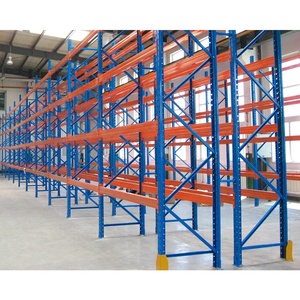
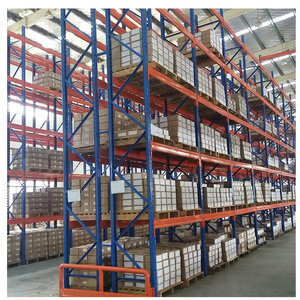
1. The Evolution of Chinese Industrial Racking Export: Technical Mastery & Engineering Precision
Over the past two decades, China’s industrial storage manufacturing landscape has undergone a profound paradigm shift. Transitioning from basic OEM steel fabricators into high-precision engineering hubs, leading Chinese industrial shelving exporters now deliver complex, automated, and anti-seismic warehouse systems tailored to modern B2B supply chains across Europe, North America, the Middle East, and South America.
Modern global logistics demands more than simple steel beams and uprights. High-density distribution centers require precise static engineering calculations, verified yield strengths (utilizing premium-grade Q235B and Q355B cold-rolled steel), and strict adherence to structural safety standards such as US RMI (Rack Manufacturers Institute) standards and European FEM 10.2.02 codes. Chinese manufacturers have invested heavily in automated continuous cold-roll forming lines, robotic laser welding units, and automated electrostatic thermosetting powder coating systems to guarantee sub-millimeter tolerances and dynamic load capacities exceeding 4,000 kg per level.
Information Gain Insight: Structural integrity in industrial shelving is primarily dictated by beam profile engineering and column perforation geometry. Top-tier Chinese exporters utilize tear-drop and micro-adjustable multi-hook connectors that minimize frame displacement under seismic shear stresses, dramatically reducing risk in high-risk zones (such as Zone 4 seismic regions defined by international building codes).
2. Enterprise Advantages & B2B Wholesaler Capabilities
Selecting the right industrial shelving exporter requires assessing manufacturing authority, customization scalability, and comprehensive quality assurance protocols. Our manufacturing facilities combine cutting-edge metallurgic research with custom CAD/CAM structural modeling to ensure every project delivers maximum volumetric efficiency.
Custom Structural Engineering
Full CAD & 3D Finite Element Analysis (FEA) provided prior to production. Custom upright profiles, beam lengths, and deck variations tailored to specialized forklift reach and floor slab specs.
Advanced Surface Finishing
Dual-action pre-treatment followed by epoxy-polyester powder coating (60-80 microns) or Hot-Dip Galvanizing (HDG according to ISO 1461) for extreme coastal humidity and cold storage applications.
ASRS & Automation Ready
High-precision manufacturing ensures seamless integration with Automated Storage and Retrieval Systems (ASRS), electric mobile shuttle systems, and AGV guided pathways.
3. Technical Comparison of High-Density Storage Racking Systems
To assist procurement managers and warehouse operations teams in selecting the optimal structural setup, the technical matrix below outlines performance parameters for primary industrial racking configurations manufactured in China:
| Racking System Type | Load Capacity (Per Level) | Space Utilization Efficiency | Access & Selectivity | Ideal Industrial Application |
|---|---|---|---|---|
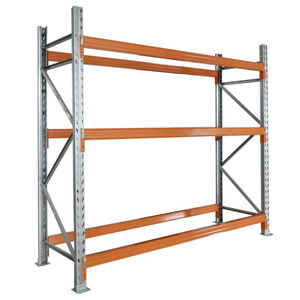
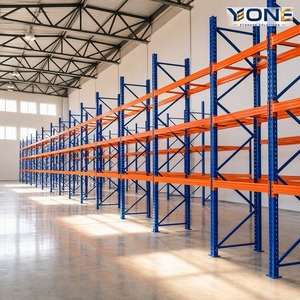
| Selective Pallet Racking | 1,000 kg – 4,500 kg | 40% – 50% | 100% Immediate Access | FMCG, 3PL Warehouses, General Wholesale |
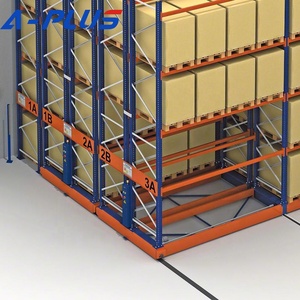
| Electric Mobile Racking | Up to 24,000 kg / Bay | 85% – 90% | 100% Selective (Dynamic Aisle) | Cold Storage, High-Cost Urban Logistics |
| Drive-In / Drive-Thru Racking | 1,000 kg – 2,000 kg | 65% – 75% | LIFO / FIFO (Low Selectivity) | Bulk Seasonal Goods, Raw Materials, Liquids |
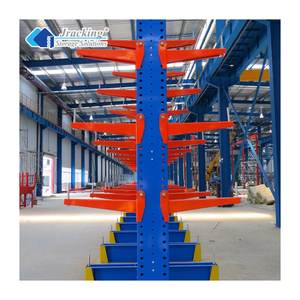
| Cantilever Racking Systems | 500 kg – 3,000 kg / Arm | 60% – 70% | Direct Open Front Access | Steel Pipes, Timber, Aluminum Profiles, Rebar |
| Automated Stacking (ASRS) Racks | Up to 3,000 kg / Position | 90% – 95% | Robotic Automated Access | Pharmaceuticals, High-Tech Electronics, Automotive |
4. Future Procurement Trends in Industrial Shelving (2025–2030)
As international supply chains evolve toward digitized operations and sustainable manufacturing, global buyers must anticipate structural changes in the procurement of China-made industrial shelving systems:
A. Rapid Adoption of Automated Electric Mobile & Shuttle Racking
Soaring industrial real estate costs worldwide are driving buyers away from wide-aisle static selective racking. Procurement focus is dramatically shifting toward Electric Movable Pallet Racking and Radio Shuttle Systems. By mounting storage bays onto motorized wheeled bases running on floor-embedded rails, warehouses eliminate static aisles, doubling storage volume within the exact same building footprint.
B. Integration of IoT Sensors & Structural Health Monitoring
Future-proof warehouse infrastructure now incorporates IoT load sensors and strain gauges directly within critical upright frames and beam connectors. Exporters are embedding structural telematics that alert safety officers to accidental forklift impacts, frame deformation, or weight overloads in real time, dramatically improving occupational health and safety (OHS) compliance.
C. Low-Carbon Green Steel & Sustainable Powder Coatings
Environmental, Social, and Governance (ESG) mandates in European and North American markets are dictating raw material sourcing. Leading Chinese manufacturers are partnering with green steel mills utilizing Electric Arc Furnaces (EAF) to reduce the embodied carbon of Q235B steel. Furthermore, solvent-free, zero-VOC electrostatic powder coatings are becoming the mandatory standard for export procurement.
D. Modular Anti-Seismic & Dynamic Force Engineering
Given the increasing frequency of extreme weather and seismic events globally, B2B buyers now demand certified anti-seismic calculations standard with every rack quote. Modern export systems feature oversized seismic baseplates, dual-anchor expansion bolts, and specialized frame diagonal bracing to withstand horizontal acceleration forces matching localized building code parameters.
Frequently Asked Questions for B2B Procurement Officers
Clear, direct technical responses regarding factory verification, international standards, container loading, and custom structural orders.
How do Chinese exporters verify load capacity and structural safety for international orders?
Top exporters utilize both empirical physical testing and computer-simulated Finite Element Analysis (FEA). Upright profiles undergo vertical compression tests, and beams undergo four-point bending tests in accordance with ANSI MH16.1 or EN 15512 specifications. Third-party inspection reports from SGS, TÜV, or Bureau Veritas are routinely supplied showing ultimate failure limits alongside safe working load (SWL) safety factors (typically 1.5 to 1.65).
What steel grades are used in heavy-duty industrial pallet racking?
We primarily utilize certified hot-rolled coil steel processed into cold-formed structural shapes. Premium structural components use Q235B (yield strength ≥ 235 MPa, comparable to ASTM A36) and high-strength Q355B steel (yield strength ≥ 355 MPa, comparable to ASTM A572 Grade 50) for ultra-heavy beam spans and tall upright frames.
How are racking components packed to prevent transit damage during ocean freight?
Standard export packaging includes corrugated protective edge guards, heavy-duty plastic wrapping, steel strapping, and wooden support skids. Uprights and beams are bundled in custom timber frames designed for safe forklift unloading from 40ft High Cube (40HC) containers without scratching powder-coated surfaces.
Can industrial racking be customized to fit specific warehouse floor plans and existing forklifts?
Yes. Every industrial racking solution is customized based on your specific operational metrics: warehouse clear ceiling height, building column spacing, forklift turning radius (aisle width requirement), floor slab concrete depth/strength, and pallet dimensions (including load overhang).
What is the difference between electrostatic powder coating and hot-dip galvanizing for industrial racking?
Electrostatic powder coating provides a durable, smooth epoxy finish suitable for dry indoor logistics and ambient warehouses. Hot-Dip Galvanizing (HDG) involves submerging raw steel into molten zinc, creating a thick metallurgical rust barrier ideal for sub-zero cold storage facilities, outdoor storage yards, and highly corrosive coastal environments.
What are typical production lead times for wholesale OEM racking orders?
Standard manufacturing timelines range from 15 to 25 days following engineering drawing sign-off and deposit confirmation. Large-scale distribution center projects (1,000+ tons) are delivered in rolling container shipments phased directly with site erection schedules.