Heavy-Duty Heavyweight Heavy Industry Racking Recommendations
Factory-direct structural steel shelving, selective pallet racks, and high-density warehouse storage systems engineered to international load safety coefficients.
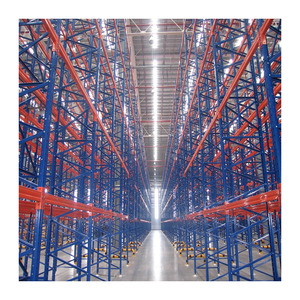
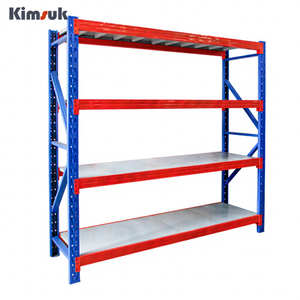
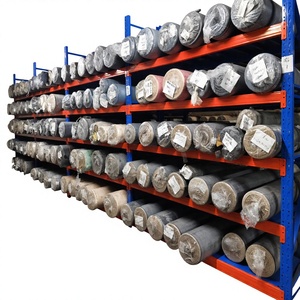
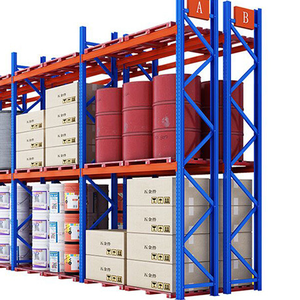
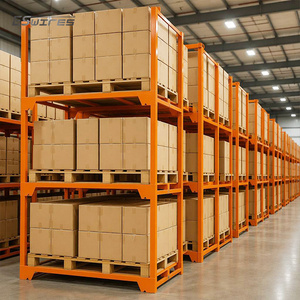
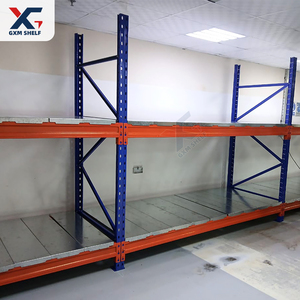
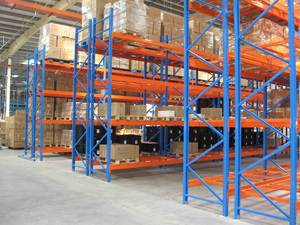
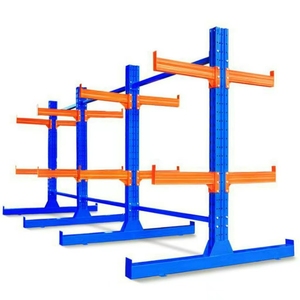
Navigating High-Capacity Storage Infrastructure: The China Manufacturing Advantage
Modern logistics hubs, cold storage facilities, and third-party logistics (3PL) providers are under constant pressure to optimize vertical floor space while guaranteeing strict operational safety. Selecting a Top China Pallet Racking Manufacturer & Factory is no longer merely a commercial procurement exercise—it is an engineering partnership that dictates long-term warehouse throughput, structural safety compliance, and capital expenditure efficiency.
China’s industrial structural steel processing industry leads global supply chains due to fully integrated steel rolling mills, automated continuous cold-roll forming lines, and advanced robotic welding infrastructure. Leading Chinese rack manufacturers leverage prime-grade cold-rolled structural steel, such as Q235B and high-yield Q355B (equivalent to ASTM A572 Grade 50), ensuring exceptional yield strength ($\sigma_y \ge 355 \text{ MPa}$) and resilience against structural deflection under maximum static load thresholds.
Automated Roll Forming
Continuous CNC-controlled 18 to 24-station cold-roll forming mills produce upright profiles with tight dimensional tolerances ($\pm 0.5\text{mm}$), ensuring precise pitch alignment and effortless frame assembly.
Robotic MIG Welding
ABB and KUKA dual-arm welding robots execute full-penetration fillet welds on beam connector claws and base plates, eliminating human welding fatigue and preventing stress fractures.
Thermosetting Powder Coating
Automatic 12-stage pre-treatment wash including zinc-phosphate coating, followed by electrostatic epoxy-polyester powder baking ($200^\circ\text{C}$), delivering $>60\text{--}90\mu\text{m}$ anti-corrosion protection.
Technical Deep-Dive: Material Science & Load Dynamics
Industrial pallet rack safety relies on strict adherence to structural engineering standards such as EN 15512:2020 (European Standard for Steel Static Storage Systems) and ANSI MH16.1 (RMI Standard). Understanding upright column profiles, beam connector claws, and baseplate anchor stress distribution is critical for facility managers seeking absolute structural safety.
- Column Profile Geometry: Omega-shaped ($\Omega$) punched upright columns featuring 11 to 13 bending folds maximize torsional stiffness and moment of inertia ($I_x, I_y$), resisting accidental forklift impacts far better than standard rectangular tubes.
- Beam Locking Mechanism: Heavy-duty interlock step beams incorporate 3 to 4-hook claw connectors with high-visibility safety drop pins, preventing unintentional beam dislodgement during rapid pallet placing or retrieval.
- Deflection Index ($L/200$): Under maximum rated payload (e.g., $4,000\text{ kg}$ per level), beam deflection is strictly engineered not to exceed $1/200\text{th}$ of the clear span length, guarding against permanent plastic deformation.
Pallet Racking System Architecture Matrix
| System Type | Storage Density | Selective Access | Stock Handling | Typical Payload Range | Ideal Industry Use-Cases |
|---|---|---|---|---|---|
| Selective Pallet Racking | Standard (40-50%) | 100% Immediate | FIFO (First-In, First-Out) | 1,000 kg – 4,500 kg / level | FMCG, 3PL Warehouses, General Logistics |
| Drive-In / Drive-Through | High (70-80%) | Low (Lane-Based) | LIFO / FIFO | 1,000 kg – 1,500 kg / pallet | Cold Storage, Beverage, Batch Materials |
| Push-Back Cart Racking | High (60-70%) | Medium (2-6 Deep) | LIFO (Last-In, First-Out) | 1,500 kg / cart position | Food Distribution, Medium-SKU Volume |
| Cantilever Storage System | Custom Variable | 100% Linear Access | Direct Crane / Forklift | 500 kg – 3,000 kg / arm | Steel Tubes, Pipe Bunks, Timber & Lumber Yards |
| Portable Nestainer Frames | Flexible Stacking | Block Stacking | Flexible Bulk Storage | 1,000 kg – 2,000 kg / unit | Seasonal Agricultural Export, Bulk Goods |
Global Procurement & Sourcing Trends (2025–2030)
Key market forces shaping international industrial storage procurement decisions over the next decade.
1. Automation Readiness & AS/RS Compatibility
Procurement teams are shifting away from standalone manual racking toward automated storage systems. Pallet racking frames are now fabricated with sub-millimeter tolerances to accommodate Autonomous Mobile Robots (AMRs), Automated Guided Vehicles (AGVs), and high-speed AS/RS crane guide rails.
2. Seismic Compliance & Risk Mitigation
Global buyers operating in high-seismic active zones (such as South America's Pacific Coast, Turkey, and California) mandate structural calculations aligned with local building regulations (e.g., Peru's Norma Técnica E.030). China manufacturers now provide localized finite element seismic calculations as standard practice.
3. Total Cost of Ownership (TCO) & Container Optimization
Modern procurement factors in shipping density. Advanced racking factories employ nested beam design and knock-down (KD) upright framing, maximizing volume utilization inside 40ft High Cube (40HC) shipping containers to lower ocean freight cost per pallet position.
4. Zinc-Aluminum-Magnesium (ZAM) & Anti-Corrosion Advances
Cold chain logistics demanding temperatures as low as $-30^\circ\text{C}$ are replacing standard powder paint with hot-dip galvanizing or self-healing Zinc-Aluminum-Magnesium (ZAM) coated steel coils, boosting corrosion resistance in high-humidity coastal zones by over $400\%$.
Next-Gen Racking Technology Development Trends
The heavy-duty warehouse storage industry is undergoing rapid technology upgrades. Modern Chinese manufacturers are integrating digital twin simulation, boltless teardrop/pitch design flexibility, and advanced structural health monitoring directly into standard industrial systems.
Structural FEA Modeling & Digital Twins
Prior to roll-forming cold steel, factory structural engineers simulate linear buckling, non-linear plastic strain, and dynamic earthquake sway using Finite Element Analysis (FEA) software, preventing over-engineering while eliminating structural failure risk.
Modular Boltless Frame Assemblies
To reduce onsite assembly labor rates across overseas project sites, modern upright frames utilize self-locking diagonal and horizontal bracing patterns connected via high-tensile Grade 8.8 structural bolts and locking nuts.
IoT Load & Impact Sensing Integration
Smart rack systems are increasingly outfitted with embedded Bluetooth strain gauges and tilt-sensors on lower upright columns. Immediate alerts notify warehouse safety officers of critical forklift impact strikes before collapse occurs.
Why Source From Our Manufacturing Facility?
Full OEM/ODM engineering capabilities backed by rigorous quality assurance and direct export logistics.
In-House Technical CAD Layout Engineering
Our structural engineering division delivers complete 2D CAD floor plan layouts, aisle width clearance verifications for reach trucks or VNA (Very Narrow Aisle) forklifts, and 3D BIM spatial models within 24–48 hours of initial request.
Strict Quality Inspection & Certification
Every production lot undergoes rigorous raw material spectral analysis, weld ultrasonic testing, powder adhesion cross-hatch testing, and dynamic beam loading validation certified to ISO9001, ISO14001, and CE safety protocols.
Frequently Asked Questions (FAQ) for Global Buyers
Clear, authoritative answers to common procurement, engineering, and export logistics questions.
Ready to Engineer Your Warehouse Storage Infrastructure?
Send us your floor plan, pallet dimensions, and target beam load capacities. Our structural engineering team will deliver a free 2D/3D CAD layout design and factory-direct price quotation within 24 hours.