High-Performance Industrial Racking Systems & Components
Explore our certified structural rack designs, specialized warehouse push-back systems, and heavy-duty steel shelving manufactured to international seismic safety standards.
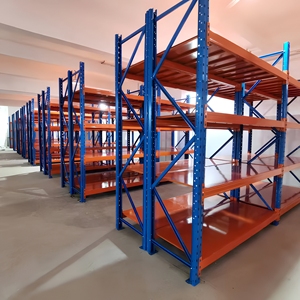
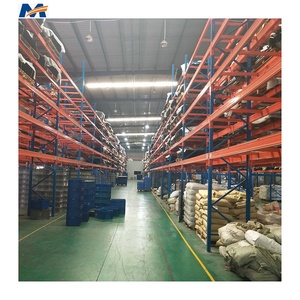
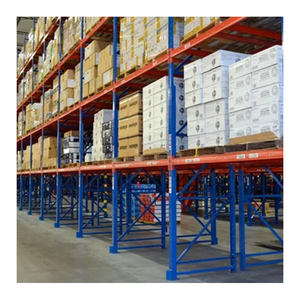
Engineering Optimization in High-Density Storage: The China Push-Back Advantage
In modern industrial logistics, volumetric space efficiency and throughput velocity represent the two primary vectors of operational profitability. As global supply chains face escalating real estate acquisition costs per square meter, procurement directors and warehouse operations teams are transitioning away from traditional single-deep selective racking systems in favor of high-density dynamic alternatives. Among these, Push-Back Racking Systems stand out as the definitive structural bridge between maximum storage density and rapid Last-In, First-Out (LIFO) inventory selectivity.
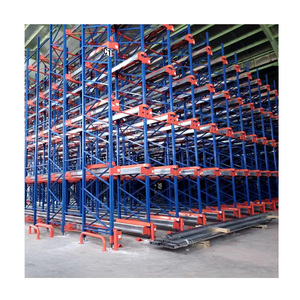
As premier China push back racking exporters and wholesalers, our manufacturing framework integrates structural dynamic engineering, rigorous metallurgical selection (utilizing certified Q235B and Q355B cold-rolled structural steel), and automated roll-forming technologies. Push-back racking operates on a series of nested, inclined carts that ride along heavy-duty structural steel rails. When a pallet is loaded from the front aisle, it gently pushes the preceding pallet back into the lane. Upon unloading, gravitational force smoothly advances the nested carts forward to the picking face.
This technical whitepaper provides warehouse designers, logistics executives, and B2B buyers with an exhaustive engineering evaluation of China-manufactured push-back systems, analyzing mechanical stress vectors, cart-nesting kinetics, anti-pop-out safety safety latches, seismic compliance (Norma Técnica E.030, ANSI MH16.1, FEM 10.2.02), and future-proof procurement strategies.
Anatomy of a Commercial-Grade Push-Back Racking Cart System
A deeper look into the precision components engineered to guarantee zero-jam operation and structural stability under multi-ton dynamic loading.
Nested Steel Carts & Inclined Rails
Fabricated from heavy-gauge steel channels, nested carts feature low-profile profiles designed to minimize vertical pitch consumption. Precision-inclined rails (typically set at a 1.5° to 2° pitch) leverage controlled gravity, ensuring consistent cart movement without excessive impact speed at the pick face.
Heavy-Duty Bearings & Flanged Wheels
Every cart wheel is equipped with double-sealed, maintenance-free precision ball bearings rated for extreme temperature swings (-30°C in cold storage up to +45°C in industrial hubs). Flanged wheel geometries prevent lateral tracking errors, binding, or wheel derailment.
Anti-Pop-Out & Safety Stop Interlocks
Integrate mechanical safety latches and structural front stops. The anti-pop-out feature keeps carts anchored during uneven forklift engagement, while front stops absorb residual kinetic energy during front pallet retrieval, securing operator safety.
| System Configuration | Maximum Depth | Standard Load Capacity | Pitch Slope Inclination | Material Specification | Recommended Pallet Types |
|---|---|---|---|---|---|
| 2-Deep Cart Push-Back | 2 Pallets Deep | Up to 1,500 kg / pallet | 1.5° Gradient | Q235B / Q355B Steel | GMA, Euro (1000x1200mm), Runner Pallets |
| 3-Deep Cart Push-Back | 3 Pallets Deep | Up to 1,400 kg / pallet | 1.75° Gradient | High-Tensile Cold Rolled Steel | Standard Wooden, Heavy Plastic, Steel Pallets |
| 4-Deep Cart Push-Back | 4 Pallets Deep | Up to 1,250 kg / pallet | 2.0° Gradient | Q355B Structural Steel Channel | Heavy Industrial Materials, Sturdy Bottom Decks |
| 5-Deep / 6-Deep Heavy Push-Back | 5 to 6 Pallets Deep | Up to 1,000 kg / pallet | Custom Calibrated Pitch | Reinforced Structural C-Channel | Uniform Lot Sizes, Bulk Beverage & FMCG |
Why Direct Purchasing from Top China Exporters Maximizes ROI
Combining world-class manufacturing automation, direct steel mill sourcing, and rigorous structural engineering to deliver reliable warehouse systems.
1. Advanced Automated Manufacturing & Tolerances
Our state-of-the-art production facilities in China feature fully automated continuous cold roll-forming lines, 3D laser cutting centers, and robotic welding stations. By keeping manufacturing tolerances within ±0.5mm on column pitch and beam profile geometry, we eliminate structural assembly friction during field installation.
Unlike regional distributors who mark up standardized components, buying direct from a master China wholesaler gives you tailored beam lengths, upright frame profiles (ranging from 80mm to 120mm face width), and customized cart rail setups engineered for your exact pallet weight distribution.
2. Coastal & Cold-Chain Anti-Corrosion Finishing
Industrial racking systems installed in humid coastal zones (such as Callao, Lurín, or international ports) or cold-storage environments (-30°C freezers) demand superior surface treatment. We utilize automated multi-stage pre-treatment washing followed by thermo-set epoxy-polyester powder coating cured at 200°C.
For extreme wash-down or outdoor applications, we supply Hot-Dip Galvanized (HDG) structural uprights and carts compliant with ISO 1461, ensuring over 30 years of maintenance-free corrosion resistance.
3. Comprehensive Seismic & Load Verification
Safety is non-negotiable in heavy material handling. Our structural engineering team validates every custom push-back layout against international building standards, including ANSI MH16.1 (RMI), FEM 10.2.02, and seismic guidelines like Norma Técnica E.030.
We provide full structural calculation packages, finite element analysis (FEA) reports, and slab anchoring evaluations—confirming baseplate sizing, anchor bolt shear resilience, and column upright bracing ratios prior to manufacturing delivery.
Future Development Trends in Push-Back Storage Technology
As smart logistics and automated material handling evolve, next-generation push-back systems are incorporating advanced telemetry, green metallurgy, and AGV interface capabilities.
1. AGV & AMR Autonomous Compatibility
Next-generation push-back systems feature widened front funnel guides and laser-guided positioning targets. This allows Autonomous Mobile Robots (AMRs) and Automated Forklifts (AGVs) to push pallets into nested carts with millimeter precision, reducing labor dependencies in 24/7 dark warehouses.
2. IoT Real-Time Structural Strain Monitoring
Integration of wireless strain-gauge sensors and ultrasonic tilt meters directly into structural uprights and cart rails. Warehouse management software (WMS) receives real-time alerts regarding dynamic overload, shock impact, or column deflection before mechanical structural failure occurs.
3. Sustainable Eco-Steel & Low-Carbon Manufacturing
Global procurement policies prioritize ESG compliance. Leading Chinese exporters are utilizing 100% recyclable high-strength green steel produced via Electric Arc Furnaces (EAF) powered by renewable solar energy, significantly lowering the embodied carbon footprint per pallet position.
Push-Back Racking vs. Alternative High-Density Systems
A rigorous structural and operational benchmark to help logistics planners evaluate system selection parameters.
| Evaluation Parameter | Push-Back Racking | Selective Pallet Rack | Drive-In Racking | Radio Shuttle System |
|---|---|---|---|---|
| Storage Density Ratio | High (Up to 75%) | Standard (30-40%) | Very High (Up to 85%) | Maximum (Up to 90%) |
| Inventory Rotation | LIFO (Last-In, First-Out) | FIFO / LIFO (100% Access) | Strict LIFO | FIFO or LIFO Selectable |
| Forklift Entry Required? | No (Aisle Picking Only) | No (Aisle Access) | Yes (High Risk of Impact) | No (Automated Shuttle) |
| SKU Selectivity | Medium (1 SKU per lane) | 100% Immediate Access | Low (1 SKU per bay) | Medium-High per channel |
| Operational Throughput | Fast (Saves 40% travel) | Moderate | Slow (Cautious driving) | Very Fast (Automated) |
| Capital Investment per Position | Moderate / Optimal ROI | Lowest Base Cost | Low - Moderate | High (Batteries/Electronics) |
Frequently Asked Questions for B2B Procurement
Answers to technical, logistical, and commercial inquiries when sourcing push-back systems from China.
What are the key advantages of push-back racking compared to standard drive-in racking? +
While both systems offer high-density LIFO storage, push-back racking dramatically increases forklift productivity and safety. In a push-back system, forklifts operate strictly within the access aisle and never enter the racking structure. This eliminates column impact collisions common in drive-in racking.
Furthermore, push-back allows each lane (level) to hold a distinct SKU, whereas drive-in requires the entire vertical bay to be dedicated to a single SKU. This yields significantly higher occupancy rates and SKU selectivity.
Can China push-back rack exporters customize systems for non-standard pallet sizes? +
Yes. As custom OEM manufacturers, we engineer cart frames and rail dimensions tailored to your exact pallet footprint (e.g., 1000x1200mm Euro, 48"x40" GMA, 1100x1100mm Asian pallets, or specialized steel/skid bases). We adjust the wheel channel spacing, anti-bounce brackets, and load-bearing crossbars according to your bottom-deck configuration (full perimeter, 3-runner, or 9-leg base).
How do you handle seismic engineering calculations for overseas installations? +
Our engineering department conducts structural finite element analysis (FEA) based on your site's specific seismic parameters (such as Peak Ground Acceleration, soil factors, and building occupancy categories). We calculate vertical dynamic loads and lateral seismic forces compliant with ANSI MH16.1, FEM 10.2.02, or local building codes like Peru's Norma Técnica E.030. Detailed structural stamped drawings are provided prior to fabrication.
What maintenance is required for high-density push-back nested cart systems? +
Push-back systems are mechanically simple and require minimal maintenance compared to automated shuttle racks. Key scheduled checks include:
- Visual quarterly inspection of front stops and anti-pop-out latches.
- Debris cleaning along the inclined wheel guide tracks to ensure uninhibited roll.
- Verification of baseplate anchor bolt torque (especially in seismic zones).
- Inspection of cart wheel bearings for smooth rotation without axial play.
What is the typical lead time for manufacturing and international container shipping? +
Production lead time at our factory typically ranges between 20 to 35 days, depending on system volume, specialized coating specs, and roll-forming requirements. Ocean freight transit varies by destination port (e.g., 18-25 days to US West Coast, 25-35 days to South America or Europe). We optimize container nesting and packing using heavy-duty steel strapping and timber bundling to prevent transit scratching or deformation.
Optimize Your Warehouse Storage Density Today
Consult with our senior structural racking engineers. Submit your floor plan dimensions, pallet specifications, and load capacities to receive a comprehensive CAD layout and factory-direct wholesale quotation.