Featured Warehouse Storage & Mezzanine Systems
Engineered to international structural standards (RMI, ANSI MH16.1, FEM 10.2.02, EN 15512), our comprehensive product selection provides high-yield volumetric storage density for global logistics centers.
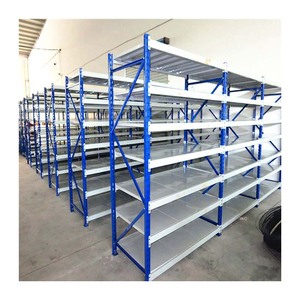
Mracking Light Duty Selective Metal Steel Storage Rack
Flexible, boltless modular steel racking designed for rapid assembly, manual order picking, and multi-tier mezzanine platform integration.
View System Specifications →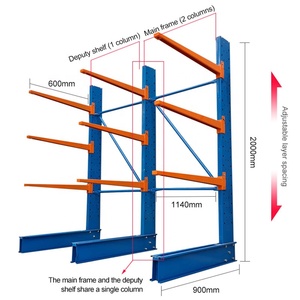
Topeasy Heavy Duty Indoor Powder Coated Cantilever Racking
Heavy-duty structural cantilever systems customized for non-standard, long-format stock, timber, steel piping, and profile bundles.
View System Specifications →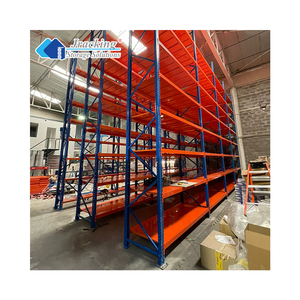
Jracking Dexion Style Heavy Duty Warehouse Pallet Rack
Classic teardrop and keyhole hook design offering maximum beam adjustability, structural rigidity, and full unit-load access.
View System Specifications →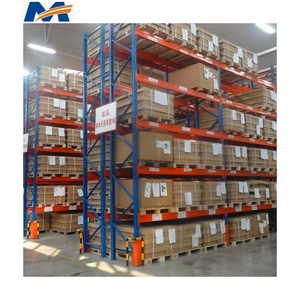
Heavy Duty Warehouse Pallet Racking & Order Picking Shelves
Hybrid structural racking accommodating simultaneous lower-level manual carton picking and high-bay palletized storage capacity.
View System Specifications →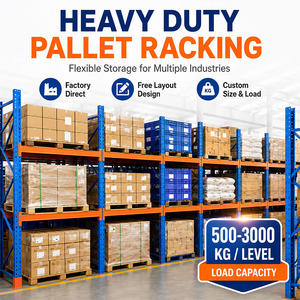
Industrial Heavy-Duty Steel Warehouse Pallet Racking System
Engineered cold-rolled Q355B steel profile frames optimized for high-density industrial warehousing and extreme payload endurance.
View System Specifications →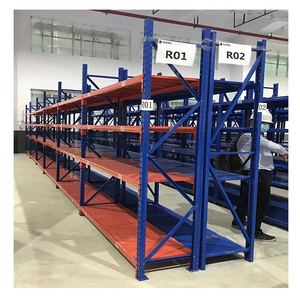
Selective Assembled Steel Pallet Heavy Duty Storage System
Standardized beam-to-frame connector assemblies with safety locking pins ensuring 100% immediate pallet access and forklift safety.
View System Specifications →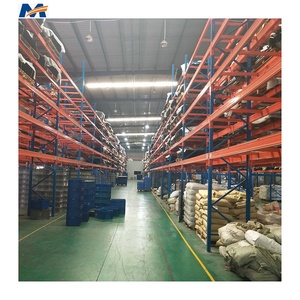
High-Capacity Structural Steel Pallet Rack Beams & Frames
Precision-roll-formed interlocking box beams treated with static powder coating for enhanced marine atmosphere corrosion protection.
View System Specifications →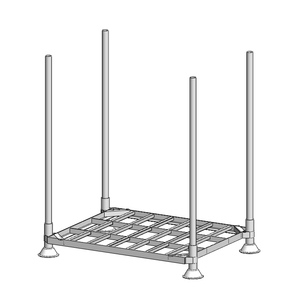
Vertical Stacking Post Pallet Manuracks for Textile & Fabric Rolls
Heavy-duty modular post racks offering flexible, stackable block storage for roll goods, raw materials, and seasonal overflow stock.
View System Specifications →The Strategic Value of Rack-Supported Mezzanines in Modern Global Logistics
As global real estate valuations soar and urban logistics demands sub-24-hour fulfillment cycles, enterprise supply chain directors face a structural imperative: maximize vertical cube utilization rather than acquiring horizontally expansive floor space.
CAPEX Efficiency
Deploying a rack-supported mezzanine yields up to a 60% reduction in capital expenditure compared to physical facility relocation or greenfield construction. It converts capital investment directly into functional operational real estate.
Volumetric Density
Unused ceiling clearance represents paid overhead. By expanding vertically up to 3 or 4 catwalk levels, facilities multiply available SKU picking locations by 200% to 400% within the exact same structural footprint.
Modular Adaptability
Unlike fixed concrete flooring, bolt-assembled cold-formed steel mezzanines can be expanded, reconfigured, or completely dismantled and relocated as enterprise SKU profiles and order fulfillment flows evolve.
Key Technological Trends Shaping Warehouse Mezzanine Manufacturing
Leading OEM/ODM manufacturers in China are executing significant engineering transitions, shifting from traditional hot-rolled heavy steel structures toward high-precision, cold-formed structural profiles integrated with smart automation and seismic mitigation technologies.
1. Advanced High-Yield Material Selection (Q355B vs Q235B Steel)
Modern mezzanine manufacturing relies heavily on high-yield cold-rolled steel. Upgrading from standard Q235B (yield strength $\sigma_y \ge 235\text{ MPa}$) to low-alloy Q355B ($\sigma_y \ge 355\text{ MPa}$) enables structural engineers to reduce overall steel deadweight by 15-20% while maintaining equivalent or superior ultimate load capacity. This weight reduction directly translates into lower ocean freight fees and reduced building slab point-loading stress.
2. Robotic AMR / AGV Compatible Mezzanine Decks
With the explosion of Autonomous Mobile Robots (AMRs) and Automated Guided Vehicles (AGVs) in order picking, upper mezzanine flooring must meet rigorous planarity and friction standards. Manufacturers now integrate specialized heavy-duty resin-coated composite panels, high-density fiber-cement boards, and precision CNC-punched galvanised steel decking engineered to resist high wheel point-loads (e.g., 500 kg-1000 kg dynamic concentrated wheel loads) with zero floor dynamic chatter.
3. Seismic Engineering Modeling (ANSI MH16.1 & Eurocode 8)
Global logistics sites in earthquake-prone corridors (such as the Pacific Ring of Fire, Western US, South America, and Japan) require dynamic seismic finite element analysis (FEA). China’s elite racking suppliers deploy advance CAD/FEA simulation software to model acceleration spectral response curves, designing heavy-duty base plates, anchor bolt embedding layouts, and diagonal horizontal/vertical sway bracing systems that guarantee life-safety performance under severe seismic events.
4. Automated Electrostatic Powder Coating & Galvanizing
To withstand high ambient humidity, cold-storage freezing environments, and coastal salt fog conditions, leading factories have upgraded to multi-stage automatic pre-treatment washing (degreasing, phosphating, nano-zirconium coating) followed by thermosetting epoxy polyester powder coating. This ensures an impact-resistant, scratch-proof finish exceeding 500-1000 hours of salt spray testing (ASTM B117 compliance).
Future Procurement Trends for Overseas Warehouse Mezzanine Buyers
Navigating global supply chain dynamics requires procurement managers to evaluate manufacturing partners not merely on FOB price per kilogram, but on holistic engineering capability, international compliance, and shipping volume optimization.
Logistics & Container Cube Density Optimization
With international sea freight rate fluctuations, top Chinese racking manufacturers utilize custom software to calculate 3D container packing algorithms. By nesting roll-formed upright frames and tear-drop beams into specialized bundling jigs, export packaging yields up to a 98% space-utilization factor inside 40ft High Cube (40HQ) containers, significantly lowering landed cost per pallet location.
Turnkey Engineering & BIM Model Integration
Future-ready procurement mandates that suppliers supply native Building Information Modeling (BIM) files (Revit, STEP, DWG). Global EPC contractors demand precise 3D digital twins to evaluate sprinkler clearance, HVAC ductwork routing, lighting placement, and forklift aisle turning radii prior to physical manufacturing.
Rigorous Building Code Harmonization
Procurement teams are prioritizing suppliers with verified, third-party laboratory certified load testing (TÜV Rheinland, SGS, CE Mark, RMI R-Mark). Ensuring structural compliance with local building departments (e.g., US IBC, European EN Standards, Peru Norma Técnico E.030) streamllines municipal safety inspection approvals (e.g., ITSE certificates).
Structural Comparison: Rack-Supported vs. Structural Steel Mezzanines
Understanding the fundamental engineering differences between cold-formed rack-supported platforms and heavy structural steel mezzanines is essential for optimizing facility layout and budget allocation.
| Engineering Parameter | Rack-Supported Mezzanine | Structural Steel (I-Beam) Mezzanine |
|---|---|---|
| Primary Columns | Cold-Rolled Racking Uprights (Q235B / Q355B) | Hot-Rolled Structural I-Beams / H-Piles (Q355B / ASTM A36) |
| Uniform Live Load Capacity | 300 kg/m² – 1,000 kg/m² | 500 kg/m² – 2,500+ kg/m² |
| Sub-Structure Utilization | 100% Pallet or Shelving Storage | Open Floor Space for Production / AGVs |
| Deflection Limit Ratio | Standard $L/200$ to $L/300$ | Rigid $L/300$ to $L/500$ |
| Assembly Speed & Lead Time | Fast (Modular Boltless / Hook-in Connectors) | Moderate (Heavy On-site Bolting or Welding) |
| Relative Cost per m² | 40% - 60% Lower CAPEX | Higher Initial Capital Outlay |
| Relocation & Scalability | 100% Reconfigurable & Demountable | Difficult to Modify / High Relocation Expense |
Why Partner with China’s Leading Mezzanine Manufacturers
Delivering end-to-end structural integrity, our verified manufacturing infrastructure merges advanced metallurgy, automated cold roll-forming lines, and comprehensive OEM/ODM technical support.
Full-Cycle Engineering & CAD Layout Consultation
Every project begins with a granular site survey analysis. Our engineering team prepares customized CAD drawings, dynamic load calculations, and aisle clearance verification tailored to your specific forklift models, building column grids, and sprinkler layout specifications.
Seismic Verification & Municipal Permit Support
We calculate vertical loads, overturning moments, and dynamic seismic response parameters aligned with national building codes (including Norma Técnica E.030 for earthquake zones). We supply certified stamped engineering documentation, capacity signs, and anchoring specs to ensure hassle-free municipal safety inspections.
Coastal & Cold-Chain Corrosion Resistance
For coastal, humid, or refrigerated applications, we provide specialized surface protection treatments. Choose between high-durability industrial thermosetting powder coating or hot-dip galvanizing for wash-down zones and cold rooms, ensuring long-term rust prevention and low life-cycle maintenance costs.
Stringent ISO & CE Quality Control Pipeline
From raw steel coil ultrasonic flaw detection to roll-forming profile tolerance measurement, beam connector weld integrity inspection (NDT testing), and powder coat adhesion testing, our ISO-certified quality assurance team guarantees that every shipped component conforms strictly to approved production blue-prints.
Frequently Asked Questions (FAQ) for Warehouse Mezzanine Sourcing
In-depth technical answers addressing structural engineering, floor deck selection, compliance documentation, and ocean freight logistics for international procurement managers.
How do engineers calculate the uniform live load capacity for a racking mezzanine?
Mezzanine dynamic and static live loads are calculated based on your intended usage: manual order picking (typically 300–500 kg/m²), heavy pallet jack movement (500–1,000 kg/m²), or automated machinery/AGV operation (1,000–1,500+ kg/m²). Engineers analyze the combined dead load (weight of steel, decking, joists) and live load, determining structural member sizes, upright column wall thickness (e.g., 1.8mm to 2.5mm roll-formed steel), beam profile depths, and anchor bolt embedded depths into your concrete slab.
What concrete floor slab specifications are required to support a rack mezzanine?
Most industrial mezzanine installations require a reinforced concrete floor slab with a minimum thickness of 150 mm to 200 mm (6 to 8 inches) and a concrete compressive strength of at least 25 to 30 MPa (3,500 to 4,000 PSI). During engineering evaluation, baseplate dimensions (e.g., 150x150x10mm vs 250x250x12mm) and heavy-duty expansion wedge anchors or chemical epoxy anchors are calculated to distribute dynamic column point-loads safely without shearing the slab reinforcement.
Which flooring decking material option should I select for my platform?
Decking selection depends on functional requirements:
- Bar Grating / Steel Mesh: Ideal for strict municipal fire codes requiring max sprinkler water penetration and ventilation.
- Checkered Steel Plate / Diamond Plate: Excellent slip resistance and ultra-heavy concentrated wheel load durability.
- Perforated Steel Decks: Combines solid footing with partial light and water transmission.
- Resin-Coated High-Density Composite Panel: Ultra-smooth, quiet, non-conductive floor suited for manual order carts and AMR/AGV robotic navigation.
How do rack-supported mezzanines comply with fire protection and safety regulations?
Fire compliance requires coordination between structural layout and building safety codes. Perforated or open bar grating floor panels allow overhead fire sprinkler water to flow down through lower catwalk levels. Additionally, engineers specify integrated handrails (1.1m height with toe-boards), kick-plates, self-closing safety pallet gate access zones (up-and-over or sliding gates for forklift loading), and dedicated egress stairways designed to local building codes (e.g., IBC or OSHA standards).
What is the typical production and delivery lead-time for a custom mezzanine order from China?
A standard project timeline consists of: 1) Initial site survey analysis & CAD design confirmation (1 to 2 weeks); 2) High-precision automated factory roll-forming, welding, pre-assembly testing, and powder coating (3 to 4 weeks); 3) Ocean shipping transit to major global ports (2 to 5 weeks depending on destination); 4) On-site bolt assembly by qualified riggers. Detailed scheduling guarantees synchronized delivery matched with your warehouse opening date.
Can a rack-supported mezzanine be modified or expanded after initial installation?
Yes. Because our racking mezzanines utilize high-precision, bolt-assembled connectors and standardized cold-rolled steel profiles, the structure is modular. You can add additional bay runs, integrate lower-level picking shelves, add secondary staircases, or extend the platform footprint vertically and horizontally as your inventory storage volume expands.
Ready to Optimize Your Warehouse Headroom Space?
Contact our structural engineering team today for a complimentary CAD floorplan layout, structural dynamic load calculation, and factory-direct wholesale pricing quote.
Get Catalog