Featured Industrial Racking Systems
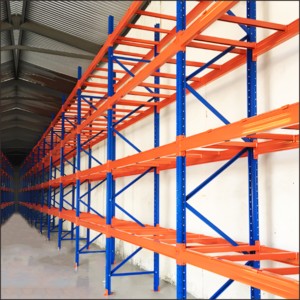
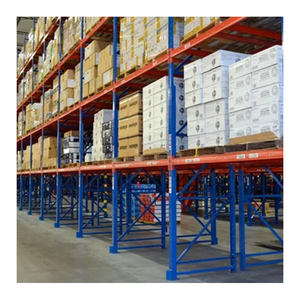
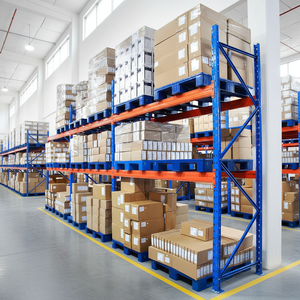
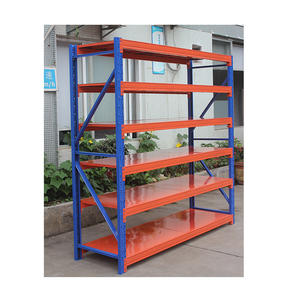
Direct OEM/ODM warehouse racking solutions designed to ANSI/RMI MH16.1, FEM 10.2.02, and ISO 9001 standards. Built with high-tensile Q235B and Q355B cold-rolled steel.
Whitepaper: Strategic Procurement & Engineering Trends in Industrial Warehouse Racking (2026–2035)
Modern global logistics networks, high-velocity e-commerce fulfillment hubs, and cold-chain infrastructure require a paradigm shift in warehouse racking architecture. Bulk commodity storage is no longer merely about holding static inventory; it is an active structural layer engineered to maximize volumetric utilization (m³), guarantee seismic safety, withstand harsh coastal or sub-zero environments, and seamlessly interface with automated material handling machinery.
Trend 1: Migration to High-Yield Micro-Alloy Cold-Rolled Steels (Q355B & Beyond)
Leading global logistics operators are moving away from traditional mild structural steels toward high-yield, cold-formed micro-alloy steel grades such as Q355B and S355JR. By utilizing higher yield strengths (minimum yield point of 355 MPa compared to 235 MPa in standard Q235B steel), racking manufacturers can produce upright columns with reduced steel thickness without sacrificing structural safety factors. This yields a 12% to 18% reduction in deadweight load on warehouse slab floors while maintaining rigid beam deflection metrics (limited strictly to L/200 under maximum uniformly distributed load).
Trend 2: Seamless Integration with AS/RS & Autonomous Mobile Robots (AMRs)
As logistics facilities adopt Automated Storage and Retrieval Systems (AS/RS), shuttle racks, and Autonomous Mobile Robots (AMRs), racking tolerances have narrowed from traditional ±3.0 mm building allowances down to sub-millimeter precision (±0.5 mm). Manufacturing automated rack uprights requires continuous roll-forming lines with online laser measurement systems. Furthermore, beam connector hooks and locking pins must eliminate dynamic sway to prevent robotic arm positional misalignment during high-bay retrieval at heights exceeding 25 meters.
Trend 3: Stringent Seismic Resilience & Dynamic Force Verification
Recent updates to global building safety regulations—including ANSI MH16.1 (RMI), FEM 10.2.02, and regional seismic codes such as Peru's Norma Técnica E.030 or Europe's EN 16681—require rigorous seismic calculations. Upright frame designs now incorporate widened heavy-duty structural baseplates, dual anchor bolts per post, engineered cross-bracing profiles, and ductile beam-to-column moment-resisting connectors. These safety systems absorb ground acceleration forces during seismic events without structural collapse or catastrophic drop of stored unit loads.
Trend 4: Advanced Anti-Corrosion Technologies for Harsh Environments
Cold-chain storage units (-30°C) and coastal humidity corridors (such as port distribution centers in Callao, Lurín, or Southeast Asian industrial ports) accelerate metal corrosion and surface oxidation. Advanced China wholesale racking operations now deploy continuous 9-stage automatic phosphatizing and zinc-phosphate pretreatment prior to applying thermosetting epoxy-polyester electrostatic powder coatings (60–90 μm thickness). For extreme corrosive or wash-down applications, Hot-Dip Galvanizing (HDG) to ISO 1461 standards provides a zinc coating exceeding 65–85 μm, guaranteeing a zero-maintenance service life exceeding 25 years.
Engineering Selection Matrix: Selecting the Ideal Racking Architecture
When procuring heavy-duty storage racks from China manufacturers, selecting the proper racking architecture dictates warehouse storage density, stock rotation dynamics (FIFO vs. LIFO), pick speeds, and capital investment recovery.
| Racking System | Storage Density | Direct Selectivity | Stock Flow | Ideal Inventory / SKU Profile | Max Load Capacity per Level |
|---|---|---|---|---|---|
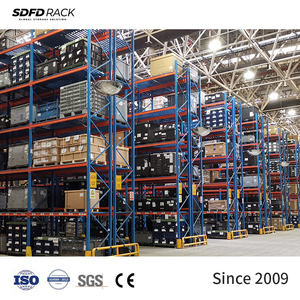
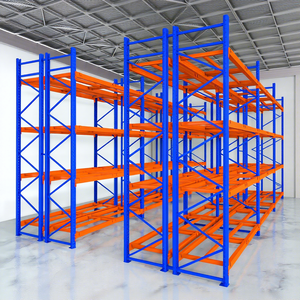
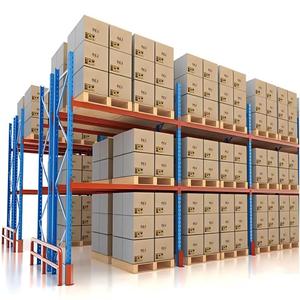
| Selective Pallet Rack | Medium (40-50%) | 100% Immediate | FIFO / LIFO | High SKU variety, fast pick rates, general logistics centers | 4,500 kg / pair of beams |
| Drive-In / Drive-Thru | Very High (75-85%) | Low (15-20%) | LIFO (Drive-In) FIFO (Drive-Thru) |
Bulk homogeneous items, cold storage, beverage logistics | 1,500 kg / pallet position |
| Push-Back Rack | High (65-75%) | Medium (30-40%) | LIFO | Medium SKU count, 2 to 6 pallets deep per lane | 1,500 kg / cart tier |
| Pallet Flow (Gravity) | High (70-80%) | Medium (30%) | Strict FIFO | Perishables, pharmaceuticals, high-turnover date-coded stock | 2,000 kg / lane position |
| Cantilever Rack | Medium-High | 100% Open Face | Flexible | Pipes, steel rebar, timber, aluminum extrusions, long loads | 5,000+ kg / arm position |
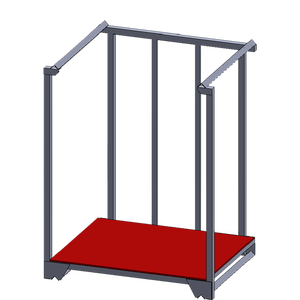
| Movable Nestainer | Flexible Bulk | Block Access | LIFO Block | Seasonal warehouse overflow, bulk stacking, flexible yards | 1,500 kg / stack frame |
Enterprise Manufacturing Competencies & Technical Capabilities
As an established tier-one China warehouse racking manufacturer and wholesale supplier, our manufacturing infrastructure combines high-volume industrial output with custom engineering adaptability.
Automated Roll-Forming Lines
Utilizing 28-station continuous cold roll-forming mills capable of handling steel strip thickness from 1.5mm up to 3.5mm. Precision punch indexing guarantees consistent teardrop, diamond, or omega hole patterns for swift field assembly and rigid beam lock-in.
Robotic Welding Stations
Panasonic multi-axis robotic welding cells execute 100% continuous full-penetration fillet welds on beam end connectors and heavy upright baseplates. Eliminates human welding fatigue defects and guarantees structural shear resistance.
Finite Element Analysis (FEA) Verification
Every non-standard racking structure undergoes ANSYS and STAAD Pro structural simulation. We perform finite element modeling for buckling loads, horizontal frame displacement, point load deflections, and seismic response spectrum analysis.
Complete Turnkey Engineering & Export Services
From initial site survey data and CAD warehouse layout engineering to load sign manufacturing, municipal compliance documentation support (ITSE / CE / ANSI), export flat-pack packaging, and global freight delivery.
Frequently Asked Questions: Warehouse Racking Procurement
Technical guidance and commercial clarity for global logistics managers, structural engineers, and industrial procurement officers purchasing racking directly from China.
What is the structural difference between Q235B and Q355B steel for pallet racking? +
How do you verify seismic compliance for warehouses in earthquake-prone zones? +
What surface finish is recommended for coastal warehouses versus cold storage environments? +
How are standard 1000mm x 1200mm pallets sized in racking layouts? +
What documentation and certifications are provided for municipal ITSE or safety audits? +
What is the standard production lead time for a wholesale OEM racking container order? +
What safety factor is engineered into pallet racking beam deflective calculations? +
Can custom racking profiles be manufactured to integrate with existing racking systems? +
How are products packaged to ensure zero transit damage during ocean freight shipment? +
Do you offer OEM custom fabrication for non-standard industrial loads? +
Optimize Your Warehouse Volumetric Space Today
Connect directly with our senior engineering team to request custom CAD floor plan layouts, FEA structural reports, and direct factory wholesale quotations tailored to your exact operational requirements.
Get Catalog