High-Capacity Industrial Racking Systems
Explore our structural steel pallet racking, customized cantilever systems, high-density tire storage, and modular shelving units certified to rigorous global standards (CE, FEM, RMI).
Engineering Integrity & Global Export Leadership
As premier industrial storage rack exporters and wholesalers, our manufacturing architecture integrates high-yield structural steel, rigorous Finite Element Analysis (FEA), and strict compliance with global building codes.
Seismic-Rated Engineering (Norma E.030 & ASCE 7)
Every racking system engineered for high-seismic zones undergoes finite element modeling to analyze dynamic overturning moments, base plate shear loading, and axial column buckling under extreme ground acceleration.
Strict International Standard Compliance
Our heavy-duty selective pallet racks and cantilever systems fully adhere to ISO 9001 quality management, European FEM 10.2.02 codes, and North American RMI (Rack Manufacturers Institute) safety protocols.
Advanced Anti-Corrosion Surface Finishing
Utilizing multi-stage automated electrostatic thermosetting powder coating and hot-dip galvanizing options (60-120 microns), our racks withstand aggressive marine humidity, coastal salt spray, and cold storage condensation.
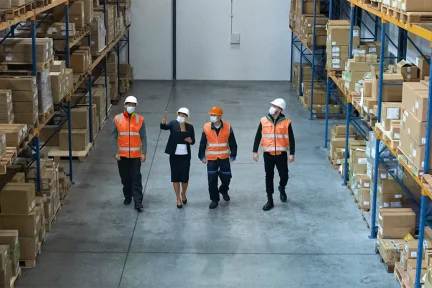
Engineering Guide: Selecting High-Gain Industrial Storage Racking
In modern industrial logistics, storage infrastructure is no longer viewed merely as passive steel framework; it is an active variable in warehouse throughput, volumetric density, supply chain resilience, and occupational safety. Global procurement officers face complex challenges when sourcing heavy-duty rack systems across international borders: navigating raw material steel grades, dynamic seismic coefficients, structural deflection limits, and total cost of ownership (TCO).
This technical guide evaluates structural methodologies, steel profiling innovations, load-bearing physics, and international procurement standards to assist enterprise buyers, logistics engineers, and warehouse operations executives in making data-driven procurement decisions.
High-performance pallet racking utilizes cold-rolled structural steel (Q235B, Q355B, SS400, or ASTM A1011 Grade 50) profiled into multi-ribbed upright columns. The inclusion of continuous stiffening ribs along the profile faces increases the section radius of gyration, dramatically elevating resistance to lateral-torsional buckling without adding excess structural deadweight.
Structural Comparison of Industrial Racking Architectures
Choosing the optimal storage rack system requires evaluating SKU velocity, forklift operational aisle widths, pallet dimensions (e.g., 1000x1200mm Euro/peruvian pallets), vertical height limits, and storage density requirements.
| System Type | Volumetric Utilization | Pallet Selectivity | Rotational Logic | Structural Steel Spec | Optimal Industry Application |
|---|---|---|---|---|---|
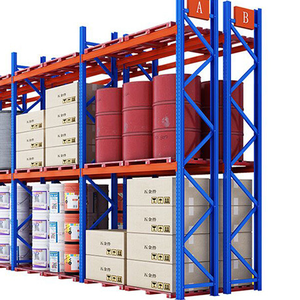
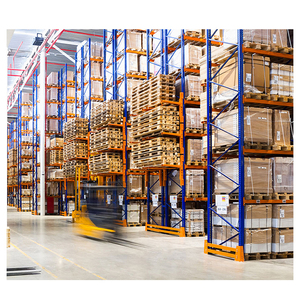
| Selective Pallet Rack | 60% - 70% | 100% Direct Access | FIFO / LIFO | Q235B / Q355B Cold-Rolled | Multi-SKU 3PL, Retail Distribution & General Warehousing |
| Drive-In Racking | 80% - 85% | Low (Lane Selective) | LIFO Standard | Structural Cold-Drawn Steel | Cold Storage, Agro-Export, Beverage & Mass SKU Lots |
| Push-Back Racking | 75% - 80% | Medium (2-6 Deep) | LIFO by Lane | Nested Cart Steel Framing | High-Density FMCG & Temperature-Controlled Facilities |
| Gravity Pallet Flow | 85% - 90% | Medium (Lane Dedicated) | Strict FIFO | Roller Track & Dynamic Brake | Perishable Foods, Pharmaceuticals & Fast-Moving Goods |
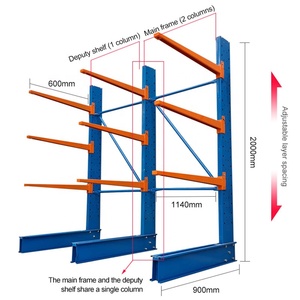
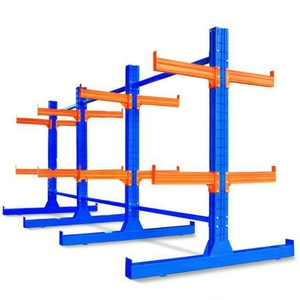
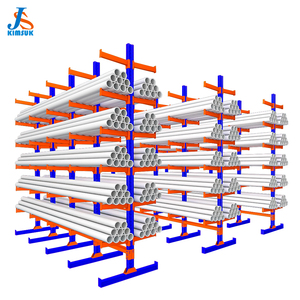
| Heavy-Duty Cantilever | Variable | 100% Linear Access | Flexible | Hot-Rolled H-Beam / Column | Steel Tubing, Rebar, Lumber, Piping & Heavy Profiles |
Anatomy of a High-Reliability Heavy-Duty Rack System
A structural failure in a warehouse rack array is almost always catastrophic, leading to severe inventory loss, operational downtime, and life-safety hazards. Industrial storage system structural integrity depends on four interconnected components:
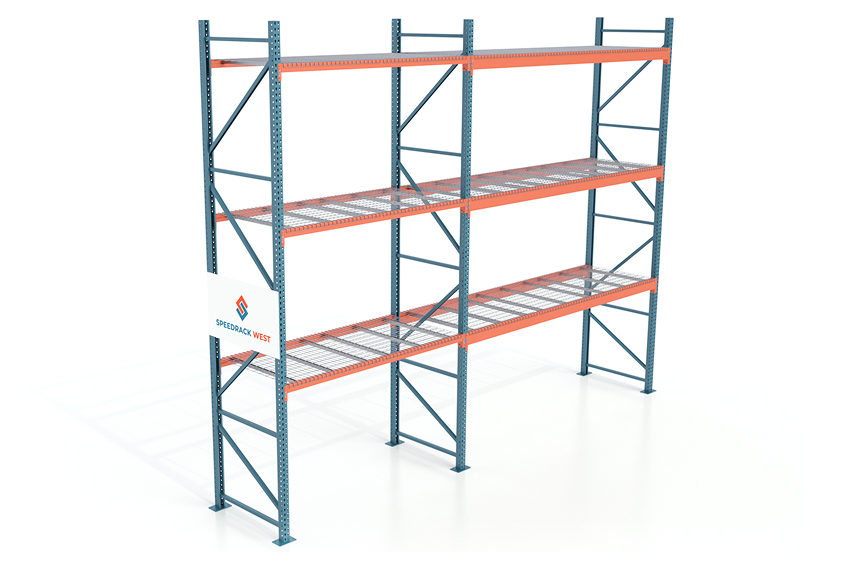
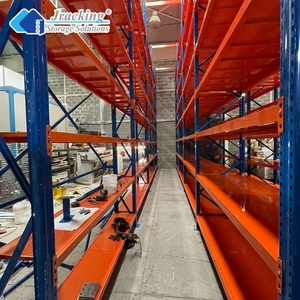
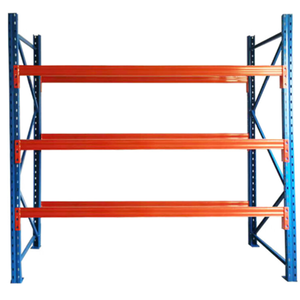
- 1. Multi-Ribbed Upright Frames Engineered with continuous teardrop or omega-shaped punchings. Diagonal and horizontal structural bracing panels are riveted or bolted to distribute compressive loads evenly along the vertical axis.
- 2. Interlocking Step & Box Beams Fabricated from twin C-channels seamlessly welded to high-strength 3-claw or 4-claw end connectors with automatic mechanical safety locks to prevent accidental forklift dislodgement.
- 3. Heavy-Duty Baseplates & Expansion Anchors Footplates transfer column loads to the concrete slab. In seismic-rated regions (Norma E.030 / ASCE 7), enlarged seismic baseplates with heavy wedge anchors dissipate horizontal seismic shear forces.
- 4. Galvanized Wire Mesh Decking & Support Bars Heavy-gauge wire decking with welded steel channels prevents loose box drops, allows overhead fire sprinkler water penetration (NFPA 13 compliance), and increases safety for non-standard pallet loads.
Global Procurement & Technological Trends
Understanding how automation, sustainability mandates, and digital supply chains are redefining international enterprise procurement of industrial rack infrastructure.
1. ASRS & Automation Integration
Modern distribution hubs are rapidly transitioning to Autonomous Mobile Robots (AMRs) and Automated Storage and Retrieval Systems (ASRS). Future-proof storage racks require ultra-tight tolerances (±1.5mm deflection allowance), sensor-guided rack positioning, and specialized rail profiles to accommodate high-speed robotic shuttles.
2. Green Steel & Low-Carbon Supply Chains
Environmental, Social, and Governance (ESG) regulations require global exporters to disclose carbon intensity. Procurement trends favor manufacturers utilizing Electric Arc Furnace (EAF) green steel, solvent-free powder coatings, and flat-pack container optimization that minimizes maritime transport carbon emissions per pallet position.
3. Structural Health Sensors & IoT Monitoring
Next-generation heavy-duty rack arrays are adopting embedded optical strain gauges and IoT collision sensors. These smart sensors monitor continuous structural deflection, detect forklift impact vibrations in real time, and trigger immediate inspection warnings before structural fatigue can lead to rack collapse.
Frequently Asked Questions for Global Rack Procurement
Technical, logistical, and compliance insights compiled by our senior engineering and export trade directors.
What steel grades and structural certifications are standard for heavy-duty industrial storage racks?
Our heavy-duty industrial pallet racks and cantilever systems are primarily manufactured using prime high-yield strength steel grades, including Q235B, Q355B (equivalent to EN 10025 S355 and ASTM A572 Grade 50), and ASTM A1011 cold-rolled structural sheet.
Every shipment is backed by Mill Test Certificates (MTC) verifying yield strength, tensile strength, and elongation properties. Our factory operations maintain ISO 9001:2015 certification, and our finished structural designs strictly adhere to European FEM 10.2.02 and North American RMI MH16.1 engineering standards.
How do you engineer racking systems for high-seismic activity zones (e.g., Peru Norma E.030)?
For installations in high-seismic regions (such as Zone 4 coastal Peru, Chile, Japan, or California), standard gravity load calculations are insufficient. We conduct 3D finite element dynamic modal analysis incorporating local seismic zoning factors (Z), soil profiles (S), and building occupancy importance factors (U) per Norma Técnica E.030 and ASCE 7 specifications.
Seismic engineering adjustments include increasing column profile depth, utilizing heavy-duty oversized base plates with enlarged anchor bolt hole patterns, adding top-beam horizontal tie-bracing, and configuring specialized row spacers to prevent seismic sway interaction.
What surface treatments are recommended for coastal high-humidity or cold storage environments?
For indoor ambient distribution centers, our automated electrostatic powder coating system applies an epoxy-polyester thermosetting finish (60–80 microns thick) following an 8-stage chemical wash and iron-phosphate pre-treatment process, providing exceptional scratch and corrosion resistance.
For high-humidity coastal facilities (such as Callao or marine logistics hubs), wash-down food processing plants, or refrigerated cold rooms below freezing (-30°C), we strongly recommend Hot-Dip Galvanizing (HDG) compliant with ISO 1461 / ASTM A123. HDG provides a metallurgical zinc alloy coating (80–120 microns) that offers self-healing cathodic protection against rust for decades.
How are international freight container loads optimized to reduce shipping costs for bulk rack orders?
As experienced industrial rack exporters, we maximize 40ft High Cube (40HC) ocean container volumetric payload using custom CAD nesting software. Upright frames are shipped knocked-down (KD) with bolted diagonal bracing to conserve volume compared to welded frames.
Beams and columns are bundled with steel strapping, protective corner guards, and wood skids optimized for forklift unloading at destination ports, achieving up to 26,000 kg weight capacity per container while eliminating transit damage.
What documentation is provided to support local municipal building permits and safety audits (e.g., ITSE)?
We supply a complete engineering documentation package for municipal permits (such as Certificado ITSE in Peru or local building inspector sign-offs). This package includes signed engineering CAD floor plans, elevation drawings, structural calculation memory books, maximum allowable bay loading placards, installation tolerance guidelines, and anchor pull-out test specifications.
What is the standard lead time for wholesale custom industrial racking orders?
Standard fabrication lead time for custom engineered selective racking orders (1 to 10 container volumes) is typically 20 to 30 days from layout sign-off and deposit confirmation. Ocean transit times vary by destination port (e.g., 20-25 days to Callao/South America West Coast; 15-20 days to US West Coast; 28-35 days to Europe).
Optimize Your Warehouse Layout & Storage Density Today
Partner with an established industrial storage racks exporter and wholesaler. Send us your building floor plan, pallet load specifications, or project requirements, and our structural engineering team will deliver a comprehensive CAD layout and factory-direct quote within 24 hours.