Heavy-Duty Pallet Racking & Industrial Shelving Portfolio
Engineered to international FEM, RMI, and EN standards. Certified for seismic resilience, heavy industrial dynamic loads, and dense warehouse storage applications.
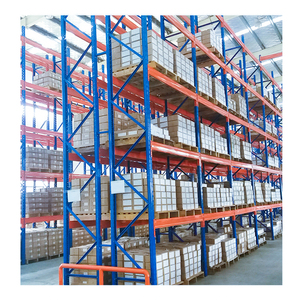
Heavy Duty Industrial Storage Rack Steel Warehouse Pallet Shelving System
View Specifications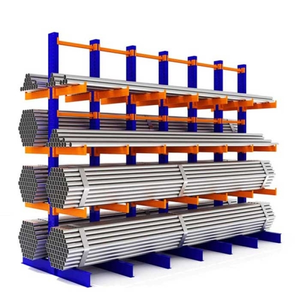
Cantilever Racks Heavy Duty Cantilever Racks for Sale Warehouse Racking Systems
View Specifications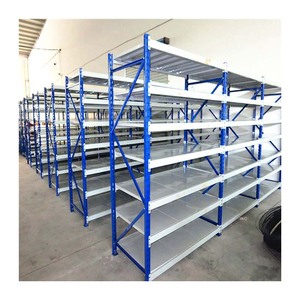
Light Duty Warehouse Selective Shelf Metal Steel Customized Boltless Racking
View Specifications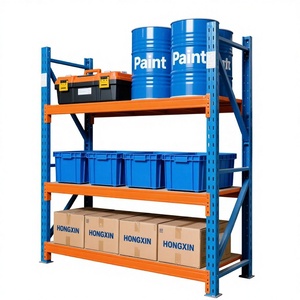
Adjustable 4 Layer Steel Storage Rack Boltless Warehouse Shelving Corrosion Resistant
View Specifications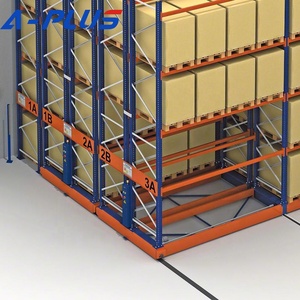
Motorized Electrical Movable Heavy Duty Mobile Pallet Racking System for Storage
View Specifications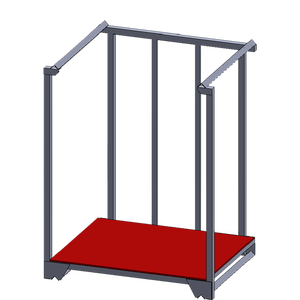
Heavy-Duty OEM Warehouse Movable Stacking Storage Nestainer Rack Palletainer
View Specifications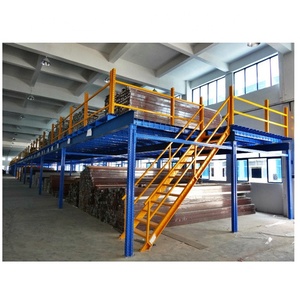
Heavy Duty Warehouse Mezzanine Storage Rack System Metal Platform Platform
View Specifications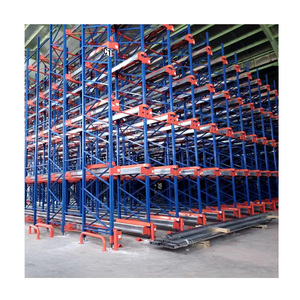
Adjustable High-Speed Auto Radio Shuttle Pallet Car Warehouse Racking System
View SpecificationsArchitectural Engineering & Strategic Procurement Analysis
An authoritative guide to modern warehouse intra-logistics, load structural dynamics, seismic compliance, and total cost of ownership (TCO) optimization.
1. Enterprise Storage Engineering: Beyond Basic Steel Fabrications
Selecting a top trusted pallet racking and shelving supplier requires far more than comparing per-kilo steel pricing. Modern warehousing logistics demands custom structural engineering designed around dynamic fork-truck loading, vertical clearance limits, seismic spectral response calculations, and local building code compliance. Storage installations are critical load-bearing systems supporting millions of dollars in operational inventory; failure at any component node can yield catastrophic supply chain collapse and safety liabilities.
Professional racking suppliers utilize high-grade structural steel (typically Q235B and Q355B cold-rolled steel profiles) backed by Finite Element Analysis (FEA). This structural modeling ensures that column uprights, beam connectors, horizontal diagonal bracing, and anchor footplates maintain complete geometric stability under maximum rated load parameters. Standard industry compliance dictates adherence to structural standards such as FEM 10.2.02 (European Federation of Materials Handling), RMI (Rack Manufacturers Institute) specs in North America, and rigorous seismic parameters such as South America's Norma Técnica E.030 Diseño Sismorresistente.
2. Technical Evaluation of Heavy-Duty Racking Architectures
Every operational distribution model—ranging from cold storage agro-export facilities to automotive parts distribution centers—requires a distinct physical layout matrix. Below is an engineering overview of primary racking architectures and their optimal usage profiles:
Selective Pallet Racking
Provides 100% direct pallet access for multi-SKU inventory. Sized standardly for 1.00m x 1.20m pallets with 75mm front/rear overhang. Ideal for fast-moving consumer goods (FMCG) and fulfillment centers requiring immediate selectivity.
Heavy-Duty Cantilever Racking
Eliminates front columns to store continuous long loads such as steel tubing, PVC piping, rebar, structural timber, and aluminum extrusions. Arms feature adjustable 100mm pitches with dynamic load pins to absorb impact during loading.
Radio Shuttle & Automated Systems
Semi-automated high-density storage where self-propelled battery shuttle cars transport pallets along deep lanes. Achieves extreme volumetric efficiency for cold storage, agro-industrial freezing rooms, and bulk beverage facilities.
3. Structural Anatomy & Metallurgical Integrity
A certified racking installation functions as a cohesive system. The structural performance relies on key precision-engineered components:
- Upright Frames: Cold-rolled omega profiles featuring continuous teardrop or diamond slotting. Column sections are optimized for axial compression strength and lateral torsional rigidity.
- Beam Assemblies: Fabricated with twin-C nested profiles or step beams, robotically welded to heavy-gauge end-connectors with 3 to 5 lock-claws. Safety locking pins prevent accidental beam dislodgement from lift-truck tines.
- Anchor Footplates & Expansion Bolts: Baseplates distribute vertical column loads directly to the concrete floor slab. Mechanical wedge anchors or chemical anchors lock frames securely into place to resist uplift and seismic shear forces.
- Wire Mesh Decking & Safety Guards: Galvanized mesh decks provide structural fall protection for loose items while ensuring 70%+ open area for sprinkler water penetration (OSHA & NFPA 13 compliance). Column protectors absorb lower frame impacts.
Future Procurement & Industry Development Trends (2025–2030)
How supply chain digitalization, automated material handling, and green manufacturing are redefining physical storage infrastructure worldwide.
1. Total Cost of Ownership (TCO) Procurement Shift
Global procurement directors are shifting focus from initial capital expenditure (CapEx) to lifetime operational cost. Cheap racking constructed with thin-gauge, low-grade steel exhibits high maintenance costs, premature beam deflection, and high repair downtime. Top suppliers provide full lifecycle warranties, standardized repair components, and modular expansion capabilities.
2. Dynamic Integration with Robotics & AMR/AGVs
Static storage is rapidly integrating with Autonomous Mobile Robots (AMRs) and Automated Guided Vehicles (AGVs). Modern rack designs incorporate precision floor-track guidance, sensor reflectors, and ultra-flat floor tolerances (DIN 15185 compliant) to permit high-speed robotic picking and shuttle transfers without human intervention.
3. Advanced Anti-Corrosion Finishes for Harsh Environments
Coastal logistics hubs, maritime cold-chain facilities, and chemical storage sites require robust protective finishes. Standard epoxy polyester powder coating (60-80 microns thick) is supplemented by continuous pre-galvanized coils or Hot-Dip Galvanizing (HDG per ISO 1461) to resist saltwater air, high garúa humidity, and aggressive sub-zero temperature condensation.
Why Global Enterprise Brands Partner With Us
Delivering end-to-end warehouse storage engineering, precision CAD layouts, and certified safety compliance across international logistics corridors.
Custom CAD Layout & Floor Analysis
Every proposal begins with detailed 2D/3D CAD site surveys. We evaluate forklift turning radii, clear height beneath roof trusses, column grids, slab floor load capacities, and fire sprinkler clearances before manufacturing a single steel profile.
Seismic Certification & Regulatory Support
Our engineering documentation fully supports local municipal permits, insurer audits, and technical safety inspections (including ITSE & SST regulations). All structural load values are stamped with validated calculations.
Turnkey Execution & Lifecycle Inspections
We manage raw material procurement, cold-roll forming, robotic welding, automated powder coating, global site delivery, professional assembly, and annual structural safety audits under a single point of accountability.
Frequently Asked Questions on Racking Procurement
Essential guidance for warehouse managers, industrial engineers, and procurement teams planning storage infrastructure upgrades.
What steel grade and structural thickness should be specified for industrial pallet racking?
How is rack beam deflection safety determined under full load capacity?
What concrete floor slab requirements are necessary for high-bay racking anchoring?
How are racking systems protected against coastal moisture and cold room corrosion?
What risk classification framework is used during annual rack safety audits?
Green Risk: Minor localized cosmetic scratches or slight deformation within safe code limits; requires routine tracking.
Amber Risk: Damage exceeds allowable tolerances but structural capacity remains intact; replacement parts must be ordered and installed within 45 days without unloading the rack immediately.
Red Risk: Severe column bucking or beam weld cracking; the affected bay must be immediately unloaded and isolated from traffic until structural repairs are completed.
How much operational aisle width should be allocated for standard forklifts?
• Counterbalance Forklifts: Require 3.5m to 4.2m aisle widths.
• Reach Trucks: Require 2.7m to 3.0m aisle widths.
• Very Narrow Aisle (VNA) Turret Trucks: Operate in 1.6m to 1.8m aisles with wire or rail guidance systems, maximizing cubic storage density.
Accelerate Your Warehouse Capacity & Safety
Send us your floor plan layout, target pallet dimensions, and operational load requirements. Our senior structural engineers will deliver a customized CAD layout and detailed technical quote within 24 hours.