Engineering Specification & Global Procurement Guide

Industrial Warehouse Safety Guard Rails: Impact Ratings, Seismic Integration & Procurement Standards

How global procurement managers evaluate structural impact barriers, prevent rack collapses under seismic forces (Norma E.030), and ensure Ley 29783 compliance.

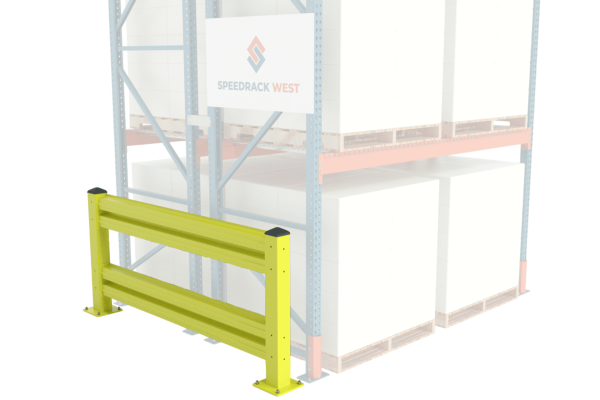
Yellow industrial steel safety guard rails protecting rack end frames
Heavy-Duty Crash Protection

Protect Upright Frames & Walkways From Forklift Impacts

Cold-rolled steel barriers engineered for 10,000+ Joule collision energy resistance in high-throughput distribution hubs.

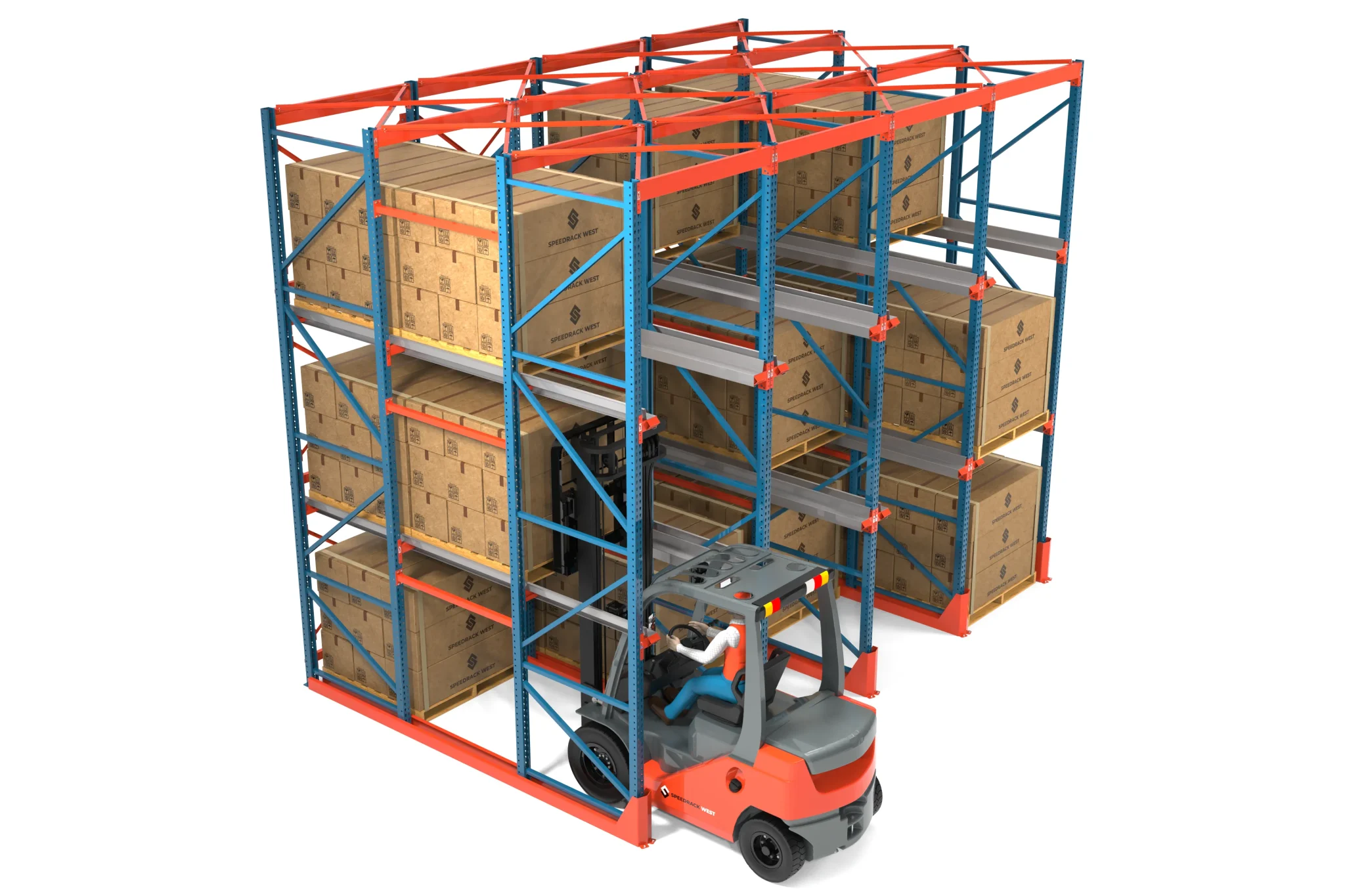
High-density logistics warehouse with rack protection guard rails
Turnkey Safety Solutions

Engineered to OSHA & Peruvian Safety Regulations

Integrated CAD planning, slab anchor calculations, and certified installation across Peru.

10,000+ J RatingImpact-tested energy absorption profiles
Seismic Norma E.030Anchoring designs checked for Zone 4 soils
OSHA & ANSI AlignedMeets EN 15512 & Ley 29783 standards
Full Peru DeliveryTurnkey supply in Lima, Callao & Regions
Technical Insight & Information Gain

The Physics of Warehouse Collisions: Why Standard Guard Rails Fail

Modern Material Handling Equipment (MHE) continues to grow in weight and operational speed. A standard 3-ton capacity forklift carrying a 1.2-ton pallet moving at just 10 km/h generates approximately 11,600 Joules of kinetic energy upon impact. Without certified, energy-dissipating warehouse safety guard rails, this structural shock is transferred directly into racking uprights or concrete floor slabs, causing immediate fatigue or catastrophic collapse.

Kinetic Energy Absorption vs. Floor Slab Shear Force

When an unshielded forklift impacts a pallet rack frame corner, the structural column absorbs the stress via localized buckling. In seismic regions like Peru—where warehouses in Lima and Callao operate under Norma Técnica E.030 Diseño Sismorresistente—even minor unrecorded upright damage reduces the seismic axial load capacity of the frame by up to 40%.

Professional engineering of warehouse safety guard rails requires evaluating three distinct force vector components:

  • Primary Elastic Deflection: The barrier rail deforms to store impact energy without passing plastic deformation to the upright.
  • Anchor Shear Dissipation: Post baseplates distribute shear stresses across multiple chemical or mechanical concrete anchors rather than prying out of the floor slab.
  • Deflection Clearance Zone: Sizing the exact offset distance between the guard rail and the front face of the rack column to ensure zero metal-to-metal contact during peak loading.
Warehouse Safety Guard Rails installed around racking ends
11,600+ Joules Typical impact kinetic energy absorbed by dual-rib steel safety guard rails.
Product Recommendations

Industrial Warehouse Safety Guard Rails & Barrier Systems

Engineered by Lima Storage & Shelving Systems S.A.C. for high-density logistics centers, cold storage facilities, and industrial manufacturing plants across Peru.

Heavy-Duty Double-Rail Steel Guard Rail

Heavy-Duty Double-Rail Steel Barriers

Designed for rack aisle ends, main forklift highways, and loading dock perimeters. Provides dual-tier impact deflection up to 430 mm height, protecting both chassis and fork tines.

  • Cold-rolled 11-Gauge Steel
  • RAL 1023 Safety Yellow Powder Coat
  • 4-Bolt Heavy Baseplates
Heavy-Duty Single Rail Guard Barrier

Single-Rail Pedestrian & Machinery Guards

Ideal for separating forklift traffic lanes from pedestrian walkways, automated conveyor lines, and low-profile electrical panels. Meets OSHA 1910.29 walking-working surface standards.

  • Modular Bolt-Together Lengths
  • Height: 300mm to 500mm
  • Anchors: Hilti / Fischer Wedge
Structural Rack End Protectors and Bullnose Guards

Heavy-Duty Structural Rack End Protectors

Heavy wrap-around steel channels featuring curved bullnose ends. Specifically engineered to shield vulnerable end-of-row rack frames from high-speed turning forklift strikes.

  • High-Yield Structural Channel
  • Curved End Dissipation
  • Flush-Fit Anchor Recesses
Modular Flexible Polymer Safety Guard Rails

Flexible Polymer Impact Safety Guard Rails

Advanced HDPE/Polymer synthetic barriers that flex upon impact, dampening force before returning to original shape. Minimizes concrete slab cracking in coastal and cold storage facilities.

  • Zero Floor Slab Spalling
  • Sub-Zero Temperature Rated
  • Self-Recovering Polymer
Steel Safety Bollards and Column Guards

Heavy-Duty Steel Safety Bollards

High-visibility tubular steel bollards filled or solid core, positioned at building support columns, corner walls, and automated door tracks to halt direct vehicle intrusion.

  • Schedule 40/80 Steel Pipe
  • Diameter: 4", 6", 8"
  • Surface Mount or Embedment
Rack Post Column Protectors

Individual Rack Post Column Protectors

Formed steel or high-density polymer upright boots attached directly to individual rack frames or anchored to the floor slab. Protects individual upright faces in tight picking aisles.

  • Formed 5mm Steel or HD Polymer
  • OSHA Color Standard
  • Easy Retrofit Installation
Engineering Matrix

Technical Comparison & Impact Rating Specification

Use this technical comparison matrix to match your warehouse traffic speed, material handling equipment (MHE) axle weight, and site environmental conditions with the appropriate safety barrier system.

Industrial Warehouse Safety Guard Rails Engineering Performance Table
Barrier Type Impact Energy (Joules) Material Grade Anchoring System Best Application Environment
Heavy-Duty Double Steel Guard Rail 12,500 J @ 10 km/h ASTM A36 Structural / Q235B Steel 4 x M16 Chemical Anchors / 120mm Depth Main Forklift Aisle Ends & Distribution Crossings
Heavy-Duty Single Steel Guard Rail 6,800 J @ 8 km/h Cold-Rolled Formed Steel Channel 4 x M12 Expansion Anchors / 100mm Depth Pedestrian Walkways & Machine Perimeter Shielding
Structural Bullnose Rack End Protector 15,000 J @ 12 km/h Structural C-Channel Heavy Steel 6 x M16 Heavy-Duty Concrete Wedge Anchors High-Turnover Automated Pallet Racking Ends
Flexible HDPE Polymer Guard Rail 14,000 J (Self-Recovering) Engineered Synthetic Elastomer Baseplate Internal Energy Dampening Rods Cold Storage (-30°C), Coastal Humidity & Food Hubs
Heavy-Duty Surface Bollard 10,000 J @ 9 km/h Schedule 80 Steel Tube + Baseplate 4 x M16 Concrete Screw / Epoxy Anchors Dock Door Frames, Transformers, Building Columns
Why Partner With Us

Enterprise Guard Rail Engineering by Lima Storage & Shelving Systems S.A.C.

Lima Storage & Shelving Systems S.A.C. is Peru's leading specialist in industrial warehouse storage, rack safety design, and structural safety barrier integration. We provide complete turnkey protection packages tailored to your facility floor plan.

Full Compliance with Norma E.030 & Ley 29783

Every guard rail installation is calculated against local concrete compressive strength (f'c), anchor embedment depth, and seismic zone 4 forces across coastal Peru.

Integrated CAD Layouts & Impact Analysis

Our engineering team models your forklift turning radiuses, aisle clearances, and traffic flows in CAD prior to procurement, ensuring optimal barrier placement without sacrificing picking efficiency.

Coastal Anti-Corrosion Finishing

For operations in humid marine climates like Callao, Lurín, and Chilca, we supply high-durability thermosetting powder coating and hot-dip galvanizing engineered for severe saline environments.

Send an Inquiry
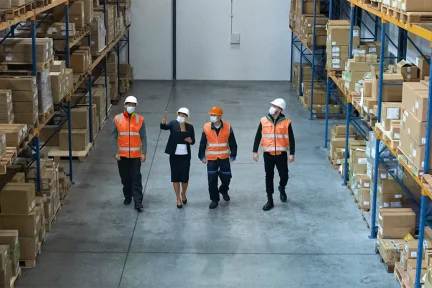
Safety Inspector auditing warehouse guard rail and rack base plates
Certified Engineering Full technical dossier and load calculations provided for municipal ITSE approvals.
Safety Layout Engineering

How to Position Guard Rails for Maximum Structural Protection

Correct layout spacing prevents expensive structural collisions. Our engineering team designs custom safety barrier perimeters based on your specific vehicle dimensions, aisle width, and pallet overhang tolerances.

  • Custom offset clearances configured for 1.00 m x 1.20 m pallet overhangs
  • Verified floor anchor pull-out resistance calculations
  • High-visibility RAL 1023 powder coating with UV stabilization
Send an Inquiry
Frequently Asked Questions

Warehouse Safety Guard Rails: Technical Buyer FAQ

Answers to common engineering, regulatory, and procurement questions asked by logistics directors and safety engineers.

How do I calculate the correct impact rating required for warehouse safety guard rails?

Impact ratings are calculated using the kinetic energy formula $E_k = \frac{1}{2} m v^2$, where $m$ is the combined gross weight of the forklift plus maximum rated pallet load, and $v$ is the top operating speed in the aisle. For example, a 4,000 kg loaded forklift traveling at 9 km/h (2.77 m/s) generates approximately 15,300 Joules of kinetic energy upon perpendicular impact. Lima Storage & Shelving Systems S.A.C. recommends selecting guard rail profiles rated at least 20% higher than your maximum calculated kinetic energy vector to account for dynamic skid momentum.

What is the minimum recommended offset distance between a safety guard rail and racking uprights?

The standard technical offset clearance recommendation is between 50 mm and 100 mm from the outermost face of the guard rail baseplate to the front post of the racking frame. This deflection zone ensures that when the guard rail absorbs a heavy forklift strike and deforms elastically, the barrier steel does not bow backward and make secondary contact with the structural rack column.

Are steel guard rails better than flexible polymer guard rails for cold storage facilities?

In frozen environments (temperatures down to -30°C), traditional carbon steel becomes brittle and standard concrete floor slabs are susceptible to frost-heave cracking. Flexible HDPE polymer guard rails specifically formulated for sub-zero temperatures absorb impact without shattering and significantly reduce shock transmission into frozen concrete slabs. However, heavy structural steel bullnose guards with epoxy chemical anchors remain preferred for main high-speed forklift entrance doors into cold rooms.

What concrete slab thickness and anchor depth are required for industrial safety guard rails?

Industrial heavy-duty guard rails require a non-cracked reinforced concrete floor slab with a minimum thickness of 150 mm (6 inches) and a compressive strength of $f'c \ge 210 \text{ kg/cm}^2$ ($3000 \text{ psi}$). Expansion wedge anchors or heavy-duty screw anchors require an embedment depth of at least 100 mm to 120 mm. In high seismic zones or shallow slab conditions, chemical epoxy anchor resin systems must be specified to prevent slab cone breakout during collisions.

How do safety guard rails assist with ITSE certification and Ley 29783 compliance in Peru?

Under Peruvian Ley 29783 (Ley de Seguridad y Salud en el Trabajo) and municipal Inspección Técnica de Seguridad en Edificaciones (ITSE) audits, logistics facilities are required to physically segregate pedestrian pathways from motorized material handling equipment and safeguard structural storage racks. Certified guard rail installations with floor anchoring details, high-visibility safety yellow coatings, and certified engineering drawings directly satisfy ITSE inspector requirements, facilitating smooth municipal operating permit approvals.

What is the typical return on investment (ROI) of installing rack end protectors?

Replacing a damaged pallet rack upright frame involves unloading multiple storage bays, disassembling horizontal beams, re-anchoring, and replacing damaged components—costing upwards of $1,200 to $3,500 USD per incident in lost operational downtime and labor. A heavy-duty structural rack end protector costs a fraction of a single frame replacement and prevents over 90% of end-of-row collision repairs, delivering full financial payback within 6 to 12 months of installation.

Protect Your Warehouse Facilities Today

Send your floor plan and equipment specifications to our engineering team. We will deliver a comprehensive CAD safety layout and itemized proposal tailored to your facility. Email: [email protected]